Israel’s Opposition Is Divided Over Who Should Join the Next Government
Israel's Coalition Deadlock: Yashar Party Leader, Gadi Eisenkot’s bloc won 48 Knesset seats, need 61 to govern; was tasked on November 8 to form a government, with 28-day deadline.
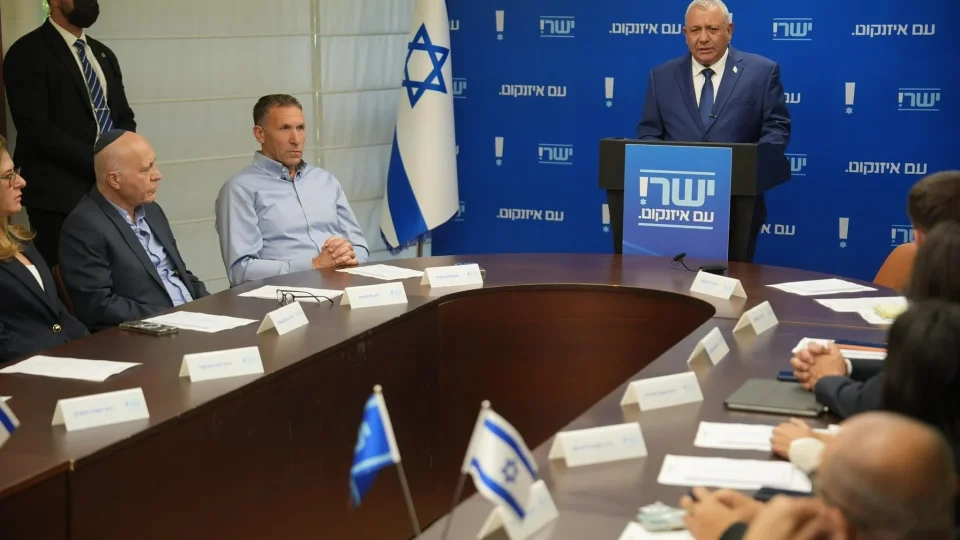
Israel Coalition Government: Gadi Eisenkot’s opposition bloc has enough seats to replace Benjamin Netanyahu in principle, but not enough to govern without making a choice its leaders have so far refused to make together: whether to bring Likud, the ultra-Orthodox parties, or Arab-majority parties into the arrangement. Their shared goal, keeping Netanyahu out of the premiership, has not produced a shared formula for the next government.
Who Has the Majority?
Eisenkot’s four-party bloc holds 48 of the Knesset’s 120 seats, 13 short of the 61 needed for a parliamentary majority. Netanyahu’s bloc holds 53, while the Arab-majority parties hold the remaining 19. That means Eisenkot cannot form a conventional majority government using only his own bloc. Eisenkot therefore has three broad routes: form a broad unity government with Likud; add the ultra-Orthodox Shas and United Torah Judaism (UTJ), whose combined 13 seats would produce exactly 61; or lead a minority government sustained by Arab-majority parties from outside the Cabinet.
The ultra-Orthodox parties, Shas and UTJ, represent largely Haredi Jewish communities, whose political priorities include protecting religious education, Sabbath observance and state funding for religious institutions. They have long been pivotal coalition partners because their seats can determine whether a government reaches a majority. Their central dispute with Eisenkot’s bloc concerns military service: many ultra-Orthodox men have received exemptions from compulsory military service, while Eisenkot and his allies campaigned to end those exemptions and require broader national service.
The Arab-majority parties are political parties whose voters and lawmakers are predominantly Palestinian citizens of Israel. They hold 19 seats between them and are essential to the arithmetic because their support, or abstention, could help Eisenkot reach a majority even if they do not join the Cabinet, reports The Times of Israel. But most Jewish-led parties have resisted including them in government, and Likud has demanded that any unity arrangement formally reject “terror-supporting parties,” language aimed at Arab parties.
Route |
Support Needed |
Main Obstacle |
|
Unity government with Likud |
27 Likud seats, minus any overlap in a broader coalition |
Netanyahu’s role and Likud’s conditions |
|
Coalition with ultra-Orthodox parties |
13 seats, from Shas and UTJ |
Military-service exemptions and ideological resistance |
|
Minority government backed by Arab parties |
Outside support or abstention from Arab-majority parties |
Many Jewish parties reportedly refuse to include Arab parties in government |
What the Terms Mean
A unity government is a broad coalition that includes parties from opposing political camps, in this case, Eisenkot’s bloc and Netanyahu’s Likud. It would give Israel a large parliamentary majority, but would require compromises on policy and leadership. Bennett supports this only if Eisenkot, rather than Netanyahu, leads it.
A minority government is a government whose coalition has fewer than 61 seats but can survive because parties outside the Cabinet either abstain on key votes or support it from the opposition benches. Golan’s preferred version would leave Arab-majority parties outside the government but depend on their parliamentary support.
Eisenkot’s ‘Emergency’ Before Coalition
Eisenkot has framed the task of replacing Netanyahu as an emergency, while preserving flexibility over the coalition’s eventual composition. On November 3, he posted that the leaders of the “Change and Reform” parties had agreed to launch coalition negotiations immediately and prevent Israel from being dragged into another election.
הודעה משותפת לראשי מפלגות השינוי והתיקון הסתיימה פגישת ראשי מפלגות השינוי והתיקון, במהלכה הוצגו ההתקדמויות בצירי המו"מ השונים להקמת ממשלה, כמו גם את המהלכים המוצלחים האחרונים למימוש הרב הפרלמנטרי בכנסת ובראשם בחירתו של ח״כ מתן כהנא לתפקיד יו״ר הכנסת. ראשי המפלגות כולם רואים עין בעין באשר לדחיפות בכינונה של ממשלת חירום לאומית בראשות איזנקוט, והחלפתו של נתניהו בלשכת ראש הממשלה - בעדיפות עליונה ובהקדם. המשתתפים דנו גם בשעת החירום הממשית בפניה ישראל ניצבת - ביטחונית, חברתית ובינלאומית ועל רגישותם של הימים הקרובים. סוכם שהמפלגות ימשיכו לעבוד במשותף, בתיאום ובמהירות למען מטרה זו. זהו צו השעה.
— Gadi Eisenkot - גדי איזנקוט (@gadi_eisenkot)
Eventually, Eisenkot reportedly invited Likud to “marathon” coalition talks, which may mean that he is testing Bennett’s preferred route, even as his own criticism of Netanyahu remains sharp.
Bennett’s Stance to Bring Likud, Exclude Netanyahu
Naftali Bennett is a former Israeli prime minister and the leader of B’Yachad, a right-wing, nationalist party. He supports a broad unity government led by Eisenkot and including Likud, but insists that Netanyahu must not return as prime minister. “I am also committed to ensuring that Netanyahu will not be the next prime minister,” Bennett said, according to Times of Israel, adding that his party would not join Netanyahu or his bloc “under any circumstances.”
For Bennett, a Likud-inclusive government could produce a large, stable majority without depending on Arab parties. Bringing in Likud would avoid dependence on Arab-majority parties and could produce a broad, stable majority, but only if Likud accepts a government in which its longtime leader is not premier.
אני מחויב. אני מחויב למהפכת המשרתים. אני מחויב לחיילים ולמילואימניקים שלנו שזועקים לחילוף, ללא מענה. מחויב להחליף את ממשלת השבעה באוקטובר. מחויב להקים, ביחד עם שותפינו, ממשלת תיקון בראשות גדי איזנקוט. אני גם מחויב שנתניהו לא יהיה ראש הממשלה הבא של מדינת ישראל, ומפלגתי לא תעבור אליו או לגוש שלו בשום מקרה. ** הנה עקרונות הממשלה אליה אנו מכוונים: 1. ביום הראשון לממשלה נקים ועדת חקירה ממלכתית לטבח השבעה באוקטובר. 2. נקצוב כהונת ראשי ממשלה לשמונה שנים. 3. נעביר את מהפכת המשרתים. נרחיב את מעגל המתגייסים, נחזק את המשרתים ואת משפחותיהם, ונשנה את סדר העדיפויות של המדינה כך שהתמריצים הכלכליים יעברו מהמשתמטים למשרתים. נעביר את המדינה מכאוס לניהול, ונציל את ישראל ממסלול ההתנגשות החזיתית עליו אנחנו צועדים בקצב מהיר. אני מאמין שהחלופה הנכונה ביותר להשיג את כל זה, היא ממשלת אחדות ציונית בראשות איזנקוט. אם אלישע מדן ויונתן שלו יכולים להילחם זה לצד זה בעזה, הם בוודאי יכולים לשבת זה לצד זה בממשלה. אני יודע שעצם השיחות מעוררות ביקורת. אני מכבד אותה, אך משוכנע כי זה המהלך הטוב ביותר למען מדינת ישראל והיחיד שיביא את מהפכת המשרתים. חובה להפוך כל אבן להקמת ממשלת אחדות ציונית בראשות איזנקוט. אני לא נאיבי. החשדנות כלפי נתניהו מוצדקת. משך שנים נתניהו הונה את שותפיו ופעל נגדם. לכן כאן מדובר שאיזנקוט עומד בראש. במסגרת המהלך שבכוונתי לקדם, נדע מהר מאוד האם פני הליכוד לאחדות, או שמא רק לנסות לבזבז את 29 הימים שנותרו למנדט של גדי. לא נאפשר להם את זה. בימים הקרובים נמשיך לפעול בתיאום מלא עם שותפינו ולמצות את האפשרויות להקמת הממשלה. בכל מסלול שנבחן, העקרונות האלה יעמדו לנגד עינינו. שבוע טוב אחיי ואחיותיי. ימים טובים עוד לפנינו. 🇮🇱
— Naftali Bennett נפתלי בנט (@naftalibennett)
That makes Bennett’s route politically fragile: Eisenkot can talk to Likud, as he has by inviting it to “marathon” coalition talks, but Bennett’s insistence that Netanyahu not lead the government collides with Likud’s insistence that Netanyahu not be sidelined. Bennett had likely already signalled this approach after Eisenkot received the mandate. On November 5, he wrote that his party’s representatives had recommended Eisenkot to President Herzog and said Israel must form a government quickly and begin the work of “repair.”
ברגעים אלה נציגי המפלגה שלנו ממליצים לנשיא המדינה על גדי איזנקוט למלאכת הרכבת הממשלה. אני כל כך גאה בנבחרת שלנו! אנחנו חייבים להקים ממשלה בהקדם ולהתחיל בתיקון, עבודה רבה לפנינו🇮🇱 https://t.co/ZHZdSUIlWI
— Naftali Bennett נפתלי בנט (@naftalibennett)
The obstacle here is Likud’s position. Likud has demanded an end to what it calls the “political boycott” of Netanyahu and a formal renunciation of “terror-supporting parties,” a reference reportedly aimed at Arab parties.
Lieberman to Agree for the ultra-Orthodox, to Avoid Arab and Minority Government
Avigdor Lieberman is a former defence minister and the leader of Yisrael Beytenu, a secular, Russian-speaking, right-wing party. Although he has long opposed broad military-service exemptions for ultra-Orthodox men, has pointed to the most direct numerical solution: bring Shas and UTJ into an Eisenkot-led coalition. He has signalled willingness to compromise on enlistment terms if doing so allows an Eisenkot-led coalition with Shas and UTJ to reach 61 seats. Their 13 seats would take the bloc from 48 to exactly 61, the minimum needed to govern.
“I am working to put an end to the rule of Netanyahu- once and for all. Not a temporary end,” he said. “Any minority government will ultimately, quickly, return him to power [after a new election], with 70 seats, for another four years. So anyone who is talking about a minority government, that means crowning Netanyahu for another full term,” reported by Times of Israel
This is a major shift for Lieberman, who built much of his political identity around opposing the sweeping exemptions from military service enjoyed by many ultra-Orthodox men. He has reportedly indicated willingness to accept an enlistment framework based on legislation he proposed in 2018, which is more favourable to the Haredi parties than his earlier demands.
In practical terms, that could mean a compromise in which ultra-Orthodox men are not all drafted into the army immediately, but are required to enter some form of recognised service, military, national, or civilian, under a phased or negotiated arrangement. Eisenkot has insisted that any agreement must preserve his “Service for All” principle, while UTJ is awaiting a new enlistment proposal.
The difficulty is that this compromise may satisfy neither side. The ultra-Orthodox parties want to preserve broad exemptions for religious students; Eisenkot and his allies campaigned on ending them. Lieberman’s willingness to soften the demand makes a deal conceivable, but it risks alienating secular voters who saw military-service equality as a core issue.
Golan: Govern with Arab support
Yair Golan is a former deputy IDF chief of staff and the leader of The Democrats, a left-wing party. He has suggested a minority government supported by the Arab-majority parties. This would avoid both a partnership with Netanyahu’s Likud and major concessions to the ultra-Orthodox parties.
The arithmetic can work if Arab-majority parties abstain or vote with the government on confidence motions and crucial legislation, even without joining the Cabinet. But it would be a narrow government, with dependency on parties that most Jewish-led parties in his bloc have refused to bring into government.
The deeper obstacle is political. Most Jewish-led parties in Eisenkot’s bloc have ruled out putting Arab parties in government, and Likud has reportedly demanded that any unity arrangement formally reject “terror-supporting parties.” That leaves Golan’s option dependent on outside support rather than full coalition participation, an arrangement that may be constitutionally possible but difficult to sustain.
Also Read: Russian Missile, Drone Fall in Poland; What May Have Stopped NATO's Article 4
Why Every Route Disagrees With Someone
The three leaders agree on ending Netanyahu’s tenure, but disagree on the price of getting there.
-
Bennett accepts Likud’s presence but rejects Netanyahu as premier; Likud may not accept a government that marginalises its leader.
-
Lieberman accepts ultra-Orthodox participation but must soften his long-standing position on military-service exemptions; Eisenkot’s insistence on universal service remains a major barrier.
-
Golan accepts Arab-party support but faces opposition from Jewish-led parties unwilling to rely on, let alone include, Arab-majority parties in government.
Eisenkot has therefore reportedly pursued several tracks at once: talks with Likud, separate negotiations with UTJ, and a fallback plan for a minority government reliant on Arab parties if the other options fail.