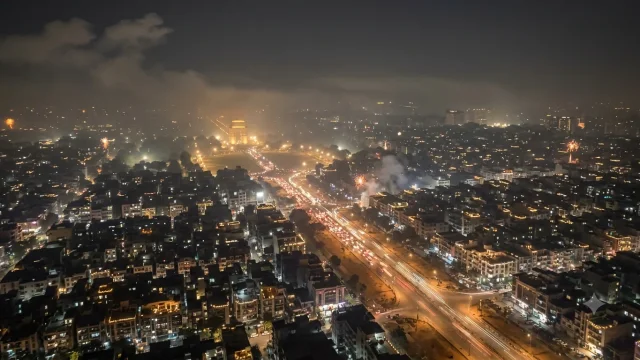
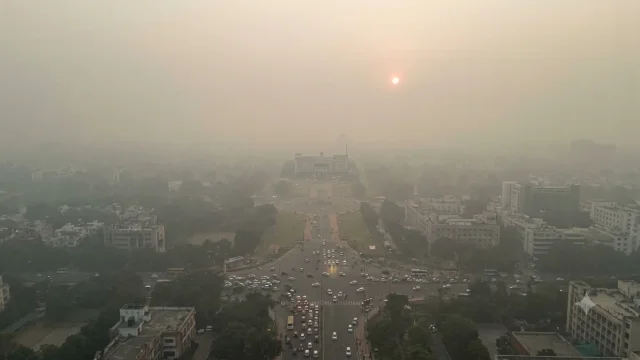
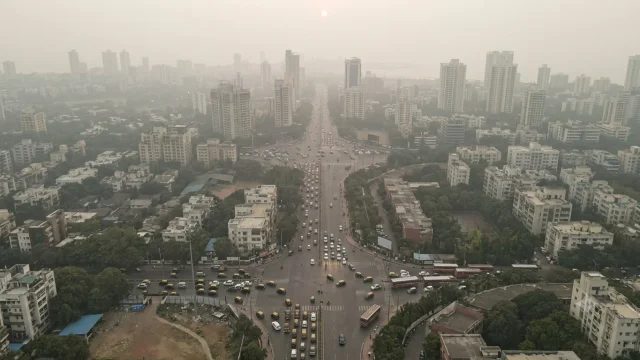
CPCB Defends AQI Reporting After Post-Diwali Data Gaps Spark Scrutiny
AQI Today, Data Gaps: CPCB defends official AQI methodology after post-Diwali data gaps; AAP’s Saurabh Bharadwaj alleges fraud and seeks CAQM action.
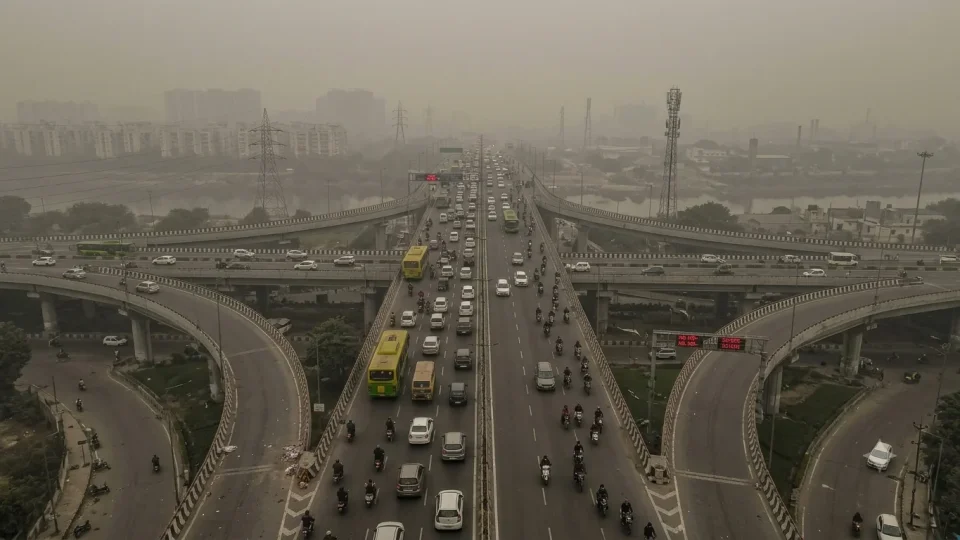
The Central Pollution Control Board (CPCB) has said that differences between its official Air Quality Index (AQI) and readings shown by private apps stemmed from different measurement methods, not under-reporting, after several Delhi monitoring stations showed missing data during the post-Diwali pollution spike. The board said the National Air Quality Index (NAQI) reflects 24-hour exposure and remains the appropriate basis for public-health advisories.
The clarification came after concerns over AQI readings being capped at 500, data gaps at some Delhi stations, and discrepancies with private platforms during and after Diwali. CPCB said particulate-matter analysers used when the NAQI was introduced in 2015 were calibrated for concentrations up to 1,000 micrograms per cubic metre; hourly readings beyond that calibrated range are treated as outside range and excluded from the 24-hour average. The board added that during extreme episodes, such as firecracker bursts, this can appear as a data gap at a particular station, though it said instruments and the monitoring network have advanced since 2015 and are being continuously upgraded.
Why It Matters
The episode has turned a technical explanation into a political and public-trust issue: CPCB maintains that its methodology is scientifically sound, while critics argue that excluding extreme readings during precisely the hours when pollution peaks may leave residents with an incomplete picture of exposure. The board’s statement does not dispute that readings above 1,000 micrograms per cubic metre were excluded; it frames that exclusion as a calibration and validation limitation rather than deliberate under-reporting.
AAP leader and Delhi legislator Saurabh Bharadwaj alleged on November 11 that he had written to the Commission for Air Quality Management (CAQM) with evidence of “AQI data fraud” by the Delhi government, and said he would meet the CAQM chairman at 2 PM to demand action. “We cannot allow this data fraud in the capital of this country,” he posted on X. His allegation remains an unverified political claim; CPCB’s response addresses methodology and data validation, not the specific allegation of fraud.
Despite writing to @CAQM_Official and providing evidence of AQI data fraud by the Rekha Gupta Govt, CAQM has chosen to close its eyes like Dhritarashtra. I will meet the CAQM Chairman today at 2 pm and demand action against this fraud. We cannot allow this data fraud in the capital of this country.
— Saurabh Bharadwaj (@Saurabh_MLAgk)
Official Response
In its official X post on November 10, CPCB said: “It is generally perceived that private apps show higher AQI,” but explained that private apps may show higher values during short pollution peaks, while NAQI continues to reflect exposure over the preceding 24 hours even after concentrations fall. The board described NAQI as a tool that converts complex pollutant data into a single index value, category and colour, intended to communicate likely health impacts from sustained exposure.
CPCB Comments on reporting of National Air Quality Index (NAQI) during the post-Diwali period. @byadavbjp @KVSinghMPGonda @moefcc @PIB_India @mygovindia https://t.co/5PvGg9jeIM
— Central Pollution Control Board (@CPCB_OFFICIAL)
“CPCB remains committed to transparent, scientific and reliable reporting of air quality and to continuous improvement of the monitoring network and methodology in consultation with experts,” the board said.
What Remains Unresolved
CPCB’s explanation clarifies why official AQI may differ from app-based readings, but it does not yet answer whether the monitoring network can capture and publicly report extreme short-duration concentrations above 1,000 micrograms per cubic metre. The Hindu reported that CPCB was considering steps to capture such peak PM levels after data from several government stations went missing for hours following Deepavali on November 8.
For residents, the practical question is whether the official 24-hour NAQI adequately communicates risk during acute spikes, even if it is methodologically appropriate for sustained-exposure advisories. CPCB’s position is that it does; the opposition’s contention is that the public deserves fuller visibility of peak pollution data.