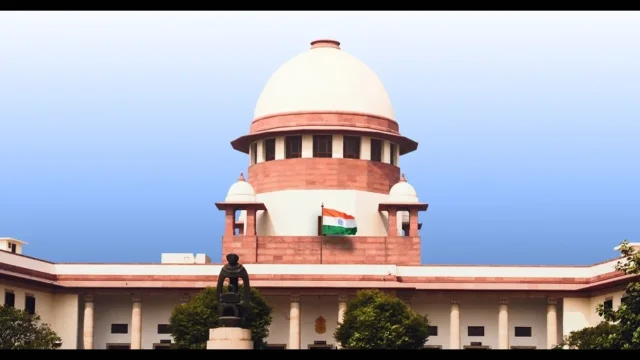
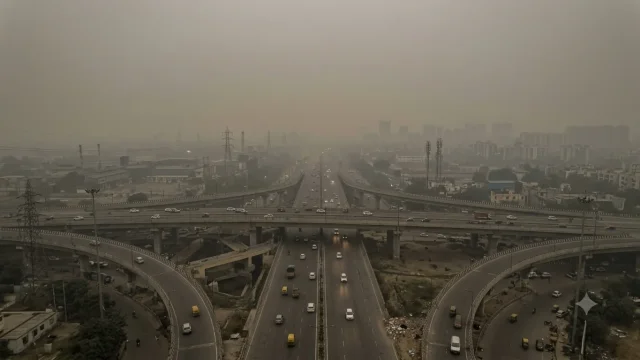
Delhi AQI on Diwali: Delhi’s AQI Nears Severe Mark on Diwali; GRAP Stage III Curbs Continue
Delhi AQI on Diwali: Delhi woke to toxic air on Diwali morning, November 8, as the city’s AQI reached 383, with several monitoring stations recording severe pollution levels.
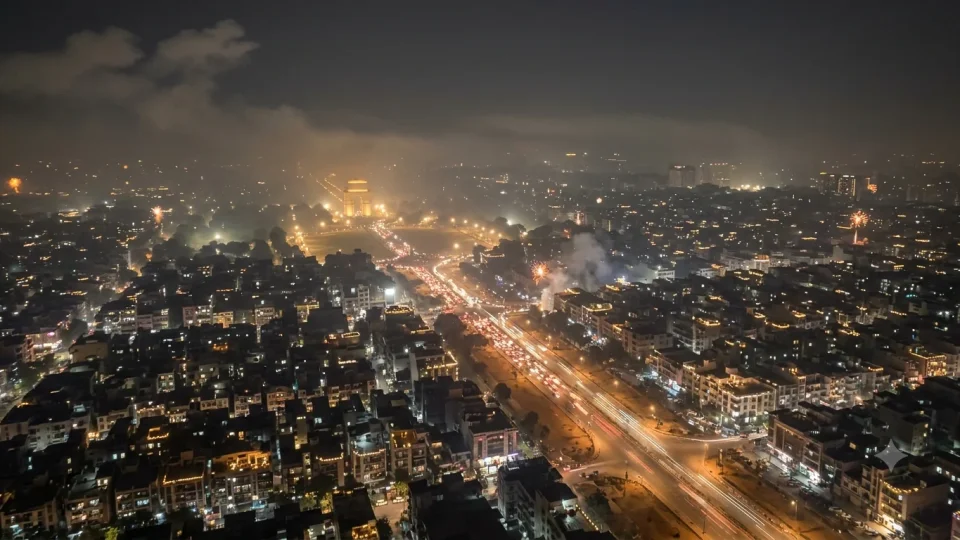
Delhi woke to toxic air on Diwali morning today, November 8, with the city’s overall Air Quality Index (AQI) at 383, just below the “severe” threshold, as 24 of its 54 monitoring stations crossed 400. The Commission for Air Quality Management (CAQM) has imposed Stage III curbs across Delhi-NCR, restricting polluting vehicles and dust-heavy construction while directing schools up to Class 5 to offer hybrid classes; the latest forecast says pollution will remain “severe” on November 8 and 9.
The Pollution Spike
The city’s air had shown only a marginal improvement before Diwali, easing from 382 on Friday to 369 on Saturday, but it remained close to the 401 mark that marks the “severe” category under the Central Pollution Control Board’s scale. By 8 am on Sunday, Jahangirpuri had recorded an AQI of 450, the highest in the city, followed by RK Puram at 448, according to CAQM's Sameer App.
Punjabi Bagh recorded 446, while Bawana and IIT Delhi were also in the severe category; ITO stood at 396, PTI reports. Of the 54 monitoring stations across Delhi, 24 were in the severe category, and the rest were in the “very poor” range.
CAQM’s Action Plan
The CAQM brought Stage III restrictions into force across Delhi-NCR on Friday in anticipation of deteriorating air quality during Diwali. Under the measures, Delhi and designated NCR districts have restricted BS-III petrol and BS-IV diesel four-wheelers, while older diesel goods vehicles also face curbs, with exemptions for essential goods and services.
1/4 The Sub-Committee on GRAP, #CAQM, decides to invoke the action plan as per Stage-III of the extant GRAP in the entire NCR with immediate effect
— Commission for Air Quality Management (@CAQM_Official) November 6, 2026
Dust-heavy work, including excavation and demolition, has been suspended. Projects that qualify for exemptions must still comply with dust-control rules.
CAQM further posted a guide pre-festival, in order to control the Diwali celebrations that contribute to the AQI spike.
This festive season, let's make every home a clean-air zone. https://t.co/xyaZMGneT6
— Commission for Air Quality Management (@CAQM_Official) November 7, 2026
Schools in Delhi, Gurugram, Faridabad, Ghaziabad and Gautam Buddh Nagar have been directed to offer both in-person and online classes up to Class 5 wherever online teaching is feasible. A separate order has capped in-person attendance at 50 per cent in state government and private offices in Delhi and five NCR districts until November 20, with exceptions for essential services and industrial establishments where remote work is not feasible.
Who is Most at Risk?
Health authorities have reportedly advised people to avoid strenuous outdoor exercise on high-pollution days. Children, older adults and people with heart or lung conditions have been asked to spend less time outdoors, while those who must go out are advised to use a well-fitting N95 mask to reduce exposure to fine particles.
Authorities have further advised people to seek medical help promptly if they develop breathlessness or chest discomfort.
What Lies Ahead
According to the Air Quality Early Warning System for Delhi, air quality is likely to remain in the severe category on November 8 and 9. The six-day outlook indicates that pollution levels will fluctuate between the severe and very poor categories.
Under the CPCB classification, an AQI between 0 and 50 is “good”, 51 to 100 “satisfactory”, 101 to 200 “moderate”, 201 to 300 “poor”, 301 to 400 “very poor”, and 401 to 500 “severe”. Light winds are keeping pollution suspended over the city for longer, while firecracker smoke has added to the existing pollution load.