Bromate to PAHs: What Went Wrong with Bisleri's Packaged Drinking Water?
FSSAI Bisleri Packaged Water Sanction: FSSAI has sanctioned prosecution against Bisleri International after two rounds of laboratory testing found its packaged drinking water unsafe, citing bromate levels and the detection of polynuclear aromatic hydrocarbons (PAHs).
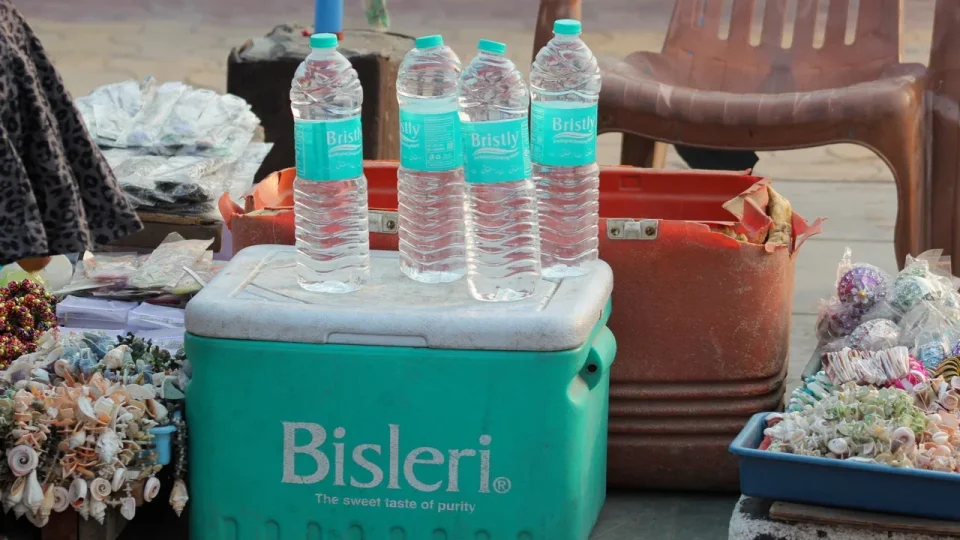
FSSAI Bisleri Packaged Water Sanction: The Food Safety and Standards Authority of India (FSSAI) has sanctioned prosecution against Bisleri International Pvt Ltd after a sample of its packaged drinking water was declared unsafe following two rounds of laboratory testing. The findings identified two chemical contaminants, bromate and polynuclear aromatic hydrocarbons (PAHs), raising questions about the company's water treatment and quality-control processes.
In a statement on November 22, FSSAI said a regulatory sample of packaged drinking water, other than mineral water, was collected from Bisleri's premises for analysis. The initial laboratory report found that the sample did not comply with prescribed bromate limits. Bisleri appealed against the findings, following which the sample was sent to a referral food laboratory. The second laboratory also declared it unsafe after detecting PAHs. FSSAI subsequently sanctioned prosecution against the company under the Food Safety and Standards Act, 2006, said the food authority of India.
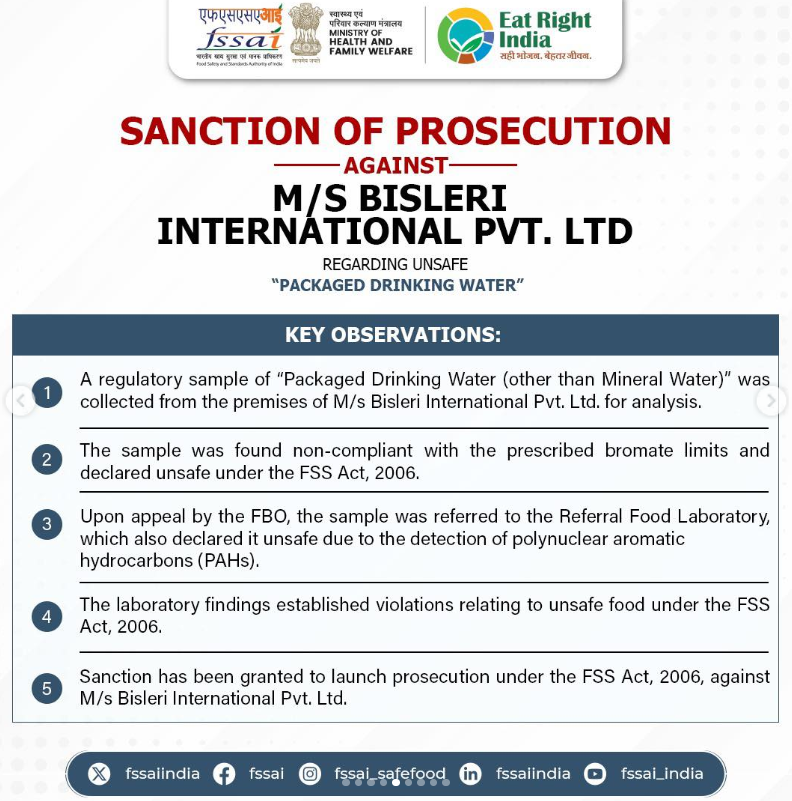
A response on the subsequent reports is awaited from Bisleri. But what are these chemicals, how can they enter drinking water, and why are they a concern?
What Are Bromates and PAHs?
Bromate is a chemical compound that can form during water treatment when ozone reacts with naturally occurring bromide in the source water. Ozonation is a commonly used disinfection method in which ozone is used to kill microorganisms.
However, the process can produce bromate if treatment conditions are not adequately controlled. Its formation depends on factors such as bromide concentration, ozone dosage and water pH.
The World Health Organization (WHO) identifies bromate as a potential human carcinogen and prescribes a guideline value of 0.01 milligrams per litre in drinking water. India's FSSAI standards also prescribe a maximum limit of 0.01 mg per litre.
PAHs, meanwhile, are a group of organic chemicals produced mainly through the incomplete burning of materials such as coal, oil and wood. They can enter water through industrial pollution, contaminated soil and certain materials used in water storage and distribution systems.
According to WHO, coal-tar coatings used in water distribution pipes can be a source of PAH contamination. Some compounds in this group are associated with cancer risks. India's FSSAI standards require PAHs to be non-detectable in packaged drinking water. However, FSSAI has not disclosed which specific PAHs were detected in the Bisleri sample or their concentrations. The source of contamination also remains unclear.
What Does This Mean for Packaged Water Safety?
The case comes amid changes in India's packaged drinking water regulations. In October 2024, the government removed the requirement for mandatory Bureau of Indian Standards (BIS) certification for packaged drinking water and mineral water.
FSSAI subsequently classified these products as high-risk food categories, bringing them under mandatory inspections and annual third-party food safety audits. A separate testing scheme for packaged drinking water and mineral water came into effect on January 1, 2026. It requires manufacturers to follow prescribed testing procedures and maintain quality-control records.
The Bisleri case raises questions about how effectively manufacturers are complying with these requirements and how regulators monitor chemical contamination.
What Happens Next?
FSSAI has sanctioned prosecution against Bisleri under the Food Safety and Standards Act, 2006. However, the sanction does not amount to a conviction. The company's liability will be determined through legal proceedings.
The regulator has not identified the manufacturing facility or affected batch, disclosed the concentrations of the detected chemicals, or clarified whether the product was withdrawn from the market.
The company's response and the laboratory reports will be important in establishing the extent and possible source of contamination. For consumers, the case highlights that packaged drinking water must meet chemical as well as microbiological safety standards. Purification alone does not guarantee safe drinking water; the quality of the source, treatment process, storage and regular testing also matter.