Kashmir's Last Local Terrorist Is Dead. What It Meant to Live with Militants Next Door
Last Local Militant Kashmir Killed: Surveys and rights reports show how civilians were coerced, suspected and caught in crossfire for decades. Security officials are not celebrating yet, as around 30 Lashkar operatives are reportedly still active and recruitment has risen after past declines.
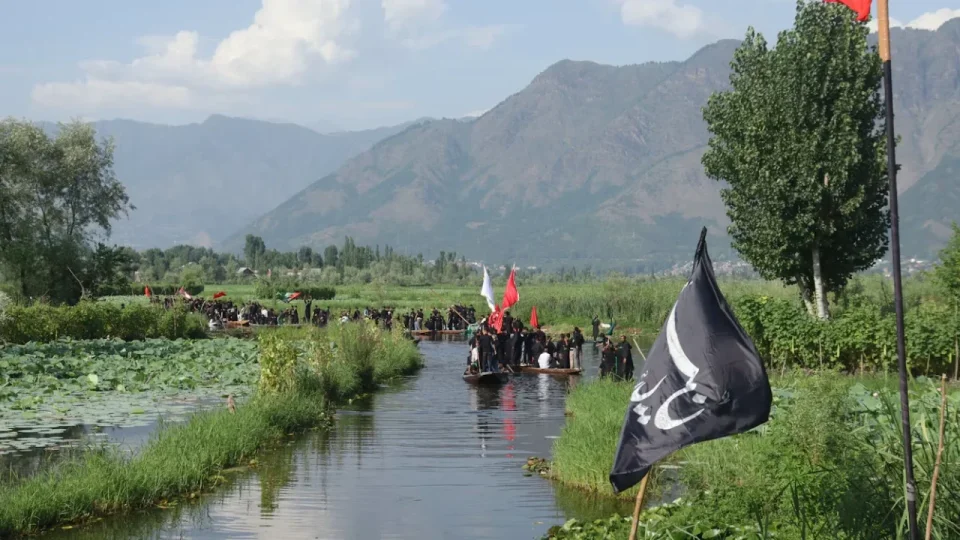
Last Local Militant Kashmir Killed: When Mohammad Lateef Bhat was killed in an encounter in South Kashmir's Kulgam district on November 18, it marked an unprecedented moment in Kashmir's history of militancy. For the first time since the insurgency began in 1989, there was reportedly no known active local terrorist left in the Valley. The 22-year-old Lashkar-e-Taiba (LeT) militant was believed to be the last active local terrorist in Kashmir. Security officials see his killing as significant, but the moment also raises another question: what has it meant for ordinary people to live among militants who were often from their own communities?
For nearly four decades, civilians in Kashmir have had to navigate a situation in which armed men could be their neighbours, acquaintances or people from nearby villages. Their local connections did not necessarily mean that residents supported them. Instead, proximity could make it difficult to refuse demands, avoid association or escape suspicion.
A 2006 survey by Médecins Sans Frontières (MSF), titled Kashmir: Violence and Mental Health, interviewed 510 people in two districts about their experiences of conflict since 1989. It found that 18.4% had been forced to provide shelter to combatants, while 33.7% had been forced to perform labour. Nearly half said they felt safe only occasionally or never.
Also Read: Ladakh's Democracy Gap: How Traditional Village Leadership Filled Part of the Void
Although the survey is nearly two decades old, it remains useful for understanding the coercive conditions that accompanied the earlier years of militancy. Its findings are not estimates of present-day experiences, but they document how the presence of armed combatants could turn civilian homes into part of the conflict.
The threat could also come from refusing to cooperate or being suspected of helping security forces. Human Rights Watch's 2006 report, Everyone Lives in Fear: Patterns of Impunity in Jammu and Kashmir, documented militants killing civilians accused of being police informers. In July 2004, militants killed Mohammed Shafi, his 22-year-old son and his 15-year-old daughter, reportedly suspecting him of being an informer.
That vulnerability was not confined to the early years of the insurgency. Freedom House's Freedom in the World 2025 report, which examines developments during 2024, noted that militant groups continued to kill suspected informers, public employees, pro-government politicians and civilians. It also documented kidnappings, extortion and intimidation. In November 2024, two Village Defence Guard members were abducted and killed by suspected militants in Kishtwar.
The report is a reminder that civilians could remain targets because of their perceived associations, occupations or refusal to cooperate with armed groups.
The wider conflict also affected people's sense of safety. A 2008 study published in Conflict and Health, based on the same 510 respondents interviewed by MSF, found that 85.7% had experienced crossfire and 82.7% had experienced round-up raids. These figures reflect exposure to the wider conflict, including security operations, rather than militant activity alone.
The psychological consequences were also considerable. A 2015 Kashmir Mental Health Survey conducted by MSF and the University of Kashmir, covering 5,519 adults across all 10 districts, estimated that 45% of adults showed symptoms of mental distress. These findings reflect the cumulative impact of prolonged conflict, rather than militancy alone.
Why Security Forces are not Celebrating Yet
Kashmir has witnessed a decline in militant numbers before, only for recruitment to rise again. In 2013, the number of active militants in the Valley reportedly fell below 80, with fewer than 35 locals, before militancy subsequently resurged, particularly in South Kashmir. Police sources have also told The Indian Express that around 30 Lashkar-e-Taiba operatives remain active in the Valley, many believed to be operating in mountainous forest areas. Officials remain concerned about foreign militants, their local support networks and the possibility of fresh recruitment.
Bhat's killing is particularly significant because police officials said he had been attempting to recruit young people and had already brought Umar Nisar Dar into militancy. Preventing another generation of local recruits from emerging remains a major challenge. For Kashmiris, however, the significance of this moment will lie in whether the absence of local militants brings greater security to everyday life. The history of militancy shows how vulnerable civilians could become when armed men operated within their own communities, making ordinary relationships, family associations and even a refusal to cooperate potential sources of danger.
The last known local militant may be dead. But the fear, insecurity and human cost experienced by those who lived through militancy cannot be measured by the number of armed men who remain.