Mumbai's Toxic Air Pushes Bombay High Court to Mull Over Blanket Ban on Firecracker
The bench of Justices Girish Kulkarni and Neela Gokhale observed that enforcement efforts had failed to prevent late-night firecracker use and suggested allowing only organised community displays or fire shows.
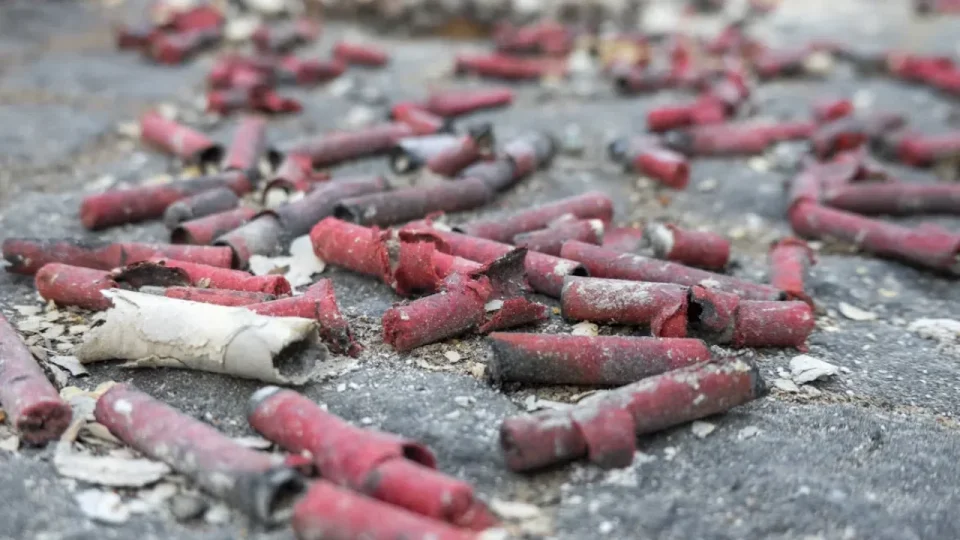
Mumbai Firecracker Ban Bombay High Court: Taking serious note of worsening air and noise pollution in Mumbai, the Bombay High Court has indicated that it is considering a complete ban on the manufacture and sale of firecrackers in the city, observing that existing restrictions have failed to prevent widespread violations. A division bench of Justice Girish Kulkarni and Justice Dr Neela Gokhale made the observations on Thursday (November 19), expressing concern over the continued bursting of firecrackers beyond permitted hours, damage to property and the impact of pollution on public health.
The court noted that despite restrictions and enforcement efforts by the police and civic authorities, people continued to burst crackers well past midnight, with violations reportedly continuing until 3–4 AM during Diwali. According to LiveLaw, the bench observed that the existing regulatory framework had proved inadequate, with the police struggling to enforce restrictions despite making efforts to control violations.
"It's important that the sale of firecrackers is banned in totality," the judges said, pointing to the damage caused to private properties and the deterioration in air quality during the festive period. The bench also questioned the lack of public awareness about the consequences of firecracker use, particularly for children, senior citizens and people who may be more vulnerable to air pollution.
"The city is breathing poisonous gases," the judges observed, adding that drastic measures might be necessary when existing restrictions were not producing the desired results.
Bombay High Court Questions Effectiveness of Existing Firecracker Restrictions
The court expressed concern that firecracker use was not limited to Diwali celebrations. People also burst crackers to celebrate cricket victories, election results and during public processions, often disregarding the inconvenience and potential harm caused to others. The judges said such activities raised concerns about the fundamental rights of other citizens, including their right to live in a pollution-free environment.
"Police are totally helpless, they did their best, but ultimately this is beyond control. We'll have to nip it in the bud and we'll have to ban all firecrackers in Mumbai," the bench said. The judges indicated that community firecracker displays or organised fire shows could be considered as alternatives to individual firecracker use.
The bench also acknowledged steps taken by the Municipal Commissioner to prohibit the sale of aerial firecrackers but said restrictions needed to address noise-producing crackers as well. It referred to more than 350 cases of property damage reported during Diwali, highlighting that the consequences of indiscriminate firecracker use extended beyond air pollution.
The court further noted that violations had continued despite earlier High Court directions, raising questions about the effectiveness of rules that authorities were unable to enforce.
Pollution, AQI and Public Health Concerns
The bench also questioned the deterioration in Mumbai's air quality during Diwali, referring to Air Quality Index (AQI) readings of 210 and 266 while discussing pollution levels recorded around November 9, the day of Diwali. Justice Gokhale said the deterioration in air quality could not be dismissed and urged the authorities to acknowledge the problem rather than remain in denial. "The fact that AQI shot up cannot be denied. How do we salvage it? Don't be in denial mode, accept it and figure out how to combat it. Even if we go by your own report, the AQI is exceeding," she observed.
The judges also questioned the affordability of individual solutions such as air purifiers, pointing out that not everyone could afford them and that citizens remained exposed to polluted air outside their homes. The bench further referred to reported deaths caused by firecracker-related injuries and said the authorities needed to consider the risks to human life while deciding whether the continued sale and availability of firecrackers could be permitted. It also raised concerns about the possible impact of firecracker use on aircraft safety.
Manufacturers' Right to Business Versus Citizens' Right to a Pollution-Free Environment
The court also questioned whether manufacturers' and sellers' commercial interests could take precedence over the health and safety of the wider population. The judges observed that manufacturers must consider the fundamental rights of citizens while exercising their right to conduct business. They also raised concerns about the ingredients used in commercially available firecrackers, questioning whether consumers were adequately aware of the potential hazards associated with these products. "If this is going to be a hazard for human life, State can't permit this," the bench observed, according to LiveLaw.
The judges stressed that reasonable restrictions were necessary in the public interest, particularly when firecracker use had resulted in pollution, property damage and loss of life. The bench also took exception to social media posts encouraging people to burst firecrackers, despite the pollution and safety concerns raised by the authorities and courts.
The Bombay High Court has reserved its order on the issue. Its observations indicate that it is considering stringent measures, including a possible complete ban on the manufacture and sale of firecrackers in Mumbai. However, no such blanket ban has been imposed through this hearing so far.