Is Parental Salary Enough Criteria to Decide Creamy-Layer? SC Rejects Centre's Plea
OBC Creamy Layer Ruling: SC gives Centre 8 weeks to implement OBC creamy-layer ruling; high parental salary alone won't deny quota benefits.
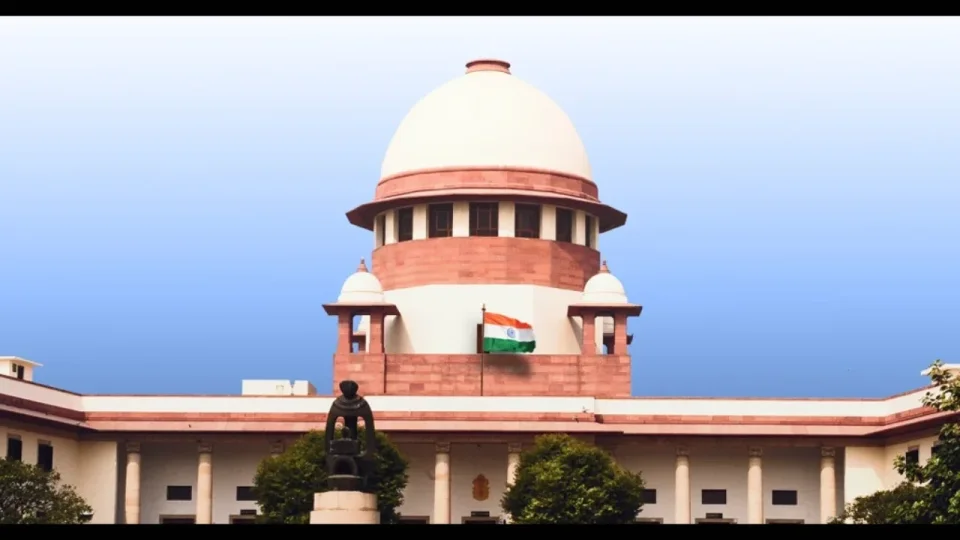
OBC Creamy Layer: The Supreme Court on Friday, November 6, reaffirmed that the salary or income of a parent employed in a public sector undertaking (PSU) or the private sector cannot, by itself, determine whether an Other Backward Classes (OBC) candidate falls under the creamy layer and is excluded from reservation benefits. The court also rejected the Centre's request to apply its March 11, 2026, judgment only prospectively, saying there was "no convincing or reasonable justification" for deferring its implementation.
A bench of Justices P S Narasimha and R Mahadevan said the earlier judgment had established the rights of the candidates involved in the case, entitling them to non-creamy-layer OBC benefits, including consequential placement and allotment of posts in the selection processes in which they had participated, reported PTI. The ruling came in the case of Union of India vs Rohith Nathan, which concerned the criteria for determining the creamy-layer status of OBC candidates whose parents work in PSUs or the private sector.
What Does The Supreme Court's OBC Creamy-Layer Ruling Mean?
In its March 11 judgment, the Supreme Court held that a parent's salary or income from employment in a PSU or the private sector cannot automatically be used to classify an OBC candidate as belonging to the creamy layer. Instead, authorities must consider the status and category of the parent's post, along with the prescribed income or wealth test under the 1993 Office Memorandum (OM), read with the relevant 2004 letter.
This means that a parent's high salary alone does not automatically disqualify an OBC candidate from reservation benefits. The nature and status of the parent's employment must also be taken into account under the applicable criteria. Reaffirming its earlier ruling on Friday, the bench said the March 11 judgment determined the rights of the candidates before it and entitled them to reservation benefits and the resulting placement and post allotment in the relevant recruitment processes.
Why Did The Supreme Court Reject The Centre's Plea?
The Centre had approached the Supreme Court seeking to make the March 11 judgment applicable only prospectively, arguing that its implementation in ongoing and past recruitment processes could create administrative complications. In its plea, the government invoked Article 142 of the Constitution, which empowers the Supreme Court to pass orders necessary to ensure complete justice.
The Centre argued that applying the judgment retrospectively could lead to "harsh and unjust unintended consequences" for employees and appointees who were not parties to the original litigation. It also warned of possible administrative disruption. However, the bench rejected the request, finding no convincing or reasonable justification to defer the implementation of its earlier judgment.
Will Existing Appointments And Seniority Be Affected?
While reaffirming the rights of the candidates involved in the case, the Supreme Court clarified that granting them the benefit of OBC non-creamy-layer reservation would not automatically affect the seniority of other employees or reopen recruitment processes and appointments that had already been concluded. The bench also referred to a December 20, 2016, letter issued by the Department of Personnel and Training (DoPT), which had clarified that selections under the Civil Services Examination (CSE) 2016 were subject to the outcome of appeals pending before the Supreme Court.
This clarification is significant because it establishes that the relief granted to the candidates in the case would not, by itself, disturb completed appointments or the seniority of other individuals.
What Happens To Other Candidates With Similar Claims?
The Supreme Court also addressed the position of candidates who believe they are similarly placed but whose cases are pending before courts, tribunals or other competent authorities. The bench said such claims could be considered independently on their merits by the relevant adjudicating body or authority. However, it clarified that it was not expressing any opinion on the merits of those individual claims. It said the interpretation of the 1993 Office Memorandum and the 2004 letter laid down in its March judgment could be taken into consideration while deciding such cases in accordance with law.
Therefore, the ruling does not automatically grant relief to every OBC candidate whose parent works in a PSU or the private sector. Their claims will have to be examined under the applicable criteria.
Supreme Court Extends Deadline For Implementation
The Supreme Court had originally given the government six months from March 11 to implement its judgment. On Friday, it extended the deadline by another two months, giving the Centre eight additional weeks from November 6. The bench also clarified that the government remains free to formulate its reservation and creamy-layer policy, provided it complies with the Constitution and the principles laid down by the court.
It declined, however, to prescribe a specific timeline for establishing equivalence between posts or consulting stakeholders while framing the policy. The bench said these matters fall within the domain of the executive and the legislature. The ruling thus reaffirms that parental salary alone cannot determine OBC creamy-layer exclusion while leaving the government with the responsibility of framing and implementing the relevant policy within the constitutional framework.