Beyond Stubble Burning: What Is Keeping Delhi’s Air Toxic This November?
Delhi AQI stayed ‘very poor’ as farm fires, traffic emissions and poor weather worsened air pollution, prompting continued GRAP Stage III restrictions across Delhi-NCR.
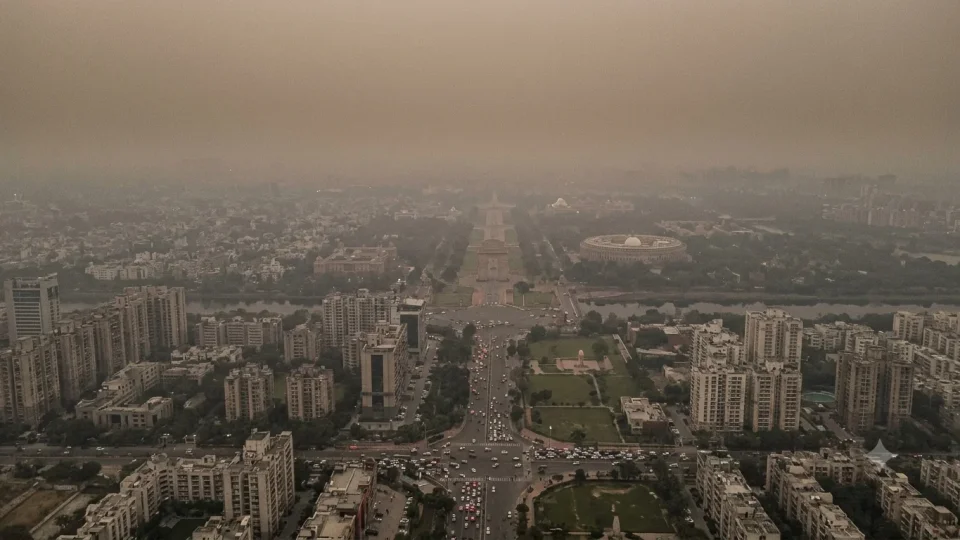
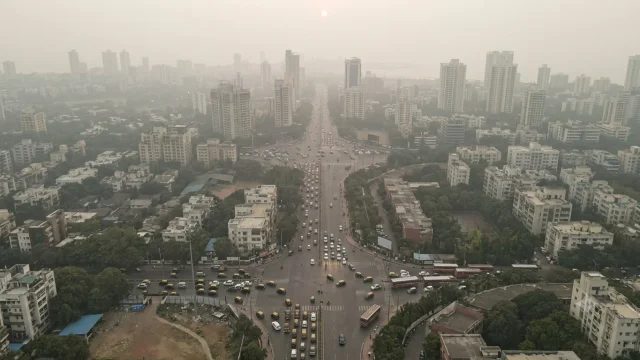
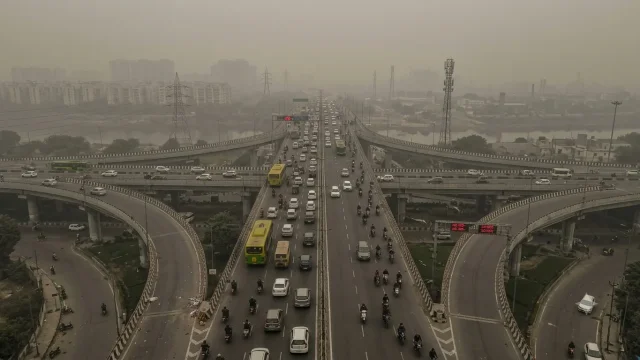
Delhi AQI Today: Delhi’s air quality remained in the ‘very poor’ category on November 15, with the city’s average Air Quality Index (AQI) at 350 and seven of its 54 monitoring stations recorded ‘severe’ pollution. The Commission for Air Quality Management (CAQM) has kept Stage III of the Graded Response Action Plan (GRAP III) in force across the National Capital Region (NCR), as authorities link the spike to poor pollutant dispersion, vehicle emissions and continuing stubble burning in Punjab and neighbouring states.
The immediate trigger is reportedly a combination of adverse winter weather, local emissions and farm fires. Delhi recorded a minimum temperature of 18.6 degrees Celsius on November 15, 5.1 degrees below the seasonal average, while relative humidity stood at 91 per cent at 8.30 AM, conditions that trap pollutants close to the ground.
Why the Pollution Rise
The CAQM has said Delhi’s pollution is being aggravated by “poor dispersion of pollutants” amid unfavourable meteorological conditions. As per an earlier India Meteorological Department and Indian Institute of Tropical Meteorology forecast of a further slide into the ‘severe’ category, GRAP Stage III across the NCR was invoked.
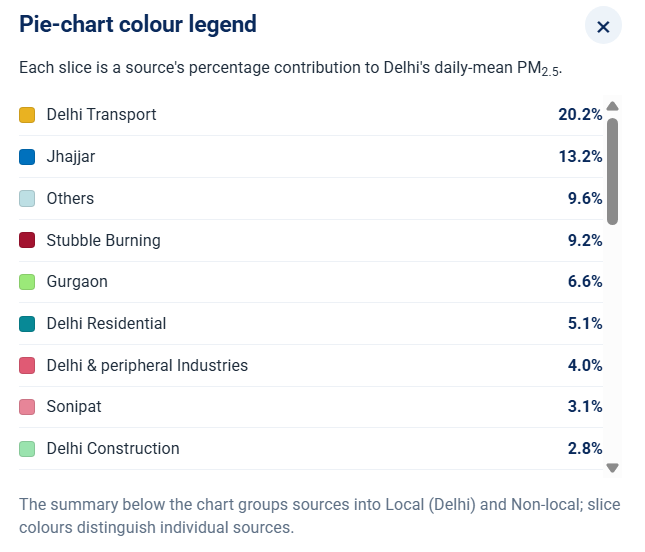
Transport was the largest identified contributor to Delhi’s pollution, accounting for about 20 per cent under the Decision Support System, followed by stubble burning at nearly 13 per cent. The figures indicate that Delhi’s crisis cannot be attributed to farm fires alone: road traffic, construction dust, industry and weather all reportedly shape the capital’s air.
Farm Fires Remain a Flashpoint
Satellite data recorded 537 farm-fire incidents across six states on November 14, with Madhya Pradesh reporting the highest number at 246, followed by Punjab at 214, Uttar Pradesh and Rajasthan at 33 each, and Haryana at 11. Between September 15 and November 13, 11,342 stubble-burning incidents were detected across these states by the Indian Agricultural Research Institute’s CREAMS Laboratory, according to India Today.
Punjab has emerged as the political centre of the dispute. India Today reported 5,835 stubble-burning incidents in the state, with fires confirmed at 2,442 sites; Patiala alone recorded 391 cases, of which 225 were confirmed. The state has reportedly imposed environmental compensation on 2,152 farmers, levied fines exceeding Rs 1.08 crore and registered 1,834 FIRs.
The CAQM has deployed flying squads in 34 districts of Punjab and Haryana from October 1 to November 30 to monitor and prevent paddy-stubble burning. On November 4, its chairperson, Rajesh Verma, reviewed enforcement with senior Punjab officials and directed that nodal officers be held accountable for monitoring failures.
To curb paddy stubble burning, Sh. Tarun Kumar Pithode, Member Secretary, CAQM, visited Faridkot and Moga and Ludhiana to review district preparedness for paddy straw management. Visit was marked by interaction with farmers practising in-situ stubble management. @moefcc https://t.co/vcyXcKTWbq
— Commission for Air Quality Management (@CAQM_Official) November 14, 2026
What the Numbers Show
Delhi’s average AQI was 350 on November 15, according to the Central Pollution Control Board’s Sameer app. Of 54 stations reporting, 47 were in the ‘very poor’ category and seven in the ‘severe’ category; IIT Delhi recorded the highest reading at 428, as per several reports, followed by ITO at 414.
|
AQI band |
CPCB classification |
|
0–50 |
Good |
|
51–100 |
Satisfactory |
|
101–200 |
Moderate |
|
201–300 |
Poor |
|
301–400 |
Very poor |
|
401–500 |
Severe |
The city recorded an average AQI of 367 on November 14, marginally lower than 373 on November 13. On November 14, 17 of 59 stations were ‘severe’, 38 ‘very poor’, three ‘poor’ and one ‘moderate’; PM10 was the predominant pollutant.
Restrictions in Force (Since November 1)
CAQM invoked Stage II of GRAP on November 2, when Delhi’s average AQI was 324, and Stage III on November 6, when it rose to 382. Although the city’s average reading has since eased to the ‘very poor’ range, The Hindu reported that Stage III curbs remain in force on November 15.
Stage III is designed for ‘severe’ air quality, with an AQI of 401–450, and adds restrictions to the measures already in force under Stages I and II. CAQM’s precautionary order for November 5–20 also restricts dust-generating demolition and outdoor construction across the NCR, while directing offices in Delhi and selected NCR districts to operate with up to 50 per cent physical staff attendance, with the remainder working from home.
Enforcement Intensifies
Union Environment Minister Bhupender Yadav reviewed pollution-control measures and ordered the closure of 191 polluting industrial units, while authorities were asked to target 233 traffic hotspots across northern states, according to India Today. The minister had earlier said the CAQM was continuously tracking wind direction, wind speed and air movement, and coordinating with state governments on enforcement.
Reviewed measures to intensify action against air pollution in Delhi-NCR. Asked NCR states to ensure strict, time-bound and coordinated ground-level enforcement. 🔗https://t.co/F9FRSaQCr0 https://t.co/wtqKCirXB2
— Bhupender Yadav (@byadavbjp) November 14, 2026
The CAQM has also taken up stubble burning directly with Punjab. Its November 4 meeting with the state’s environment and agriculture secretaries, deputy commissioners and police chiefs followed what it described as a “very high number of fire counts” in Punjab, and it directed intensified monitoring and enforcement.
What Happens Next
The India Meteorological Department has forecast cloudy skies with light rain or drizzle in Delhi, with a maximum temperature of 27 degrees Celsius. The Air Quality Early Warning System expects a slight improvement over the next two days, with PM2.5 and PM10 concentrations likely to decline.
But the relief may be limited. CAQM’s own assessment warns that Delhi-NCR faces a recurring early-to-mid-November pollution pattern, and its Stage III order was issued precisely because forecasts indicated that air quality could deteriorate further despite existing restrictions.