CAQM Orders District-Level Air Pollution Plans for NCR, Sets 15–20% Reduction Target for 2027
Delhi Pollution: CAQM has brought districts, municipal bodies and named officers into the pollution fight, requiring measurable action on vehicles, dust, industry and waste.
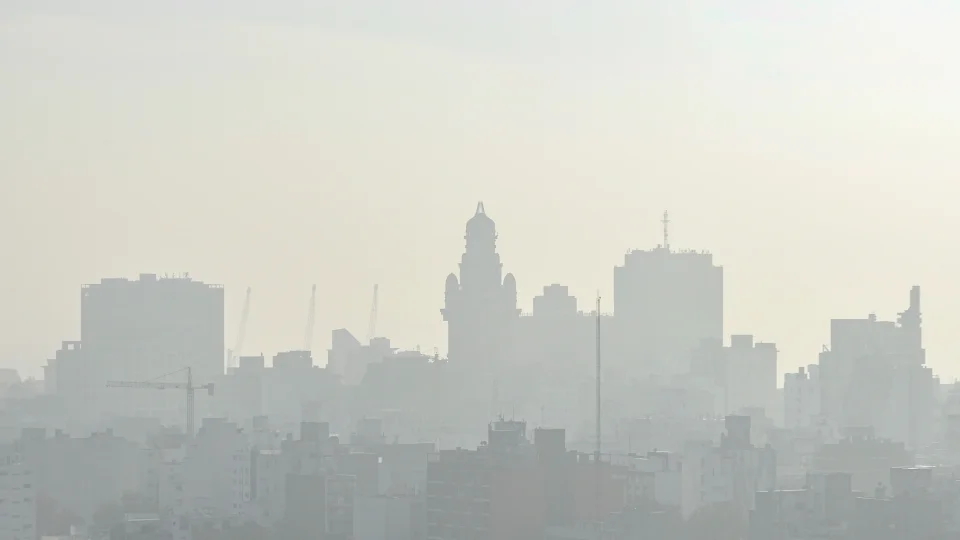
Delhi Pollution: The Commission for Air Quality Management (CAQM) has directed Delhi, Haryana, Uttar Pradesh and Rajasthan to prepare measurable 2027 action plans at state, district and municipal levels, with named officers accountable for cutting annual average pollution by 15–20%.
In a November 20 Update, CAQM titled “Preparation of the Annual Action Plan-2027 for abatement of air pollution in the NCR”, said the Annual Action Plan-2027 must include clearly defined sector-wise actions, measurable targets, timelines and monitoring parameters. The plans are intended to reduce annual average AQI, PM2.5 and PM10 levels by 15–20% compared with 2026. The order was issued on Saturday (November 21).
What CAQM has Ordered
CAQM has expanded air-quality planning beyond state governments and municipal corporations by introducing District-Level Action Plans. The commission said pollution control requires sustained, coordinated action on an “airshed” basis, rather than isolated interventions within individual jurisdictions.
The plans must be prepared and monitored through CAQM’s online portal, pavan.caqm.nic.in. Formats for plans at all three levels: state, district, and municipal corporation, will be made available on the portal.
Measurable Targets
The 2027 plans must target an overall reduction of 15–20% in annual average air pollution levels compared with 2026, with specified targets that cover AQI, PM2.5 and PM10 concentrations.
The commission has identified the major pollution sources to address: vehicular pollution, road dust, industrial emissions, construction and demolition waste, municipal solid waste, crop-residue management, diesel generator sets, crematoria, and other local sources.
Named Accountability
CAQM has required that every action point identify the department or agency responsible for implementation. It must also designate a specific officer, with the officer’s name, designation and contact details listed against the action to ensure clear accountability.
The commission has asked state governments to direct municipal corporations, deputy commissioners, district magistrates, district collectors and other agencies to begin preparatory work well in advance. The aim is to ensure that the 2027 plans are finalised and submitted by the December 5 deadline.
Order Has Been Issued to Whom
The letter has been sent to the environment secretaries of Delhi, Haryana, Uttar Pradesh and Rajasthan, as well as the state pollution control boards. Copies have also been sent to deputy commissioners, district magistrates, district collectors, chief secretaries and municipal authorities across the NCR.
In Delhi, the recipients include the Municipal Corporation of Delhi, the New Delhi Municipal Council and the Delhi Pollution Control Committee. In Haryana, Uttar Pradesh and Rajasthan, the list includes municipal corporations, development authorities and local bodies in cities including Gurugram, Faridabad, Sonipat, Panipat, Rohtak, Karnal, Ghaziabad, Meerut, Noida, Greater Noida, Alwar, Bharatpur, Bhiwadi and Neemrana.
Requirement |
CAQM Directive |
|
Pollution-reduction target |
15–20% reduction in annual average pollution levels compared with 2026. |
|
Indicators |
AQI, PM2.5 and PM10. |
|
Planning levels |
State, district and municipal corporation. |
|
Accountability |
Each action must name a department or agency, and a nodal officer. |
|
Deadline |
Plans to be finalised and submitted by December 5, 2026. |
Also Read: Delhi’s Pollution Fund Piles Up: Over Rs 1,153 Crore Lies Unspent as Capital Chokes on Poor Air
Additional Measures
CAQM said additional action points for the 2027 plans, over and above those included in the 2026 plans, will be communicated separately to states, districts and municipal corporations in due course. It also clarified that actions relating to development authorities in urban areas will form part of the municipal corporations’ action plans.
The directive signals a shift from activity-based reporting towards outcome-based monitoring. Authorities will now have to demonstrate how specific interventions contribute to measurable improvements in air quality, rather than merely listing pollution-control measures.