Ken-Betwa Project: As Madhya Pradesh Announces ₹202.5 Crore Package, Protesters Say Their Rights Remain Unaddressed
Tribal communities and farmers have continued their protest against the Ken-Betwa Project despite Madhya Pradesh announcing a ₹202.5 crore rehabilitation package, saying it fails to address concerns over displacement, land rights and livelihoods. The standoff underscores the broader debate over development and indigenous rights in India. By Mahima Katal New Delhi, July 11: The Madhya Pradesh government has announced an additional rehabilitation package worth ₹202.5 crore (approximately USD...
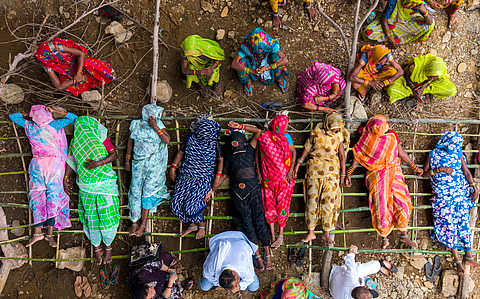
Tribal communities and farmers have continued their protest against the Ken-Betwa Project despite Madhya Pradesh announcing a ₹202.5 crore rehabilitation package, saying it fails to address concerns over displacement, land rights and livelihoods. The standoff underscores the broader debate over development and indigenous rights in India. By Mahima Katal New Delhi, July 11: The Madhya Pradesh government has announced an additional rehabilitation package worth ₹202.5 crore (approximately USD 24 million) for families affected by the ambitious Ken-Betwa River Linking Project. However, tribal communities and farmers leading a week-long Jal Satyagraha, a non-violent protest in which demonstrators stand in water, say the financial relief fails to address their core concerns over displacement, land rights and livelihood.
Tribal residents stage a symbolic pyre protest against the Ken-Betwa River Linking Project in Madhya Pradesh's Bundelkhand region. File pic
(Credit: DTE)
The protests entered their sixth day on Thursday in Chhatarpur district, where members of tribal communities and farmers affected by the Ken-Betwa Link Project, as well as the Majhgawan, Runjh, Neguwa and NTPC projects, continued their demonstration under the banner of the Jai Kisan Sangathan. The movement is also accompanied by an indefinite hunger strike and a Mitti Satyagraha, another form of peaceful protest rooted in India's tradition of civil disobedience.
Government announces enhanced rehabilitation package
Former Madhya Pradesh cabinet minister and Panna legislator Brijendra Pratap Singh said the state government had approved a special rehabilitation package for families displaced by the Majhgawan, Runjh and Ken-Betwa projects.
Under the revised package, eligible displaced families will receive a one-time rehabilitation grant of up to ₹12.5 lakh (approximately USD 14,500), in addition to benefits already available under existing rehabilitation policies.
The announcement comes amid mounting public attention on the protests and growing demands for greater transparency in the rehabilitation process.
Protesters demand more than financial compensation
Despite the government's announcement, protesters remain unconvinced.
Standing waist-deep in river water as part of the Jal Satyagraha, demonstrators argue that compensation alone cannot replace ancestral lands, forests, agricultural livelihoods and cultural ties that have sustained tribal communities for generations.
The protesters allege that local authorities have failed to adequately consult affected communities and have not fully addressed concerns relating to rehabilitation, resettlement and long-term livelihood security.
They further claimed that the administration discontinued the supply of drinking water at the protest site, forcing women, children and elderly participants to consume muddy river water.
According to the protesters, several participants have fallen ill after drinking contaminated water.
The administration has denied the allegations.
Administration says demands have been addressed
Chhatarpur District Collector Parth Jaiswal maintained that there are no unresolved issues.
According to the district administration, officials from neighbouring Panna district have been directed to engage with the affected families, and the government believes that all legitimate demands raised by the protesters have already been addressed through existing rehabilitation measures and the newly approved package.
A wider debate over development and indigenous rights
The protests highlight a recurring challenge in India's large infrastructure and river-linking projects: balancing developmental objectives with the constitutional and legal rights of indigenous communities.
The Ken-Betwa River Linking Project, one of India's flagship inter-basin water transfer initiatives, is intended to improve irrigation, drinking water availability and hydropower generation across parts of Madhya Pradesh and Uttar Pradesh. Supporters argue that the project will boost agricultural productivity and address chronic water scarcity in the Bundelkhand region.
However, critics contend that the project will result in the displacement of thousands of people, including members of Scheduled Tribes, while also affecting forest ecosystems and biodiversity.
Rights groups have consistently argued that rehabilitation must extend beyond monetary compensation to include secure resettlement, restoration of livelihoods, protection of community resources and meaningful participation of affected people in decision-making.
Development versus dignity
As negotiations continue, the protests underscore a broader policy question confronting infrastructure development in India: whether economic growth can be pursued without compromising the rights and dignity of communities that bear its social and environmental costs.
For the protesters standing in the waters of Chhatarpur, the newly announced rehabilitation package is not the end of the conversation. They insist that until their concerns over displacement, rehabilitation and community rights are meaningfully addressed, their peaceful resistance will continue.