Kolkata Trams That Saw Partition, Poverty, Refugee Influx Are Rolling Into New Era
Kolkata's iconic trams, once flashpoints during major protests, are set for a modern revival with air-conditioned coaches and renewed purpose.
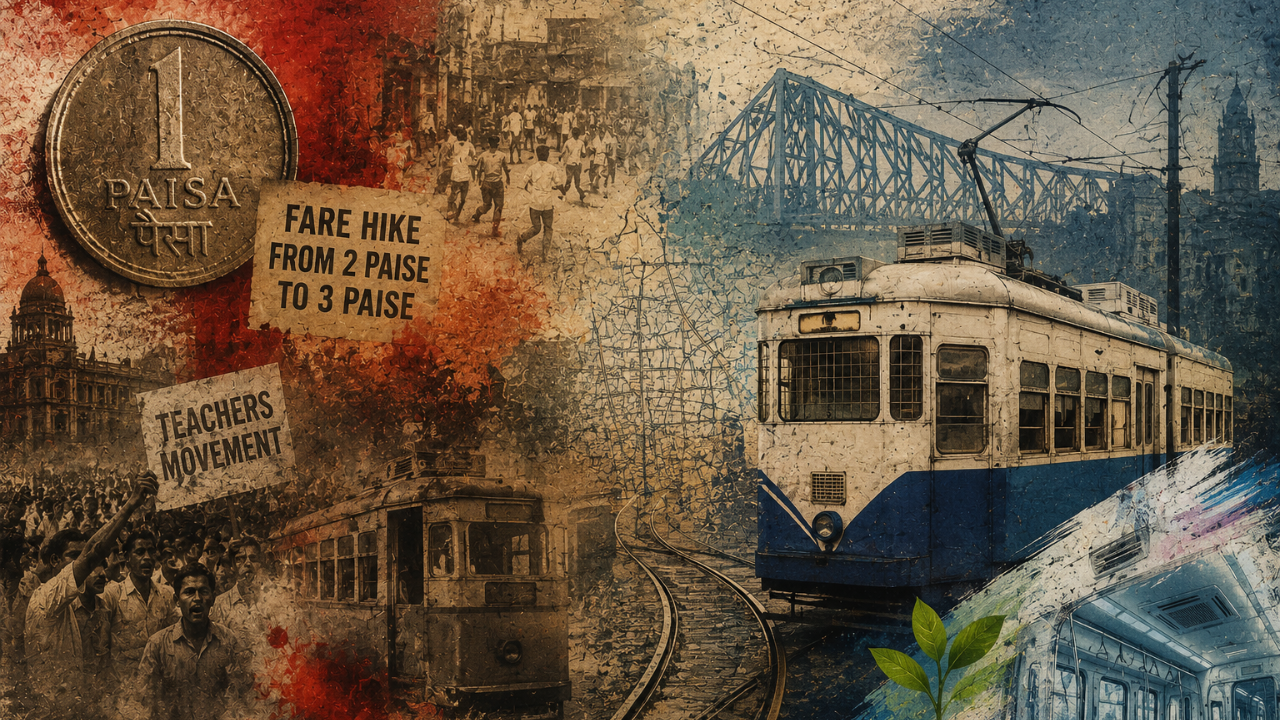
Kolkata's iconic trams, once flashpoints during major protests, are set for a modern revival with air-conditioned coaches and renewed purpose.
By Pranjal Gupta
New Delhi, July 3: From witnessing the Quit India Movement to the Partition of India, Bengal, and the riots that preceded it, Kolkata's trams have borne the weight of history. Now, they are set to continue running through the city's streets in a new avatar. The newly elected government in West Bengal has revealed its plans to renovate the trams in Kolkata, bringing them up to modern standards with improved facilities.
Bengal Transport Minister Arjun Singh on Wednesday said the new trams will be equipped with air conditioning to make daily travel more comfortable. He revealed that the government is planning to explore development opportunities in inland waterways transport and a port along the Ganges to strengthen the state's transport ecosystem. Hence, the renovation.
Trams have been a reflection of how people lived in Kolkata, especially during the 1950s, 1960s, and 1970s. It was also a time when trams became the target of many revolts in the state.
In 1953, the Calcutta Tram Company (CTC) hiked the fare by 1 paisa (from 2 paisa to 3 paisa). It received massive opposition, given that the state was already dealing with extreme poverty after Independence, as millions of refugees came to India through Bengal during the Partition, as per historical overviews compiled by Sahapedia.
An abstract illustration depicts Kolkata's historic trams, recalling decades of protests before their planned revival with modern infrastructure and amenities. (AI-Generated Image)
Trams Didn't Carry People Through the City, But Also Protests
By the final days of the 1954 teachers' movement, the city witnessed the same fierce attacks on transit vehicles. When the food movement erupted, the trams were targeted once more, a haunting rhythm of destruction that would repeat across the 1960s. Buses, too, were swept into the fury and reduced to ashes.
Yet, the trams, then the very lifeblood of the city's commute, bore the heaviest brunt of the rage. The tracks reached far deeper into the urban fabric than they do today, turning the rebellion into something hyper-local yet universally bound. To join the revolution, a citizen didn't need to march across the city; one could simply hurl a brickbat at a passing tram and retreat instantly into the safety of their own para.
The sprawling tracks ensured that resistance was never confined to a single, distant square—it meant a rebellion could spark everywhere at once, running wild down every street of Kolkata.
British Revives Their Own Tracks
In the 1950s, British management was fighting bloody street battles in Kolkata to protect profit margins on a colonial tram network while simultaneously dismantling its own networks at home. Today, the UK treats permanent light rail infrastructure as an essential cornerstone of sustainable, high-capacity urban design.
Probably because Britain realised that the very infrastructure they once weaponised for control across the globe is the exact lifeline they now desperately need to rescue their own ageing, exhausted towns.
In 2025, the United Kingdom is set to invest £15.6 billion to strengthen its transport system.
"Record investment in urban transport infrastructure to support our city regions: £15.6 billion investment for public transport systems through the Transport for City Regions settlements, which will include enabling construction to start on West Yorkshire's Mass Transit system—a more than double real-terms increase in capital spending on local transport in city regions by 2029–30 compared to 2024–25," read a press release from the UK government.