Mamata's Last Political Salvo As Chief Minister
The Slate Bureau Trinamool Congress supremo Mamata Banerjee refusing to tender her resignation is probably her last political salvo as Chief Minister. The decision not to tender a formal resignation to the Governor after losing to the Narendra Modi-led NDA in the crucial assembly elections would hardly precepitate any constitutional crisis but would surely keep alive her party's allegation of 'vote chori' with disenfranchisement of her voters by the Election Commission for some more time. ...
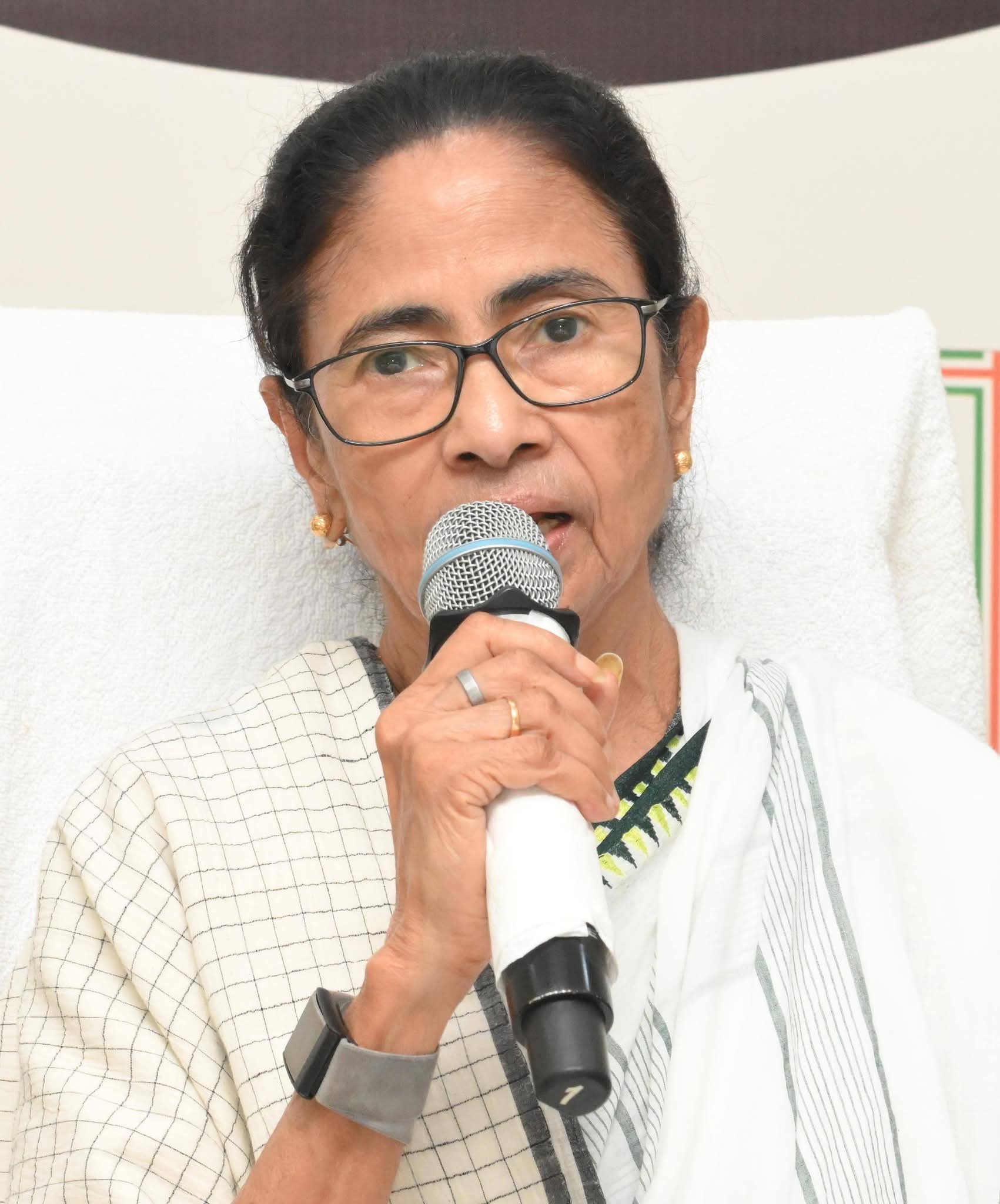
The Slate Bureau
Trinamool Congress supremo Mamata Banerjee refusing to tender her resignation is probably her last political salvo as Chief Minister.
The decision not to tender a formal resignation to the Governor after losing to the Narendra Modi-led NDA in the crucial assembly elections would hardly precepitate any constitutional crisis but would surely keep alive her party's allegation of 'vote chori' with disenfranchisement of her voters by the Election Commission for some more time.
The Trinamool Congress which raised the issue of 'vote chori' in the run up to the election is now highlighting marginal vote share statistics converting into disproportionate number of seats as vindication of its claims to discredit the victory of the ruling coalition at the Centre. It is after 49 long years that a political party ruling at the Centre would be heading the government in West Bengal which was ruled by the Left and subsequently by the Trinamool Congress.
Mamata, who fought many a political battles taking common people along on the streets before taking over as the Chief Minister of West Bengal after piercing through the 34-year-long strong bastion of the Left, continued her style of politics even after assuming power. She often took to the streets, staged dharnas, personally appeared in courts, defended her officers by personally resisting raids by central agencies and stirred protests against the actions and policies of the Narendra Modi government at the Centre. As she is set to demit office after ruling Bengal for 15 years, this could be her last political salvo as Chief Minister to discredit the electoral victory registered by NDA.
The Trinamool Congress leader is aware that her decision would not make much of a difference as the term of the state assembly ends on May 7. But it is her political statement rather than an attempt to create a constitutional crisis. She wants to remain in the game knowing full well that the game for now is over.
Article 164 of the Constitution makes no distinction between a Chief Minister and 'other' ministers. They all hold office during the pleasure of the Governor.
The Governor can remove her before the new government is formed but is unlikely to do so in normal circumstances as there would be a governance vacuum.
But if Mamata starts taking policy decisions at this hour, the Governor can invoke Article 356 of the Constitution till new government is formed. The state will be under the President's rule for a brief period with the Governor exercising all powers.
Refusing to resign is against the convention but such conduct can be dealt with under the provisions of the Constitution even during the term of legislative assembly. For instance, if a Chief Minister fails to prove majority, the Governor can appoint a new Chief Minister irrespective of the fact that the CM failing to prove majority on the floor of the House refuses to resign.
The party leaders said it was a symbolic protest against manipulation of the assembly poll results and signalled a prolonged political and legal battle ahead.
Mamata is known for her confrontationist approach and she continued with her style of politics even while being the Chief Minister. She took on the Election Commission for the special intensive revision of electoral rolls being conducted by it before the legislative assembly election. She claimed that the commission was working at the behest of the BJP-led government at the centre and her voters were being targetted. She took to judicial recourse and even appeared before the Supreme Court in person to make submissions.
Mamata's latest stand against submitting resignation after the electoral debacle has been criticized even by her supporters as it is against convention. But many of her party colleagues see it as a symbolic protest which is permitted in democracy.
The BJP has won 207 seats in the 294-member assembly while the ruling Trinamool was reduced to 80.