Modi–Takaichi Summit Signals India-Japan Shift Towards Economic Security and Strategic Technology
By Mahima Katal Prime Minister Narendra Modi's summit meeting with Japanese Prime Minister Sanae Takaichi on Thursday reflects the growing transformation of the India-Japan partnership from a traditional economic relationship into one centered on economic security, technological resilience, and strategic cooperation in the Indo-Pacific. The leaders focused on strengthening collaboration in semiconductors, critical technologies, resilient supply chains, artificial intelligence, critical...
By Mahima Katal
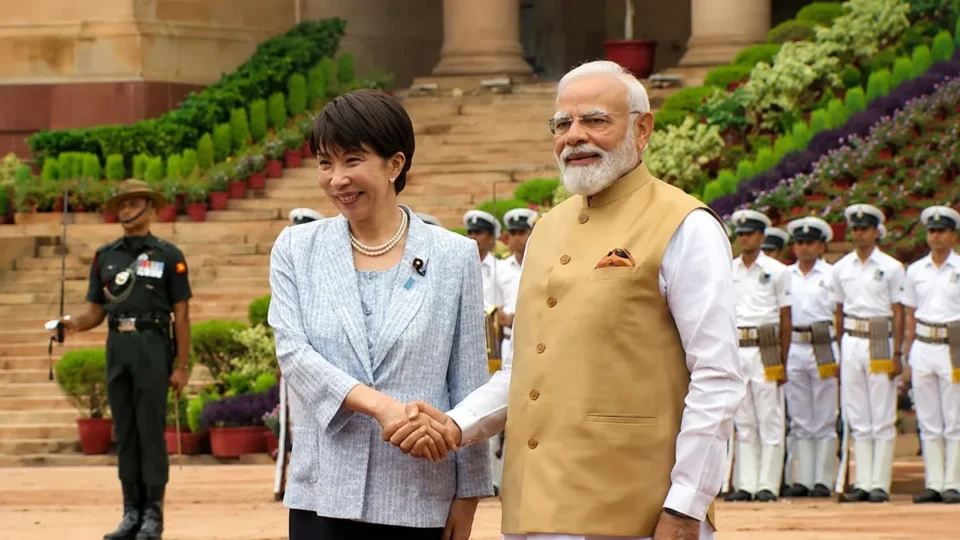
Prime Minister Narendra Modi's summit meeting with Japanese Prime Minister Sanae Takaichi on Thursday reflects the growing transformation of the India-Japan partnership from a traditional economic relationship into one centered on economic security, technological resilience, and strategic cooperation in the Indo-Pacific.
The leaders focused on strengthening collaboration in semiconductors, critical technologies, resilient supply chains, artificial intelligence, critical minerals, and pharmaceuticals—sectors that have become increasingly important amid global geopolitical tensions and supply chain disruptions.
The expected adoption of a Joint Declaration on Economic Security Cooperation marks a significant development. Economic security has emerged as a central pillar of international diplomacy as countries seek to reduce dependence on single-source suppliers, particularly in strategic sectors such as semiconductor manufacturing and rare earth minerals. For India, deeper cooperation with Japan aligns with its ambition to become a trusted manufacturing and technology hub under initiatives such as Make in India and the Semiconductor Mission.
The anticipated joint statement on artificial intelligence also reflects the expanding technological dimension of bilateral ties. With AI increasingly shaping economic competitiveness, governance, cybersecurity, and defence, closer cooperation could facilitate research partnerships, talent development, regulatory dialogue, and responsible AI deployment.
Beyond technology, discussions on critical minerals and pharmaceuticals carry strategic significance. Critical minerals are indispensable for electric vehicles, renewable energy infrastructure, and advanced electronics. Japan has long sought to diversify supply chains away from excessive dependence on China, while India aims to develop domestic processing capabilities and secure access to mineral resources.
The summit also highlights the broader geopolitical convergence between New Delhi and Tokyo. Both countries share concerns about maintaining a free, open, and rules-based Indo-Pacific and have steadily expanded cooperation in defence, maritime security, infrastructure, and regional connectivity through platforms such as the Quad.
India and Japan elevated their relationship to a Special Strategic and Global Partnership in 2014, and bilateral engagement has since broadened considerably. Today, more than 70 institutional dialogue mechanisms support cooperation across trade, investment, science and technology, defence, education, and cultural exchanges.
As the two nations prepare to celebrate 75 years of diplomatic relations in 2027, the Modi–Takaichi summit suggests that the partnership is entering a new phase—one where economic resilience, technological innovation, and strategic coordination are likely to define the future trajectory of India-Japan relations.