Political Unity On Security Is The Secret Weapon Every Indian Should Demand
The Editorial Board In an increasingly multipolar world marked by geopolitical tensions, economic uncertainties, and hybrid threats, nations in the Global South—particularly emerging economies like India, Brazil, Indonesia, and South Africa—face unique challenges. These countries often contend with limited military budgets, developmental priorities, and external pressures from great powers. Amid such realities, the most potent strategic asset is not always advanced weaponry or...
The Editorial Board
In an increasingly multipolar world marked by geopolitical tensions, economic uncertainties, and hybrid threats, nations in the Global South—particularly emerging economies like India, Brazil, Indonesia, and South Africa—face unique challenges.
These countries often contend with limited military budgets, developmental priorities, and external pressures from great powers.
Amid such realities, the most potent strategic asset is not always advanced weaponry or alliances, but something more fundamental: domestic consensus on national security issues.
When political parties, civil society, and institutions align on core threats and responses, it sends a powerful signal of unity to adversaries, deterring aggression and enabling effective power projection.
For India and its peers in the Global South, this consensus acts as a force multiplier, transforming internal cohesion into external strength. This can be a formidable diplomatic and economic masterstroke by a 1.4 billion people strong country like India.
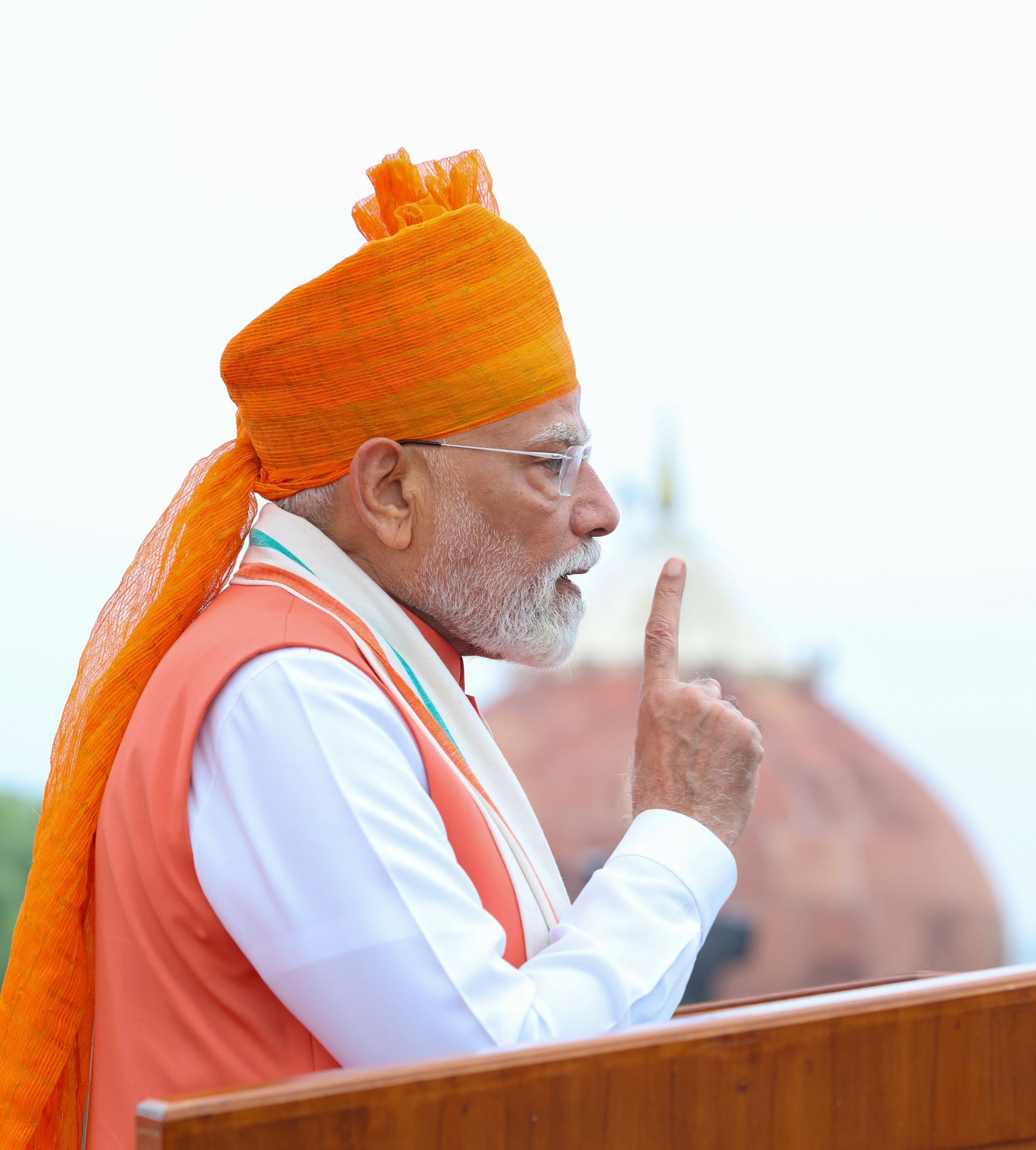
With Iran-Israel US conflict already threatening our economic and energy security, the Narendra Modi government convened an all-party meeting in New Delhi on Wednesday to explore a consensus on the government’s response to the ongoing West Asia crisis.
Congress leader and Leader of Opposition in Lok Sabha, Rahul Gandhi announced in advance that he would not attend on account of important engagements in Kerala, the state he represents in Lok Sabha. However, he could not go to Kerala on account of his mother’s illness.
The Congress party was, however, represented in the meeting. Union Minister Kiren Rijiju said all political parties had arrived at a ‘broad understanding’ that a unified front will be presented by everyone in the present crisis. “I feel satisfied in telling you that the government has answered all the questions asked by the entire opposition. Finally, all the opposition colleagues have said that in this hour of crisis, whatever decision the government takes, whatever steps it takes according to the prevailing situation, everyone will support it unitedly... I believe that whatever was demanded by the opposition that such information should be given, the government has given adequate information today,” Rijiju told reporters after the all-party meeting.
The consensus undoubtedly would ensure a formidable diplomatic posturing which is important at this juncture.
History is replete with examples where internal political divisions have weakened nations, inviting exploitation by external foes. In the Global South, where colonial legacies often exacerbate ethnic, religious, or ideological fractures, such discord can be particularly devastating. Consider the Polish-Lithuanian Commonwealth in the 18th century: Its parliamentary system, crippled by the liberum veto—a rule allowing a single deputy to block decisions—led to paralysis. Foreign powers like Russia, Prussia, and Austria bribed deputies to sow chaos, culminating in the partitions of 1772, 1793, and 1795 that erased Poland from the map for over a century.
This mirrors challenges in many post-colonial states, where institutional weaknesses allow foreign meddling. Closer to home, India’s own partition in 1947 stemmed from religious-political discord amplified by British divide-and-rule tactics, resulting in mass displacement and enduring conflicts with Pakistan, including nuclear tensions. Similarly, in Africa, Ethiopia’s ethnic divisions since 2020 have fueled a civil war, killing hundreds of thousands and inviting interventions from Eritrea and Egypt, derailing its regional ambitions. In Latin America, Brazil’s political polarization under recent administrations has led to economic recessions and weakened its stance in global forums, making it vulnerable to external influences like Chinese economic coercion.
These cases underscore a universal truth: When political forces prioritize partisan gains over national merit, societies enter a “dangerous zone.” Decision-making stalls, military preparedness suffers, and adversaries exploit fractures through disinformation, cyber- attacks, or proxy support. For emerging economies, this not only hampers defense but diverts resources from development, perpetuating cycles of instability.
The Power of Consensus: Fortifying Defense and Projecting Strength
Conversely, when nations forge consensus on key security issues, they build resilience and deter threats. This unity enables sustained strategies, resource mobilization, and credible signaling to the world. During World War II, the United States achieved bipartisan agreement, appointing Republicans to key roles under Democrat Franklin D. Roosevelt, leading to rapid military expansion and Allied victory. Britain, under Winston Churchill, rallied cross-party support, sustaining the war effort despite setbacks.
In the Global South, Singapore under Lee Kuan Yew exemplifies this: Broad elite consensus on security and development transformed a vulnerable island into a regional powerhouse, with strong governance deterring aggression. Australia, though not strictly Global South, offers a model with its bipartisan stance on threats from China, ensuring continuity in alliances like AUKUS and the Quad—alliances India also benefits from. Israel’s consensus on threats from Iran and others has allowed it to maintain military superiority despite its size, a lesson for middle powers like India facing China-Pakistan challenges.
For emerging economies, consensus amplifies limited resources. It signals to adversaries that any aggression will face unified resistance, deterring hybrid threats like border incursions or economic warfare. In India’s context, bipartisan support on issues like countering Chinese expansionism in Ladakh or maritime security in the Indian Ocean could strengthen deterrence without escalating costs, allowing focus on economic growth.
True consensus must not be confused with groupthink or enforced uniformity seen in authoritarian regimes. In democracies, consensus arises from open debate, diverse viewpoints, and evidence-based agreement, ensuring adaptability. Western examples, like the U.S. Cold War policy of containing communism, allowed tactical debates while uniting on goals, leading to NATO’s formation.
Authoritarian “consensus,” as in Stalin’s Soviet purges or China’s top-down decisions, suppresses dissent, leading to blunders like the Soviet invasion of Afghanistan. In contrast, liberal democracies in the West maintain unity on national interests vis-à-vis hostile powers—e.g., NATO’s coordinated response to Russia—through institutions like parliaments and media that foster scrutiny.
For the Global South, where democracies like India blend pluralism with developmental needs, this democratic consensus is ideal. It avoids the fragility of authoritarian models while building inclusive unity, as seen in Indonesia’s multi-alignment strategy amid U.S.-China rivalry.
Developing and middle powers differ in the degree of their vulnerability to lack of domestic consensus and great-power competitions depending on the degree to which their institutions are robust and economies free from being dependencies. In Ukraine pre-2022, pro-Russian factions eased Moscow’s invasion pretext. In the Sahel, coups in Burkina Faso exploit instability, with Russia backing polarized regimes.
External actors weaponize these divisions: Russia’s disinformation in the Baltics or elections in the West parallel’s efforts in Africa and Asia, amplifying grievances. For emerging economies, weak cohesion invites “active measures”—cyber-attacks, economic coercion, or proxy conflicts—diverting from growth agendas.
The real deterrent lies in signaling unity: When political parties align on national security, it reassures allies, deters foes, and stabilizes investments. For India, consensus on issues like border defense or tech sovereignty would enhance its Quad role, projecting strength without sole reliance on military spending. Similarly, South Africa’s bipartisan approach to regional security could counter instability in the Horn of Africa.
In the Global South, where resources are stretched between development and defense, domestic consensus on national security emerges as the most effective strategic asset. It deters aggression by signaling unbreakable resolve, enables efficient resource use, and fosters alliances.
India, with its vibrant democracy, can lead by example—fostering bipartisan dialogues on external threats from China, Pakistan, and beyond. This strategy also extends to threats arising out of internal security challenges - be it Kashmir, Left Wing Extremism, North-East or Islamic radicalism. The ‘enemy within’, with or without links to foreign entities, suffer great demoralisation and deterrence with increased consensus among political forces that are wedded to the country’s territorial unity, integrity and national sovereignty.
By prioritizing merit over partisanship, nations can transform internal consensus into global influence, ensuring survival and prosperity in a fractured world. The lesson from history is clear: Consensus at home is the ultimate shield abroad.