Why India Must Build A Layered Architecture To Protect Its Energy Lifeline Through Hormuz
The Slate Bureau There is a stretch of water approximately thirty-three kilometres wide at its narrowest point that quietly governs a significant portion of India's economic fate. The Strait of Hormuz, wedged between the Iranian coastline to the north and the Omani peninsula to the south, is not merely a geographical feature on a nautical chart. It is, for India, a strategic vulnerability of the first order - a single chokepoint through which the overwhelming majority of the nation's crude...
The Slate Bureau
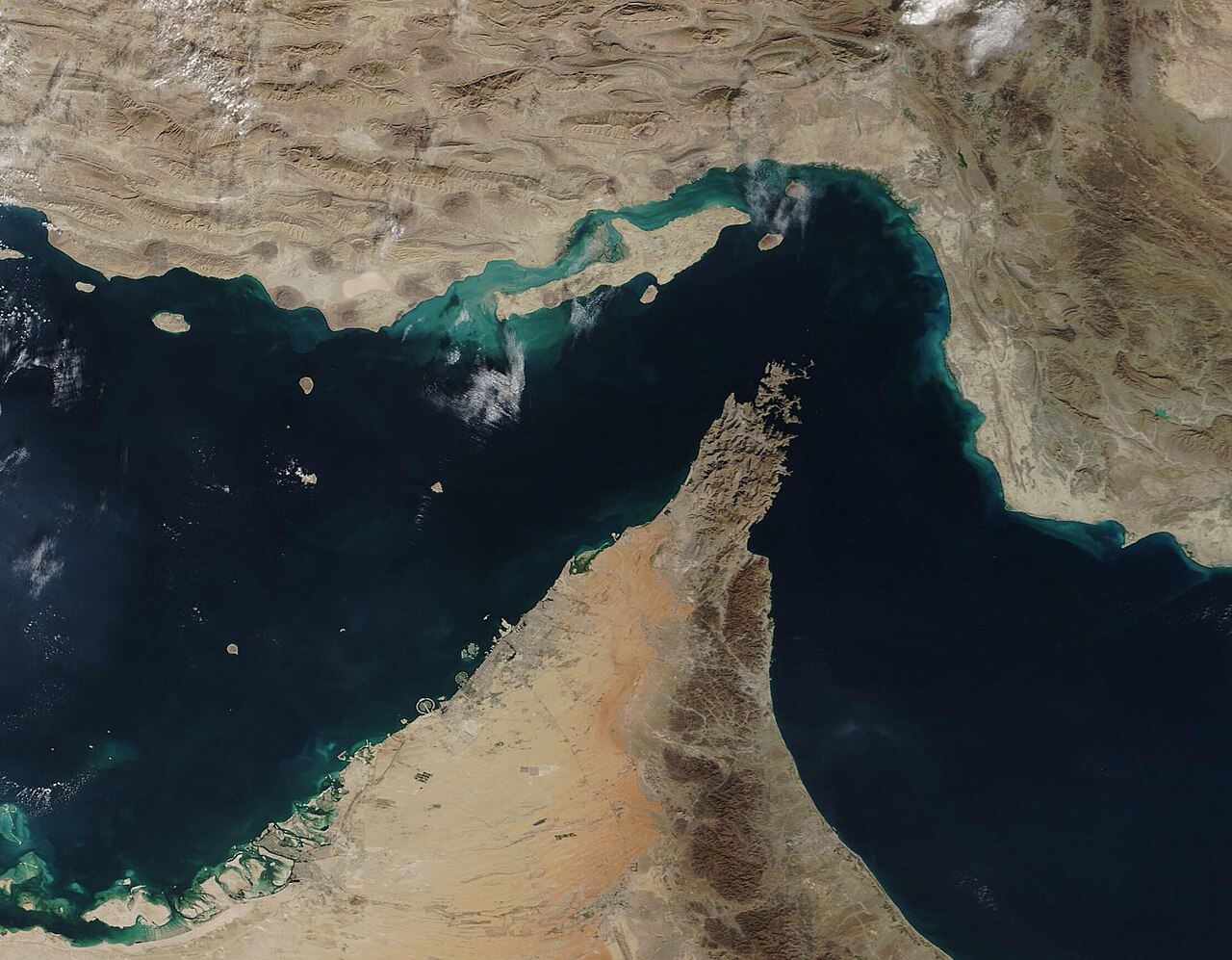
There is a stretch of water approximately thirty-three kilometres wide at its narrowest point that quietly governs a significant portion of India's economic fate. The Strait of Hormuz, wedged between the Iranian coastline to the north and the Omani peninsula to the south, is not merely a geographical feature on a nautical chart. It is, for India, a strategic vulnerability of the first order - a single chokepoint through which the overwhelming majority of the nation's crude oil imports must pass, and whose disruption, even temporarily, would send shockwaves through Indian industry, inflation figures, and the daily lives of hundreds of millions of citizens.
The question of how India protects its passage through Hormuz is therefore not an abstract exercise in foreign policy theorising. It is one of the most consequential strategic questions the country faces, and it demands an answer of corresponding seriousness - one that is layered, resilient, and constructed for the long term rather than assembled in response to the next crisis.
There is a recurring temptation, in strategic planning as in many other domains, to reach for the single decisive instrument - the one lever that, if pulled correctly, resolves the problem cleanly. In the context of Hormuz, that temptation manifests variously as an argument for naval supremacy, or for diplomatic neutrality, or for energy independence, each advanced as though it alone were sufficient.
None of them are. Each addresses a genuine dimension of the challenge. None addresses all of them. And in a region as volatile, as multipolarly contested, and as structurally complex as the Persian Gulf, a strategy built on a single pillar is a strategy waiting to collapse.
What India requires is not a solution but an architecture - a deliberately constructed, mutually reinforcing set of capabilities and relationships that together provide what no individual element can deliver alone: reliable, sustained access to the energy its economy cannot function without.
Any credible architecture for Hormuz security must begin with diplomacy, and India's diplomatic position in the Gulf is, by historical accident and deliberate cultivation, unusually advantageous. New Delhi has managed, with considerable skill, to maintain functional and in many cases warm relationships with parties whose mutual antagonisms would ordinarily make simultaneous engagement difficult. India's ties with Iran predate the current era of sanctions and strategic competition. Its relationships with the Gulf Arab states — Saudi Arabia, the United Arab Emirates, Kuwait, Qatar - are deep, economically anchored, and reinforced by the presence of a vast Indian diaspora whose remittances constitute a significant financial artery in their own right.
This positioning is not neutrality in the passive sense. It is active, purposeful engagement with multiple stakeholders - a diplomacy of presence that keeps Indian interests visible and Indian concerns audible across the full spectrum of Gulf politics. The value of this posture becomes most apparent precisely when tensions escalate: a country that has invested in relationships across factional lines retains options that a country aligned exclusively with one camp does not.
Sustaining and deepening this diplomatic balance is not merely desirable. Given the structural realities of India's energy dependence, it is indispensable.
Diplomatic relationships, however well tended, cannot by themselves guarantee the physical security of shipping lanes. India must maintain a credible naval presence in and around the Arabian Sea - one capable of protecting Indian-flagged vessels, contributing meaningfully to maritime security operations, and projecting the kind of quiet deterrence that discourages interference with Indian commercial interests.
The Indian Navy has made substantial progress in developing its blue-water capabilities, and that progress must continue. Escort operations, anti-piracy patrols, intelligence-sharing arrangements with regional and extra-regional partners, and the capacity for rapid deployment in response to emerging threats all form part of a naval posture appropriate to a nation of India's size and stake in the region.
Critically, however, this naval readiness must be calibrated with care. The Gulf is already a crowded maritime space, occupied by the naval forces of multiple major powers pursuing interests that do not always align with India's own. An assertive Indian naval posture that is perceived as aligning with one bloc against another risks precisely the diplomatic entanglements that India's balanced approach is designed to avoid. Presence without provocation - the capacity to act without the posture that demands a reaction - is the strategic ideal India should pursue.
No amount of diplomatic finesse or naval capability eliminates the underlying vulnerability created by concentrated energy dependence. As long as the majority of India's oil imports flow through a single chokepoint, that chokepoint retains the power to hold the Indian economy hostage to events entirely outside Indian control.
The structural answer to this vulnerability is diversification - a deliberate, sustained effort to broaden the geographic and source diversity of India's energy imports so that no single disruption point can produce a systemic crisis. This means expanding energy relationships with suppliers whose export routes do not pass through Hormuz: West African producers, North and South American suppliers, and the accelerating possibilities offered by overland pipeline connectivity through Central Asia and beyond.
It also means accelerating the domestic energy transition. Renewable energy development, though it cannot substitute for petroleum across all industrial applications in the near term, reduces aggregate import dependence over time and therefore diminishes, incrementally but meaningfully, the strategic leverage that any single maritime corridor holds over the Indian economy. Every percentage point of domestic renewable generation is, in a very real sense, a reduction in India's Hormuz exposure.
Even a perfectly diversified energy import portfolio cannot guarantee uninterrupted supply in the event of a sudden and severe disruption. The gap between disruption and restoration, however brief, requires a buffer. Strategic petroleum reserves exist precisely to provide that buffer: a stockpile sufficient to sustain essential economic activity while diplomatic and logistical responses are mobilised.
India has developed strategic reserve capacity at multiple underground facilities, but the adequacy of that capacity relative to the scale of potential disruption deserves continuous reassessment. The benchmark should not be what was considered sufficient when the reserves were established, but what the current import volume, consumption pattern, and realistic disruption scenario actually demand. Building reserve capacity is expensive. Running short of it during a crisis is costlier.
Finally, India must invest in the development and diplomatic underpinning of alternative transport corridors, overland and maritime routes that can carry energy supplies independently of the Strait of Hormuz. The International North-South Transport Corridor, connecting India through Iran and Central Asia to Russia and Europe, represents one such avenue. Deepening connectivity with Gulf producers through overland routes that bypass maritime chokepoints entirely represents another.
These corridors require patient, long-term investment in infrastructure, bilateral agreements, and the kind of sustained institutional attention that competes poorly against immediate priorities. That is precisely why they must be treated as strategic imperatives rather than optional enhancements, built during periods of stability so they are available during periods of crisis.
India cannot control what happens in the Strait of Hormuz. It cannot dictate the decisions of regional powers, prevent the escalation of conflicts it did not initiate, or neutralise the geography that makes the strait an irreplaceable corridor for Gulf energy exports. What it can control is the depth, diversity, and resilience of its own preparation.
Diplomatic balance, naval readiness, energy diversification, strategic reserves, and alternative corridors are not competing priorities to be ranked and budgeted against one another. They are complementary components of a single coherent architecture, each reinforcing the others, each compensating for the limitations of the rest.
No single shield is enough. But together, they constitute something more reliable than any shield: a system designed not merely to survive a crisis at Hormuz, but to ensure that no crisis there can define India's fate.