


RBI Raises Repo Rate, Rules Out Near-Term Cuts as Inflation Risks Rise
RBI raises repo rate to 5.5 per cent, rules out near-term cuts as inflation risks rise despite resilient economic growth.
By The Slate Bureau
Mumbai, October 7: The Reserve Bank of India (RBI) on Wednesday raised its benchmark interest rate by 25 basis points to 5.50 per cent, its first increase in nearly four years, and signalled that further rate hikes could follow as rising inflation and a weakening rupee lead to a change in its policy approach.
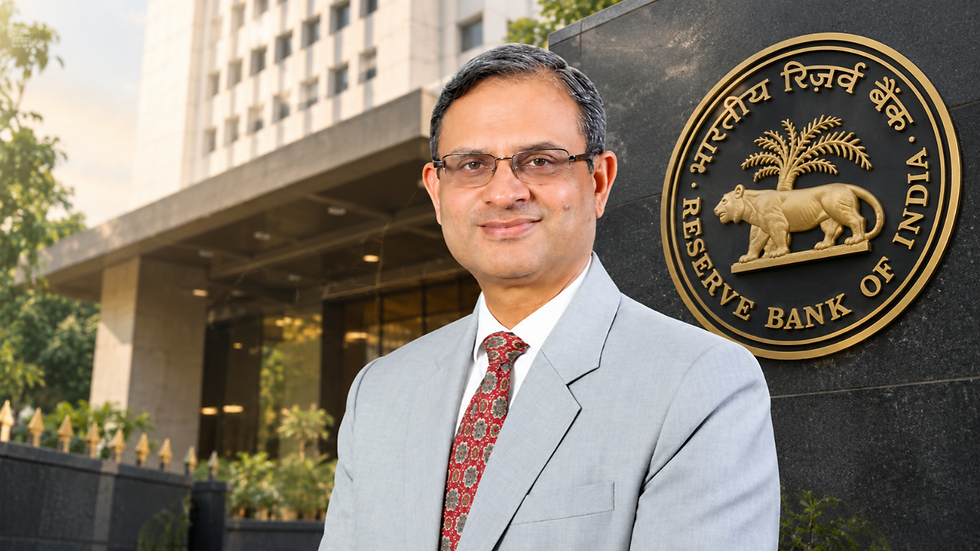
The six-member Monetary Policy Committee (MPC) unanimously voted to raise the repo rate, the first such increase since Governor Sanjay Malhotra took office in December 2024. While the move was widely expected, the central bank surprised markets by changing its policy stance to "calibrated tightening", effectively ruling out a rate cut in the near term. "Rate cuts are off the table in the near term and policy action ahead can only be a rate hike or a pause, depending on the evolving conditions and the outlook," Malhotra said while announcing the MPC's decisions.
The Governor, however, cautioned that the timing and extent of any further tightening would depend on how inflation and economic growth develop. The RBI will particularly monitor underlying price pressures and whether temporary supply shocks become more deeply embedded in the wider economy.
With the rate increase, India has joined several major economies in tightening monetary policy as higher oil prices linked to the Iran war add to inflation, reduce consumers' purchasing power and put pressure on currencies. Weak rainfall and El Nino conditions have added to the inflation risks.
Inflation pressures have broadened even as economic activity remains resilient. Consumer price inflation rose to 4.82 per cent in August, above the RBI's 4 per cent medium-term target for the third consecutive month. Core inflation, which excludes more volatile food and fuel prices, also accelerated to 4.2 per cent.
The central bank said inflation risks were no longer as favourable as they had been a year earlier. It pointed to higher food and fuel prices, deficient monsoon rainfall, El Nino conditions and renewed volatility in international oil prices as key risks. The RBI now expects headline inflation to average 5.2 per cent in the 2026-27 financial year. It expects inflation to rise to 6.0 per cent in the third quarter and remain elevated at 5.7 per cent in the fourth quarter.
"There are also early signs of inflation becoming generalised," Malhotra said, pointing to the rise in core inflation and the growing share of items in the consumer price index basket recording higher price increases.
Oil prices have emerged as a major risk following the renewed escalation of the West Asia conflict. According to the RBI, India's crude oil basket averaged USD 116.1 a barrel in September, sharply higher than USD 82 in July.
Food prices have also come under pressure. The central bank highlighted sharp increases in sugar and onion prices and said there were early signs that inflation was spreading to a wider range of goods and services.
Growth Remains Strong
Despite the inflation risks, the RBI raised its economic growth forecast for 2026-27 by 40 basis points to 7.1 per cent, after the economy expanded 7.8 per cent in the first quarter. The RBI said economic activity remained resilient in the second quarter, although the pace of growth had moderated. Manufacturing and services continued to expand, while indicators such as capital-goods production, bank credit and consumer spending remained supportive.
"The Indian economy has been strong, and the economic momentum remains broad-based," Malhotra said, adding that the economy was expected to remain resilient despite global
headwinds.
The central bank, however, warned that weaker monsoon rainfall, geopolitical tensions, elevated commodity prices, trade frictions and tighter global financial conditions could weigh on economic growth.
The RBI said monetary policy could not directly address supply-side shocks such as higher food or oil prices. However, it could prevent such shocks from becoming entrenched by ensuring they do not lead to permanently higher inflation expectations or widespread changes in corporate pricing behaviour.
"While there is some evidence of elevated inflation expectations and generalisation of inflation, there are limited signs of supply-side pressures getting embedded in pricing behaviour," Malhotra said.
The policy shift therefore reflects a balancing act for the central bank. The RBI needs to contain a wider inflation shock while also protecting an economy that continues to grow strongly.
It said the duration and extent of the rate-hike cycle would depend on actual inflation and growth outcomes, particularly whether underlying inflation remains high and whether supply shocks lead to wider and more persistent price increases.
Global Risks
Global risks have also increased, with the RBI citing the West Asia conflict, elevated bond yields, trade uncertainty and the risk of a sharp correction in AI-stock valuations as threats to the economic outlook. "We shall strive for price and financial stability as both are essential for sustainable growth in the long run," Malhotra said.
The rate decision comes at a time when financial-system liquidity remains abundant and bank credit growth has accelerated. Average daily surplus liquidity under the RBI's liquidity adjustment framework reached Rs 5.9 lakh crore since the previous policy meeting. Bank credit growth also accelerated to 18.1 per cent year-on-year as of September 15, compared with 10.4 per cent a year earlier.
The RBI said the strong growth in monetary and credit aggregates represented an additional risk, even though there was still limited evidence of inflation being driven by excessive domestic demand.
The central bank said it would use an appropriate mix of liquidity-management tools to keep the weighted average call rate aligned with the repo rate. The RBI's guidance effectively narrows the range of likely policy moves at upcoming meetings to either keeping rates unchanged or raising them further. A rate cut is unlikely in the near term. "We continue to see 25-50 basis points of additional rate hikes going ahead, with further upside if global risks persist," said Upasna Bhardwaj, Chief Economist at Kotak Mahindra Bank.


