The Chip Army: India’s Million-Strong Talent Offensive
The Slate Bureau For decades, the global semiconductor narrative was defined by a single, stark irony: while India provided the brainpower for the world’s most complex chip designs in Silicon Valley, it lacked the "cleanrooms" and "fabs" to build them at home. But as the India AI Impact Summit 2026 concluded this February, Union Minister Ashwini Vaishnaw delivered a definitive script flip. India isn't just building factories; it is building a "Chip Army." The mission is clear: to train one...
The Slate Bureau
For decades, the global semiconductor narrative was defined by a single, stark irony: while India provided the brainpower for the world’s most complex chip designs in Silicon Valley, it lacked the "cleanrooms" and "fabs" to build them at home. But as the India AI Impact Summit 2026 concluded this February, Union Minister Ashwini Vaishnaw delivered a definitive script flip. India isn't just building factories; it is building a "Chip Army." The mission is clear: to train one million semiconductor professionals by 2026, transforming a design-heavy talent pool into a full-stack industrial force.
The Great Classroom Pivot
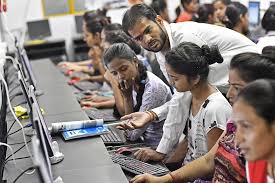
The quest began with a radical overhaul of the Indian education system. As of 2026, over 315 universities across the nation have been integrated into a centralized semiconductor grid. The days of theoretical electronics are over. Through the Chips to Startup (C2S) program, students from Jammu to Kerala now have free, real-time access to high-end Electronic Design Automation (EDA) tools from global giants like Synopsys and Cadence.
This isn't just mass education; it’s high-precision skilling. The AICTE (All India Council for Technical Education) has launched specialized B.Tech and Diploma programs in VLSI Design and Semiconductor Technology. By February 2026, approximately 67,000 students and over 1,000 startup engineers were actively taping out designs on the national chip platform.
"We are making 'compute' and 'design' a public utility. The next great chip won't come from a boardroom in Santa Clara, but from a classroom in a Tier-2 Indian city." — Ashwini Vaishnaw, Feb 20, 2026
The Skill-to-Fab Pipeline
The challenge of 2026 is moving talent from the screen to the "wafer." To bridge the gap between "coding" and "fabrication," India has established a network of ChipIN Centres and industry-led research hubs. Under the India Semiconductor Mission (ISM) 2.0, announced in the 2026 Budget, the government has moved beyond design to ATMP (Assembly, Testing, Marking, and Packaging).
Hands-on Training: Partnerships with companies like Infineon and Lam Research have turned institutions like the National Institute of Electronics & Information Technology (NIELIT) into "Train-the-Trainer" hubs.
Virtual Fabs: For students who cannot access physical cleanrooms, the government has deployed TCAD (Technology Computer-Aided Design) simulators, allowing them to visualize the physics of a 12nm node from their laptops.
The Global Bridge: Strategic MoUs with Purdue University and Taiwan’s NTHU ensure that Indian talent is trained to global standards, facilitating a two-way exchange of expertise.
Beyond Engineering: The Indirect Boom
The "One Million" target is a multi-layered pyramid. While the apex consists of PhD-level device physicists and process engineers, the broad base includes:
300,000 Fabrication Specialists: Skilled in photolithography and etching.
200,000 ATMP Professionals: Focused on the critical "back-end" of manufacturing.
500,000 Indirect Roles: Specialists in ultra-pure chemical handling, logistics, and environment management.
This "nuanced skilling" ensures that as the ten approved mega-projects—like the HCL-Foxconn JV and Tata-PSMC Fab—begin commercial production in late 2026, they aren't met with a talent vacuum but with a ready, local workforce.
India’s quest to train a million professionals is more than an employment scheme; it is a bid for Technological Sovereignty. By democratizing access to the "tools of the trade," India is ensuring that its demographic dividend becomes a "digital dividend." As the first Indian-made chips roll off the lines this year, they carry with them the expertise of a generation that has finally learned to master the atom.