US Hegemony At Stake As Trump Struggles To Broker Truce
The Slate Bureau Beyond the unrelenting hostilities and severe global disruptions, the ongoing armed conflict involving the United States, Israel and Iran has put Washington’s hegemony at stake with President Donald Trump struggling to broker truce amidst his declining potential to shape global outcomes. Over the past couple of days, Trump has repeatedly gone public asserting that negotiations were underway and a truce was within reach but both Iran and his ally Israel have distanced...
The Slate Bureau
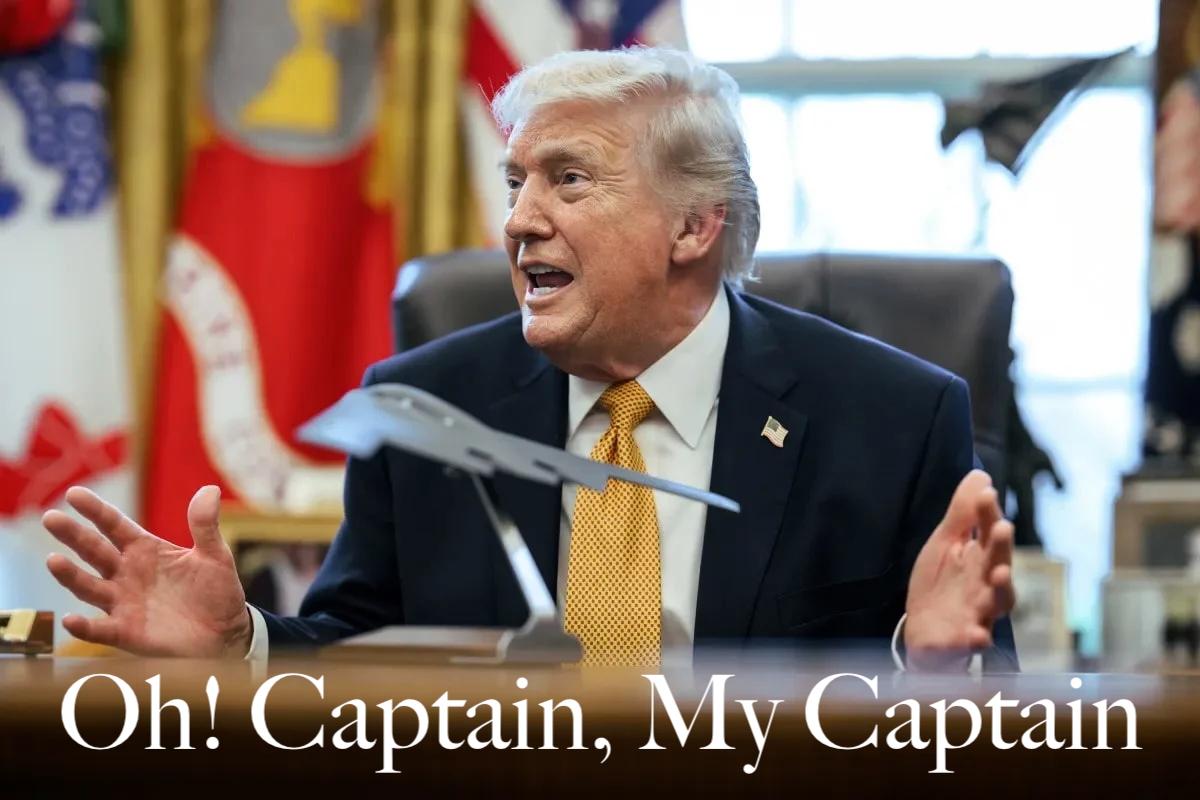
Beyond the unrelenting hostilities and severe global disruptions, the ongoing armed conflict involving the United States, Israel and Iran has put Washington’s hegemony at stake with President Donald Trump struggling to broker truce amidst his declining potential to shape global outcomes.
Over the past couple of days, Trump has repeatedly gone public asserting that negotiations were underway and a truce was within reach but both Iran and his ally Israel have distanced themselves from any US-led ceasefire initiative, casting shadow over Washington’s ability to steer the course of events by stalling the rapidly escalating conflict in its national interest.
Iran emphasized that it has not been in any direct or indirect talks with the US. Israel left Trump isolated with Israeli Prime Minister Benjamin Netanyahu declaring that Israel will protect its vital interests under any circumstances.
Trump’s desperate bid to exit the war has only emboldened Iran which has denied US claims of ceasefire talks as fake news. Trump has now started reaching out to world leaders for support. On March 24, Trump called upon Indian Prime Minister Narendra Modi. “Received a call from President Trump and had a useful exchange of views on the situation in West Asia. India supports de-escalation and restoration of peace at the earliest…” Modi posted on X.
Trump seems to be willing to grasp any opportunity to walk out of the conflict. Pakistan Prime Minister Shehbaz Sharif’s post on X expressing Islamabad’s willingness to host talks drew the attention of Trump who shared it on his account. “…Subject to concurrence by the US and Iran, Pakistan stands ready and honoured to be the host to facilitate meaningful and conclusive talks for a comprehensive settlement of the ongoing conflict,” Sharif had posted on X.
Facing flak from various quarters within the country, Trump even delayed potential US strikes to create space for diplomacy but to no avail.
Tehran’s stance has been particularly blunt, with senior leaders rejecting claims of negotiations and vowing retaliation if US or Israeli actions intensify. The rejection underscores Iran’s intention to resist any pressure for talks even at the cost of escalation of conflict.
US no longer seems to be in a dominating position with its ally Israel making it clear that Israel’s military campaign is guided by its own strategic calculations, not Washington’s timelines. Israeli officials have expressed scepticism over the prospects of any US-brokered deal and indicated that operations against Iranian targets will continue irrespective of diplomatic overtures.
This dual defiance—from both an adversary in Iran and an ally in Israel— isolates the US. It marks a significant departure from earlier phases of the conflict, when US announcements of ceasefires or de-escalation carried greater weight. Now attempts by Trump to declare or broker truce are met with confusion or outright denial by the parties involved, with hostilities continuing on the ground despite such claims.
Analysts say the current situation reflects a more fragmented geopolitical environment, where regional actors are increasingly asserting autonomy. Iran’s dismissal of offers from the US indicates that deterrence and diplomatic pressure from Washington are no longer effective enough to compel engagement. At the same time, Israel’s insistence on proceeding with the war on its own terms highlights the limits of US leverage even over close allies.
The contradiction between Trump’s public statements and ground realities has also added to perceptions of diminished US control. While the White House has sought to project an image of active diplomacy, the absence of verifiable negotiations and the continuation of strikes across the region point to a widening gap between rhetoric and influence.
With backchannel efforts reportedly involving third-party mediators such as Turkey and Egypt failing to produce visible results, the conflict is evolving into a multi-actor standoff where Washington is just one of several power centres, rather than the decisive arbiter.
As military exchanges intensify and diplomatic signals remain inconsistent, the crisis is shaping into a broader commentary on shifting global power dynamics—where even the United States, long seen as the primary driver of Middle East geopolitics, appears increasingly constrained in dictating outcomes.
Trump may have realized that the fallouts of a lingering conflict may not be in political and economic interest of the US. Probably, seeing the resilience and the capacity of Iran to withstand attacks for such long, Trump decided to back out but his miscalculation has put Washington’s hegemony at stake like never before.
Beyond geopolitics, the conflict is already sending shockwaves through the global economy, particularly via energy markets and supply chains. Rising tensions in the Middle East—a critical hub for global oil supplies—have led to heightened volatility in crude prices, with fears of supply disruptions pushing markets into uncertainty.
Shipping routes in the region, including vital chokepoints, are under increased risk, raising insurance costs and delaying cargo movement. This has had a cascading effect on global trade, driving up freight rates and adding pressure to inflation already being battled by major economies.
Financial markets have reacted nervously, with investors shifting towards safe-haven assets amid concern of a prolonged conflict. Emerging markets, in particular, face the risk of capital outflows and currency instability as geopolitical risk premiums rise.
Economists warn that even if hostilities were to subside in the near term, the economic aftershocks could persist. Supply chain disruptions, elevated energy prices and weakened investor confidence may take months—if not longer—to stabilise, delaying recovery in key sectors worldwide.
The crisis also complicates policy choices for central banks, which may be forced to balance inflationary pressures driven by energy costs against slowing growth prospects.
Taken together, the developments point to a broader transformational shift in global affairs. The United States, once the central arbiter in West Asian conflicts, now appears to be one among several actors, with regional powers asserting autonomy and global consequences unfolding beyond Washington’s control.
As the conflict deepens, both the geopolitical order and the economic outlook remain uncertain, reinforcing the sense that the era of singular power-driven diplomacy may be giving way to a more fragmented and unpredictable world where Washington may no longer have an authoritative voice.