‘Victory Is Within Reach’- Trump Vows Devastating Strikes As War Enters Final Chapter
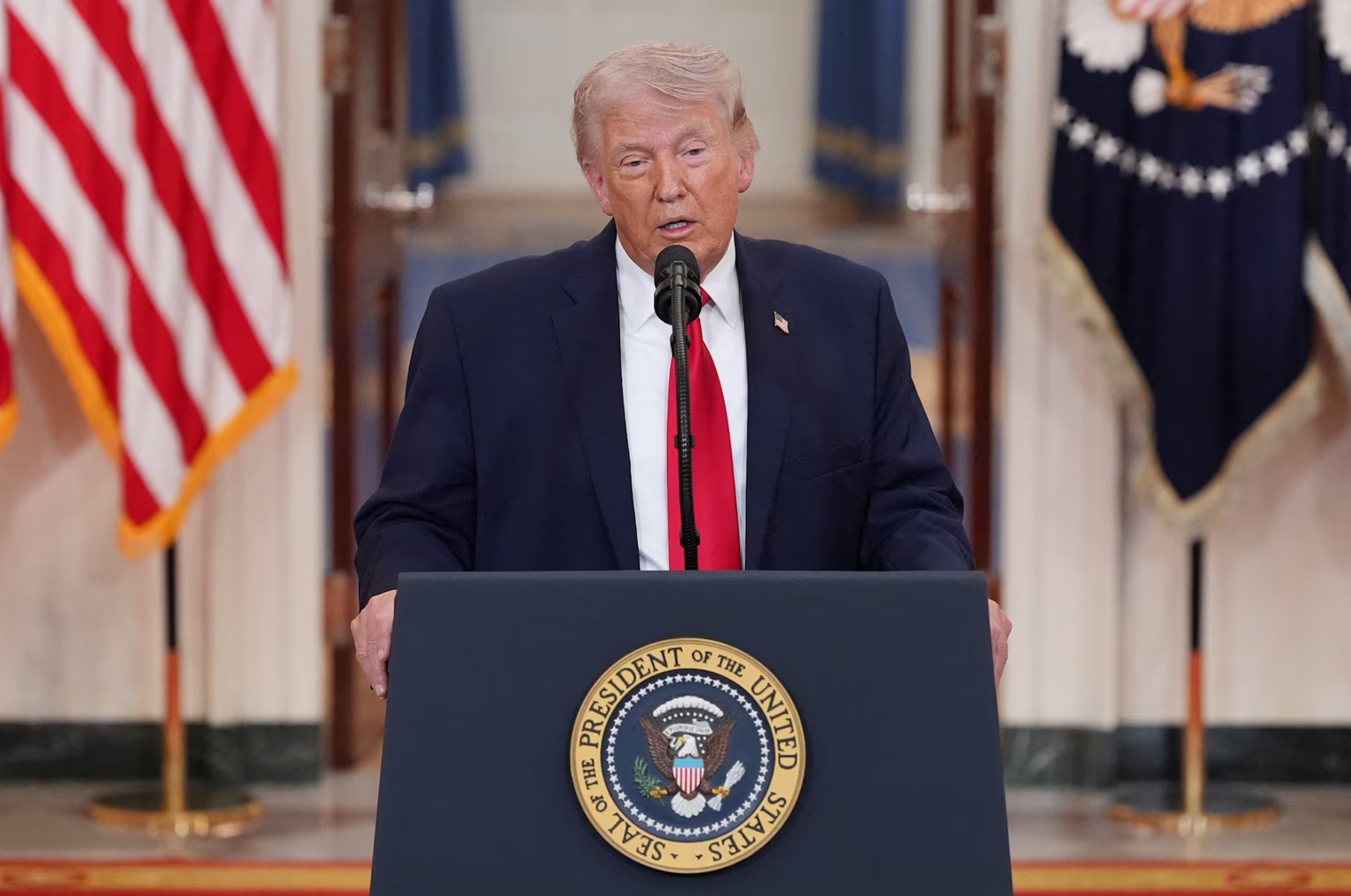
The Slate Bureau U.S. President Donald Trump stepped before the world Wednesday evening from the White House Cross Hall to deliver his first prime-time address since launching ‘Operation Epic Fury’ in late February, and the message was both triumphant and ominous. “These core strategic objectives are nearing completion,” Trump told a watching world, claiming Iran's navy has been annihilated, its air force grounded, and its ballistic missile stockpile severely depleted. Yet in the same breath,...
The Slate Bureau
U.S. President Donald Trump stepped before the world Wednesday evening from the White House Cross Hall to deliver his first prime-time address since launching ‘Operation Epic Fury’ in late February, and the message was both triumphant and ominous.
“These core strategic objectives are nearing completion,” Trump told a watching world, claiming Iran's navy has been annihilated, its air force grounded, and its ballistic missile stockpile severely depleted. Yet in the same breath, he vowed that the hardest blows were still to come. Over the next two to three weeks, Trump said, the United States would hit Iran “extremely hard”. He threatened that America will destroy every Iranian electricity generating plant and, if no diplomatic deal is reached, to target its oil infrastructure as well.
The roughly 19-minute speech was heavy on battlefield imagery but thin on exit strategy. Trump offered no concrete timeline for withdrawal, no definition of what a final “deal” would look like, and no answer to the question looming over global economy and energy market: when does this actually end?
The American’s stated objectives- destroying Iran’s missiles and production capability, eliminating its navy, severing its support for regional proxy groups, and preventing it from ever obtaining a nuclear weapon- have been met with mixed assessments from military analysts. As per media reports this week only around one-third of Iran’s missile capabilities have been verifiably eliminated.
On the nuclear objective, Trump’s own statements have been contradictory. He told reporters Tuesday that Iran “will have no nuclear weapon - that goal has been attained,” only to hint hours later that a future president may need to revisit the issue entirely.
Meanwhile, the human and economic toll is mounting. 13 U.S. soldiers have been killed. Iran reports over 1,700 civilian and military deaths. More than 1,300 people have died in Lebanon as Israel’s expanded invasion presses into Hezbollah-controlled territory. According to the WTO, sustained high oil and gas prices through the remainder of 2026 could shave 0.3% off projected global GDP growth. Europe, heavily reliant on energy imports, faces an even steeper hit, with GDP expansion potentially lagging at least 1% behind earlier forecasts. If the war continues through the end of April, Goldman Sachs expects deep recessions in several Gulf economies, with Kuwait and Qatar’s output shrinking by about 14% this year, Saudi Arabia’s by around 3%, and the UAE’s by roughly 5%. As a hub that ships close to one-third of the world’s urea and a quarter of its ammonia, the Persian Gulf channels as much as 40% of global nitrogen fertiliser exports through the narrow Strait of Hormuz.
Since the conflict erupted, benchmark prices have already surged, with urea up about 50% and ammonia roughly 20%. That spike hits import‑dependent farm powerhouses hardest, especially Brazil, which sources roughly 85% of its fertiliser from abroad and has limited short‑term alternatives.
The Indian Rupee (INR) depreciated against the US Dollar (USD), closing at Rs. 94.82 per USD last month, with a depreciation of 9.9 per cent in 2025-26 (till March 27, 2026).
Since the commencement of the Middle East conflict on February 28, 2026, the INR has depreciated by 4.1 per cent.
The Government has clarified in the Parliament that this depreciation is not specific to INR, as during this period, major Asian currencies have also depreciated. Certain peers such as South Korean Won, Thai Baht and Philippine Peso have declined against the USD more than INR, by 4.6 per cent, 5.5 per cent and 4.8 per cent respectively. The depreciation of currency is likely to enhance export competitiveness, which in turn impacts the economy positively. On the other hand, depreciation may raise the prices of imported goods. However, the overall impact of exchange rate depreciation on domestic prices depends on the extent of the pass-through of international commodity prices to the domestic market.
“Inflation in India has eased, with the average retail inflation (measured by the Consumer Price Index [CPI]) declining from 6.2 per cent in 2020-21 to 4.6 per cent in 2024-25 and further to 1.9 per cent in 2025-26 (April-February). At present, the macroeconomic fundamentals of the Indian economy remain strong. Growth continues to be supported by robust domestic demand, moderating inflation, improved corporate balance sheets, and sustained fiscal discipline. Real GDP has consistently grown at over 7 per cent during the last three years," India's Finance Minister, Nirmala Sitharaman had said in a written reply in Lok Sabha.
However, global markets reacted sharply to Trump’s words. Oil prices surged nearly 4%, with Brent crude climbing above $104 per barrel. S&P 500 futures slid 0.75% and Dow futures fell more than 310 points. By 10 AM on Thursday,