Workforce or Work-Forged? India’s Heatwave Is Testing Human Endurance
By Amandeep Singh New Delhi, May 22: Large parts of northwest, central, eastern and peninsular India are likely to remain under heatwave to severe heatwave conditions over the next six to seven days, according to the India Meteorological Department (IMD). The weather department said isolated parts of Uttar Pradesh and Madhya Pradesh are expected to witness heatwave conditions between May 22 and May 28. Severe heatwave conditions are also likely over East Uttar Pradesh and East Madhya Pradesh...
By Amandeep Singh
New Delhi, May 22: Large parts of northwest, central, eastern and peninsular India are likely to remain under heatwave to severe heatwave conditions over the next six to seven days, according to the India Meteorological Department (IMD).
The weather department said isolated parts of Uttar Pradesh and Madhya Pradesh are expected to witness heatwave conditions between May 22 and May 28. Severe heatwave conditions are also likely over East Uttar Pradesh and East Madhya Pradesh during the same period.
Punjab, Haryana, Chandigarh and Delhi are also expected to remain under heatwave conditions from May 22 to May 28, with severe heatwave conditions likely in some pockets between May 24 and May 27.
Rajasthan is likely to face intense heat throughout the week, with severe heatwave conditions expected over parts of West Rajasthan from May 24 to May 28.
The IMD further said heatwave to severe heatwave conditions may prevail over parts of Vidarbha, Coastal Andhra Pradesh and Yanam, Chhattisgarh, Jharkhand, Odisha, Telangana, Jammu and Kashmir, Himachal Pradesh and Uttarakhand on different days during the forecast period.
Apart from daytime heat, warm night conditions are also likely in isolated pockets of Uttar Pradesh and Vidarbha from May 22 to May 24, Odisha from May 22 to May 26, and Telangana on May 22 and May 23.
THE HEATWAVE CONUNDRUM
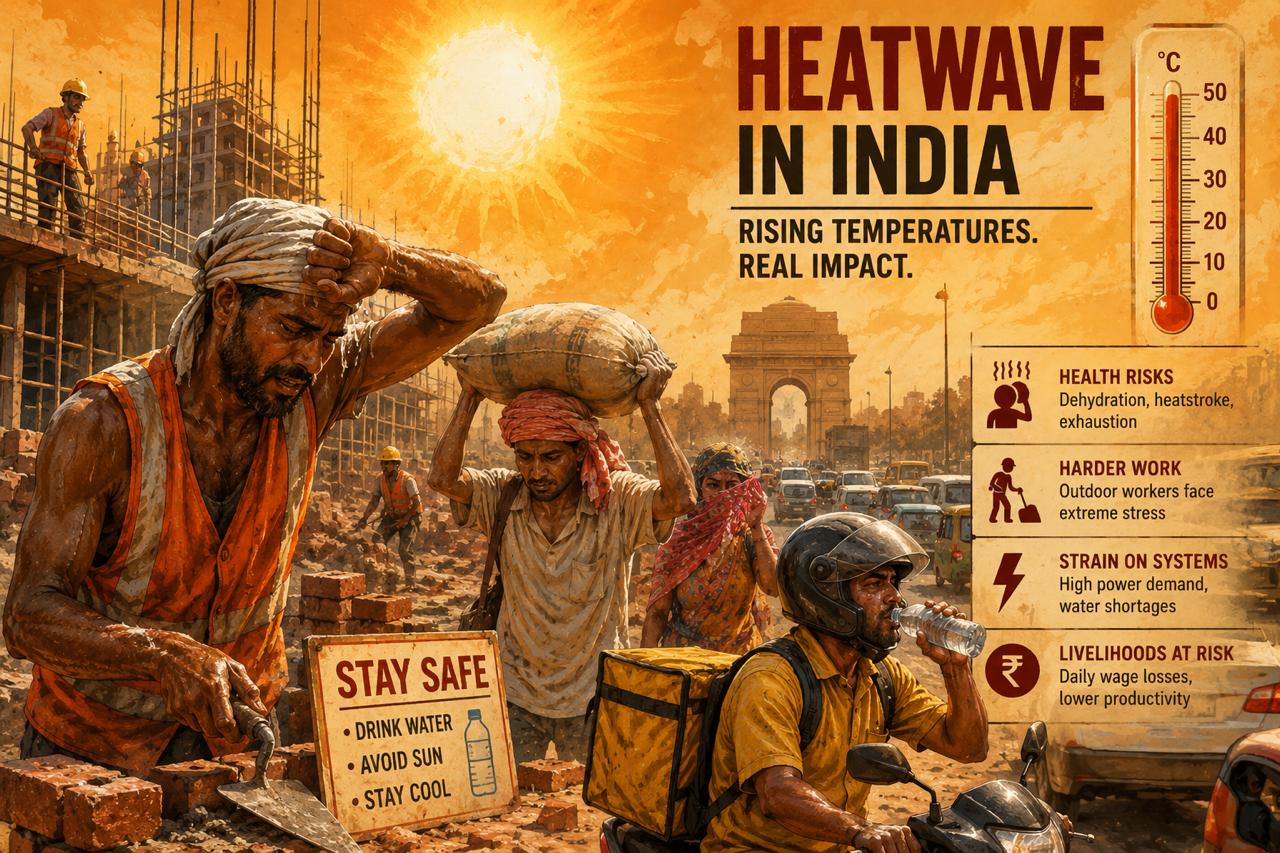
The continuing spell of extreme heat is not just pushing temperatures higher on paper, but slowly exhausting the rhythm of everyday life across several parts of the country. For thousands of people whose livelihoods depend on being out in the open, the heatwave becomes less of a weather event and more of a daily battle of endurance. Construction workers standing for hours under bare concrete structures, delivery workers moving through burning roads, street vendors sitting beside melting pavements and sanitation workers beginning shifts before sunrise, all remain directly exposed to unforgiving temperatures that leave little room for relief.
In many cities and towns, afternoons have started feeling deserted as roads empty out and people avoid stepping outside unless absolutely necessary. The heat drains not only physical energy but also productivity, concentration and sleep, especially as several regions continue to experience unusually warm nights with little cooling even after sunset. For labourers and daily wage workers, however, stopping work is often not an option. Missing a day’s work can mean losing an entire day’s income, forcing many to continue working despite fatigue, dehydration and the growing risk of heatstroke.
Health concerns also deepen during prolonged heatwave conditions. Doctors and public health experts have repeatedly warned about dehydration, exhaustion, dizziness, respiratory stress and heat-related illnesses, particularly among children, the elderly and people with existing medical conditions. At the same time, rising temperatures are expected to put additional strain on electricity demand, water supply and public infrastructure, adding another layer of pressure to already struggling urban systems.
As heatwaves become more frequent and intense with each passing summer, the impact is increasingly being felt not equally, but most heavily by those who spend their days building, carrying, travelling and working under the open sky.
WORKFORCE OR WORK-FORGED?
What makes the heatwave more disturbing is not just the rising temperature, but how normalised suffering has quietly become around it. Every summer now arrives with warnings, advisories and soaring numbers, yet the people standing directly beneath the sun continue moving as if exhaustion itself has become part of employment. Across roads, construction sites, markets and traffic signals, there are people working through air that feels heavy enough to stop breathing not because conditions are manageable, but because survival leaves little room for choice.
The country often celebrates its growing cities, expanding infrastructure and nonstop pace of development, but rarely pauses to look at the bodies carrying that development forward every single day. A delivery rider waiting at a red light under 45-degree heat, a labourer lifting concrete on an exposed rooftop, a sanitation worker beginning duty before sunrise to escape the afternoon sun... these are not isolated visuals anymore. They are becoming the permanent face of Indian summers.
In many ways, the idea of a “workforce” itself begins to feel incomplete here. Because what exists increasingly resembles people being work-forged instead. Shaped by daily heat, pressure, dust and endurance. The body adapts because it has to. Skin burns because it has to. People continue despite dizziness, dehydration and fatigue because stopping often comes at the cost of income, food or stability. For many daily wage workers, heat is no longer an inconvenience. It is an occupational condition they are expected to silently absorb.
And perhaps that is the harshest part of all, how invisible this suffering becomes once it blends into routine. Offices cool down behind closed doors while outside, entire sections of society continue negotiating with concrete heat, polluted air and collapsing energy levels just to complete another day’s work. As heatwaves grow longer and harsher each year, the crisis stops being only environmental. It becomes social, economic and deeply human.