Iran-US War: IndiGo Resumes Some Saudi Flights Amid Ongoing Gulf Conflict
Iran US War: Conflict widens as partial IndiGo Saudi flights, a deadly Saudi Arabia attack, a Kuwait drone attack, and U.S. naval strikes in the Strait of Hormuz.
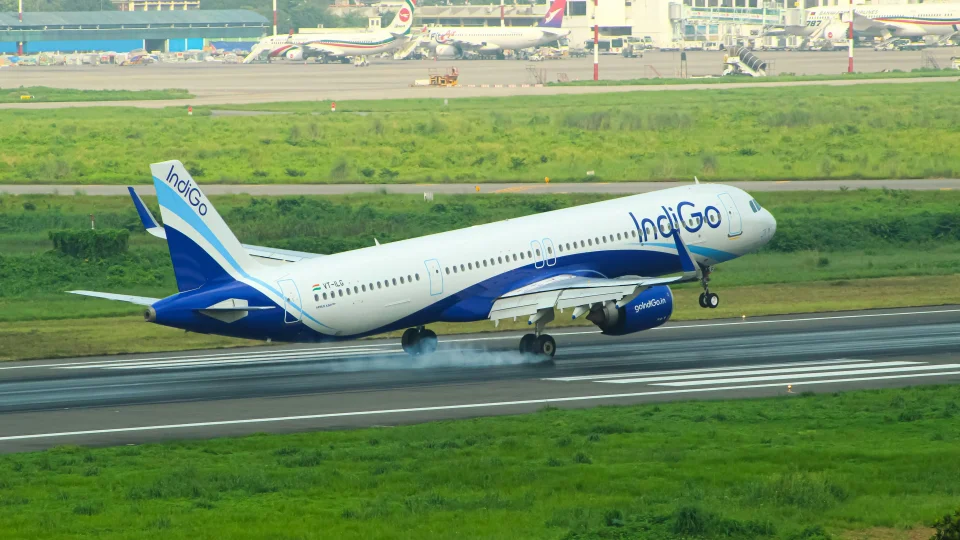
Iran US War: IndiGo has resumed select flights to Jeddah and Madinah, while services to Riyadh and Dammam remain suspended until December 7, says the airline’s advisory. The decision follows an assessment of the security situation and operational considerations, with affected passengers being informed through the contact details provided at booking.
Travel Advisory | Saudi Arabia Following a careful assessment of the prevailing situation and the associated operational considerations, we are pleased to resume select flight operations to and from Jeddah and Madinah. However, flights to and from Riyadh and Dammam will remain cancelled until 7 December 2026 (inclusive). Timely notifications are being sent to affected customers through the contact details provided at the time of booking. Customers are advised to check their flight status on the IndiGo website or mobile app before proceeding to the airport. At IndiGo, the safety and well-being of our customers and crew remain our highest priority. We appreciate your understanding and cooperation during this time.
— IndiGo (@IndiGo6E) November 27, 2026
The Indian Embassy in Riyadh, too, shared the update, noting the continued suspension of services to Riyadh and Dammam. The partial resumption follows a November 18 advisory that had cancelled all flights on the four Saudi routes until November 30, citing the ongoing security situation.
#TravelAlert Indigo flights to and from Jeddah, Madinah, Riyadh and Dammam have been cancelled until 30 November 2026.
— India in Saudi Arabia (@IndianEmbRiyadh)
For India, the immediate impact is likely to be aviation and energy exposure. IndiGo’s Saudi route suspensions affect pilgrims, workers and traders, while any prolonged disruption around the Strait of Hormuz could reportedly push up crude and LPG prices, both central to India’s import bill and domestic fuel costs.
Saudi Arabia Under Attack
Saudi Arabia’s Energy Ministry said an attack on Aramco’s Jazan oil refinery killed a Nepalese worker on Thursday. The Houthis have repeatedly targeted Saudi oil facilities since fighting with the kingdom escalated in 2026, according to Indian Express.
A day earlier, the Houthis claimed strikes on the Ras Tanura refinery, described in reports as Saudi Arabia’s largest, and a drone attack on a Riyadh tower housing the Public Investment Fund, which wounded 11 people.
On Friday, the Saudi-led coalition said its air defences intercepted a Houthi cruise missile heading towards Riyadh, according to coalition spokesperson Major General Turki al-Maliki. Saudi Civil Defence issued, then quickly lifted, danger alerts in Al-Kharj and the Eastern Province. Houthi military spokesman Yahya Saree claimed Saudi Arabia carried out 104 air and missile strikes across Yemen in 24 hours, as per claims.
Further, Houthi-affiliated Al Masirah TV later reported Saudi strikes on the Mocha power station in Taiz and telecommunications networks in al-Bayda governorate, according to Al Jazeera.
Kuwait Drone Attack
Italy’s Foreign Minister Antonio Tajani reportedly said Kuwaiti investigations had confirmed that the drone used in Thursday’s attack was made in Iran. The attack killed two Italian technicians working for Rheinmetall, according to reports.
Iran denies launching the drone from its territory and has offered to join a joint commission of inquiry with Italy and Kuwait. Its embassy in Rome reportedly described the incident as a “false flag”. Kuwait has reportedly summoned Iran’s ambassador, while the UK, Austria, Belgium, Greece and Cyprus have condemned the attack.
The Embassy of the Islamic Republic of Iran in Rome categorically rejects the allegation that Iran was behind today’s purported drone attack on a military facility in Kuwait—an incident that resulted in the deaths of two Italian nationals. The Embassy draws attention to the critical and complex situation currently unfolding in the West Asia region and the Persian Gulf—a situation stemming from the repercussions of military aggression by the United States and Israel against Iran, which has persisted in various forms over the past nine months. Furthermore, the Embassy of the Islamic Republic of Iran calls the international community’s attention to "false flag" maneuvers and operations—actions aimed at expanding the scope of the conflict, linking disputes in other regions to the crisis in the Persian Gulf, dragging Europe into the crisis, and further exacerbating the already critical situation. The Embassy urges all parties to remain vigilant in this regard.
— Ambasciata della R I dell’Iran-Roma (@iraninitaly) November 26, 2026
Canada’s Foreign Minister Anita Anand also condemned the alleged Iranian drone attacks, offered condolences to the victims’ families and urged all parties to uphold international humanitarian law, according to her reported statement. Iran has denied responsibility.
Canada condemns Iran’s drone strikes on Kuwait, which killed two Italian technicians and injured others. We extend our deepest condolences to their families and to all who mourn them, and we wish those injured a full recovery. We urge all parties to exercise restraint and uphold their obligations under international humanitarian law, including the protection of civilians and civilian infrastructure. Canada supports the efforts of Gulf partners to bring about a negotiated end to the conflict and reopen the Strait of Hormuz.
— Anita Anand (@AnitaAnandMP)
Hormuz Standoff
The United States and Iran remain locked in a standoff over the Strait of Hormuz, the narrow waterway that carries much of the world’s oil. US Central Command reportedly said it disabled the cargo ship M/V Pacific Archer in the Gulf of Oman on Thursday after its crew allegedly ignored warnings while trying to evade the American naval blockade on Iran; no one aboard was hurt.
CENTCOM disabled a commercial vessel in the Gulf of Oman, Nov. 26, after the crew attempted to run the U.S. naval blockade, despite multiple warnings, following departure from Bandar Abbas. A U.S. military aircraft launched precision munitions that struck the stern of Palau-flagged M/V Pacific Archer. The ship’s propulsion was ultimately disabled and the civilian crew was unharmed. Read the full release online: https://t.co/4CAaN4gDvW
— U.S. Central Command (@CENTCOM)
The US reportedly says “CENTCOM continues to strictly enforce the blockade. U.S. forces have redirected 158 compliant commercial vessels and disabled six that refused to comply.” Iran says two oil tankers exploded after hitting sea mines in and near the strait, while its navy chief says forces are working to break the blockade, which Washington has reportedly called “fabricated.”
The pressure is also reportedly being felt inside Iran, where gas supply to petrochemical plants has fallen sharply, and some units are due to shut down within 72 hours as fuel is preserved for winter heating. Brent crude was reportedly trading near USD 96 a barrel.
The Wider Conflict
The current escalation marks a sharp deterioration in a conflict that had already drawn in regional powers. Saudi-led forces and the Houthis have fought intermittently since Yemen’s civil war began in 2014, but fighting intensified in 2026, with the Houthis reportedly expanding attacks on Saudi oil and civilian infrastructure.
The Iran–US confrontation has turned the Strait of Hormuz into the conflict’s economic flashpoint. A US naval blockade aimed at Iran has reportedly disrupted commercial shipping, while reported mine strikes and tanker incidents have raised fears of wider disruption to Gulf energy exports.
Also Read: Iran Intensifies Pressure on Strait of Hormuz Shipping as Tanker Attacks Rise