Nvidia’s China Server Probe Puts Former Sales Chief Jay Puri Under Scrutiny
Nvidia AI Chip China Probe: FBI Seeks Information On Super Micro Executives As US Probe Examines Alleged Diversion Of Nvidia-Powered Servers To China
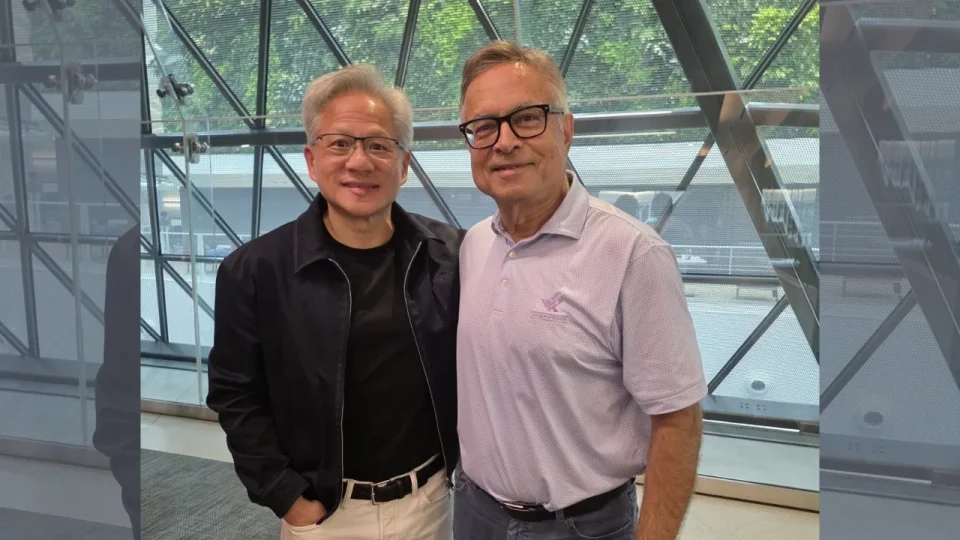
US federal investigators are examining whether Nvidia-powered servers were diverted to China, and have reportedly sought information about another relationship involving Jay Puri, Nvidia’s former head of Worldwide Field Operations, and Cenly Chen, Corporate Senior Vice President, Strategic Sales & Managing Director, Supermicro.
The FBI recently interviewed a person familiar with Super Micro and reportedly sought information about top executives, including Chen. The Justice Department unsealed charges on March 19 against Super Micro co-founder Yih-Shyan “Wally” Liaw, sales manager Ruei-Tsang Chang and contractor Ting-Wei Sun, reports Reuters. WSJ further said that prosecutors allege that the three directed a Southeast Asian company to order about 2.5 billion dollars worth of Super Micro servers in 2024 and 2025, then diverted at least $510 million worth of them to China.
The Personal Connection
Puri’s relationship with Chen has drawn scrutiny mainly because of their professional roles. Puri led Nvidia’s global sales team, which was responsible for deciding how the latest chips were allocated to customers, while Chen worked closely with Super Micro’s customers and had regular dealings with Nvidia. Reports say the two dated for several years before marrying on March 7.
Super Micro has reportedly said Chen did not manage its overall relationship with Nvidia or its procurement of Nvidia GPUs. The company said chip allocation to customers was determined through a multi-department process.
Why the Overlap Matters
The central question is whether personal ties between a senior Nvidia sales executive and a senior Super Micro executive could have influenced access to scarce Nvidia chips. Puri’s role reportedly gave him oversight of global sales and chip allocation, while Chen’s role put her close to Super Micro’s customers and its dealings with Nvidia.
That overlap is what has drawn scrutiny, even though there is no public allegation that either Puri or Chen helped divert chips to China. Reports say the relationship did not allege wrongdoing by either executive.
The case matters because Nvidia’s chips are seemingly among the most sought-after AI hardware in the world, and access to them can determine which companies can build advanced AI systems; And thus, a suggestion that personal relationships influenced allocation could raise questions about fairness, transparency, and export-control compliance.
The Wider Probe
The indictment accuses the three men of conspiring to smuggle more than $500 million worth of servers containing high-end Nvidia chips into China. The case has become one of the most significant tests of US export controls on advanced AI hardware. Super Micro has said it was a victim of the alleged scheme and has cooperated with investigators, according to Reuters. The company further said it placed the employees on leave and ended its relationship with the contractor.
Liaw has pleaded not guilty and resigned from Super Micro’s board in March. The third-party broker has pleaded guilty as part of an agreement with prosecutors, according to court filings, cited by WSJ. The third defendant, a Super Micro sales manager based in Taiwan, has reportedly not appeared in court.
The Jensen Huang backdrop
The report comes as Nvidia deals with revelations about co-founder Jensen Huang’s extramarital affair with Alice Huang, a former executive at Singapore-based Megaspeed International. US officials have suspected that Alice Huang may have worked with Chinese intelligence, allegations that Beijing denies.
Huang resigned as Nvidia’s CEO on November 12 but was reinstated this week after President Donald Trump intervened with the company’s board. The board voted unanimously to bring him back as president, chief executive and board member, according to Nvidia.
The parallel scrutiny of Puri and Chen adds to the pressure on Nvidia at a time when Washington is already examining the company’s China-related exposure. Reports say Nvidia has cooperated for months with Justice Department investigations into both Megaspeed International and Super Micro.
What May Come Next
The key issue is whether investigators find any evidence that Puri’s relationship with Chen influenced Nvidia’s chip allocation or Super Micro’s access to servers. So far, the public record shows scrutiny of their professional overlap, not a charge against either individual.
The case is also likely to test how far US authorities can go in policing personal relationships inside companies whose products are subject to export controls. For Nvidia, the immediate challenge is to show that chip allocation and server sales were governed by formal processes rather than personal ties.
Also Read: China’s Space Play: Why Pakistan’s First Astronaut Matters to Beijing