Russian Missile, Drone Fall in Poland; What May Have Stopped NATO's Article 4
Poland NATO Missile: Poland’s decision not to invoke Article 4 may question NATO’s response threshold, Russia’s probing strategy, and alliance’s ability to deter future incursions.
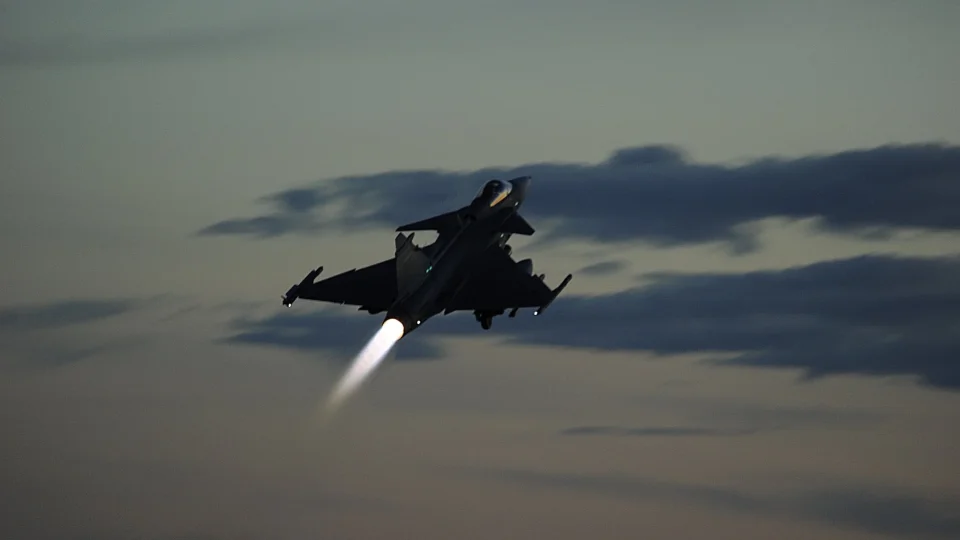
Poland Russia NATO Missile: A Russian Kh-101 cruise missile, another suspected missile, and a jet-powered drone crashed in southeastern Poland on Friday (November 20) during the Coalition of the Willing's Koalicja 2026 drills, a major military exercise, causing no reported casualties while prompting NATO condemnation, but no formal Article 4 request - a provision in NATO's founding treaty that allows any member country to formally seek consultations with other NATO members if it believes its territorial integrity, political independence or security is under threat. Warsaw called the incursions a provocation, turning the strikes into a test of allied deterrence as Russia's war presses closer to NATO territory.
Polish Prime Minister Donald Tusk said the missile “definitely came from Russia” and described it as an apparent deliberate provocation. Nato Secretary-General Mark Rutte called the breach “dangerous” and “unacceptable”, while saying Polish F-16s, backed by NATO, had responded exactly as the alliance should.
W związku z naruszeniem polskiej przestrzeni powietrznej zwołałem naradę z udziałem ministrów, przedstawicieli Wojska Polskiego oraz szefów służb. https://t.co/rlK79MJl02
— Donald Tusk (@donaldtusk)
What Entered Polish Airspace
Polish authorities said three objects violated the country’s airspace during Russia’s overnight assault on Ukraine. A Kh-101 cruise missile went down roughly 50 kilometers (30 miles) from the Ukraine border, and what officials believe was likely a jet-powered drone hit about 30 kilometers (20 miles) from the border with Ukraine, and a Russian missile is believed to have crashed around 35 kilometers from where troops from 11 countries, as many as 3,000, were taking part in logistics-training exercises, reports AP.
No casualties or damage were reported. But the timing was politically explosive: the missile landed while Western forces were conducting drills nearby, and shortly before Britain’s Defence Secretary Wes Streeting and counterparts from other participating countries were due to visit the training site.
NATO deployed Polish, Swedish and Dutch aircraft and activated ground-based radar systems for air defence. Rutte later said allies stood in “full solidarity” with Poland.
During the overnight air defence operations over Poland, Swedish JAS Gripens scrambled to defend Allied airspace. The Swedish pilots tracked several targets during the operation and showed great courage as they operated in very difficult weather and low visibility conditions. https://t.co/M1YBaaOwB0
— Försvarsmakten (@Forsvarsmakten)
A Deliberate Provocation?
Tusk’s accusation was reportedly that the missile’s arrival on Polish soil was unlikely to have been accidental. “What fell on Polish soil definitely came from Russia,” he said, calling it a deliberate provocation.
W związku z naruszeniem polskiej przestrzeni powietrznej zwołałem naradę z udziałem ministrów, przedstawicieli Wojska Polskiego oraz szefów służb. https://t.co/rlK79MJl02
— Donald Tusk (@donaldtusk)
The Washington-based Institute for the Study of War went further, assessing that Russia timed the incursions to coincide with the Coalition of the Willing exercises to test NATO’s response and deter support for Ukraine. That is an analytical judgement, not an independently verified fact, but it may fit a probable wider pattern of Russian coercion aimed at European capitals.
The incident may have raised questions about how NATO assesses and responds to repeated Russian incursions near its eastern border. A missile landing on alliance territory during a Western military exercise is seemingly more serious and escalated than the polystyrene-foam decoy drones that entered Poland last year, but the alliance’s public response has so far focused on condemnation and solidarity rather than a new collective escalation.
Why Was Article 4 Not Invoked?
Article 4 of the North Atlantic Treaty is a mechanism for collective discussion and coordination; it does not, by itself, trigger the mutual military defence commitment set out in Article 5. Poland did not formally invoke Article 4 after the latest incident. Warsaw had previously done so after around 20 Russian drones entered its airspace last year, a step that contributed to the creation of Eastern Sentry, a NATO operation intended to strengthen the alliance’s eastern flank.
After this incident, Polish officials reportedly asked NATO for additional forces and air-defence capabilities. Nato Secretary-General Mark Rutte said allies stood in “full solidarity” with Poland and praised its response, but the alliance did not announce a new collective escalation.
Spoke with @donaldtusk about the grave violations of Polish airspace overnight. NATO jets were scrambled in response. We stand in solidarity with Poland and will continue to strengthen our ability to deter and defend. This incident is clearly dangerous - a consequence of Russia’s ongoing war against Ukraine. I condemn Russia’s attacks as well as its ongoing war. We continue to stand united as Allies and will continue to support Ukraine
— Mark Rutte (@SecGenNATO)
The decision not to invoke Article 4 may reflect a judgment that direct requests for additional capabilities, existing NATO mechanisms and bilateral support would be more effective than formal consultations. However, The Telegraph has interpreted that Moscow could interpret Poland’s restraint as a sign that NATO is reluctant to escalate, potentially weakening its deterrent effect.
Also Read: Russia, China Disagree on Iran's Nuclear Doctrine: Araghchi
The Alliance’s Dilemma
This may expose a difficult balance. NATO wants to reassure Poland and deter Russia without allowing a single incident to trigger an escalation that could divide the alliance or draw it more directly into the war.
Whereas Rutte called the breach dangerous and unacceptable, praised Poland’s response and promised allied solidarity, but stopped short of announcing a new collective military escalation.
For Poland, the calculation may differ. Warsaw has repeatedly faced Russian drone and missile activity near its border and may prefer practical reinforcement over symbolic escalation. But the longer such incidents continue without a clear collective response, the more scope there is for Moscow to test whether NATO’s red lines are shifting.
What Happens Next
Poland is believed to be expected to press NATO for more support to secure its eastern flank. Rutte’s visit to Warsaw and his promise of allied solidarity suggest that the alliance is treating the incident seriously, even if it has not triggered Article 4.
No action has yet been taken after the episode that either produces stronger air defences, clearer rules for responding to future incursions and a more credible deterrent, or if it becomes another Russian probe met mainly with condemnation.