751 Trades Worth Up to $148 Million: Trump's Financial Disclosure Lists Nvidia, SpaceX Investments
The September transactions come as Nvidia faces leadership uncertainty and growing scrutiny over its China-related dealings, while Trump's relationship with Musk continues to navigate political differences despite their ongoing engagement.
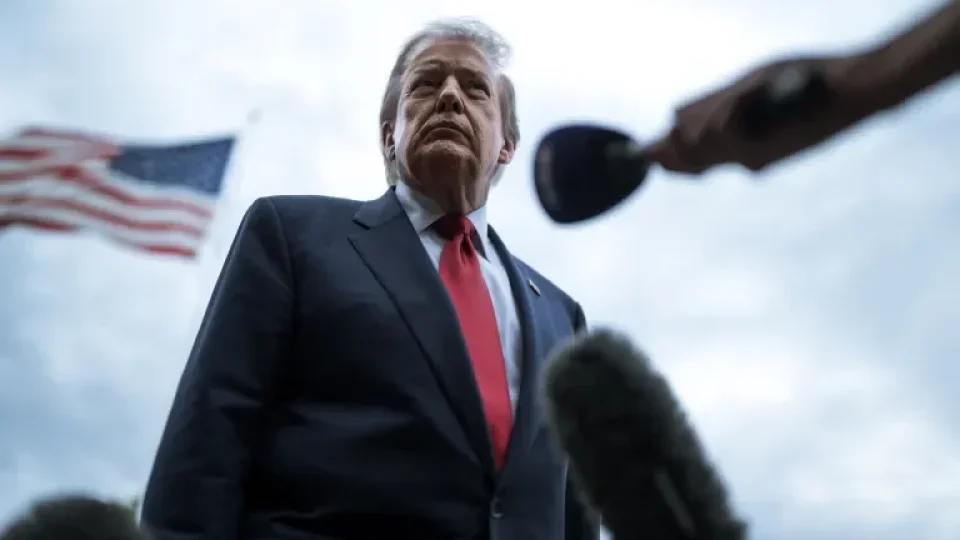
Trump Financial Disclosure: The financial disclosure filed by US President Donald Trump shows that he purchased and sold shares in several of the world's largest companies in September, including Nvidia, Amazon, Microsoft and Elon Musk's SpaceX. The disclosure provides an insight into the companies and sectors in which Trump's investment accounts have financial exposure, even as some of these businesses face political, regulatory and commercial uncertainty.
At a time when Nvidia, the world's leading AI chipmaker, is dealing with a leadership crisis and growing scrutiny over its dealings with China, Trump's latest financial disclosure assumes added significance, particularly because it records transactions involving the company. Nvidia's former chief executive, Jensen Huang, stepped down following reports about his relationship with a Chinese businesswoman suspected of having links to Beijing's intelligence network. The allegations have also raised questions about whether restricted Nvidia chips reached Chinese companies through connections associated with the businesswoman.
Nvidia's board has accepted Huang's resignation and rejected his offer to return as chief executive. The company is also facing investigations and demands for answers from US lawmakers and regulators. The controversy has brought its leadership, national security obligations and business dealings under greater scrutiny, adding to the uncertainty surrounding a company that remains central to the global artificial intelligence industry.
Against this backdrop, Trump's September disclosure records purchases and sales of Nvidia shares through his investment accounts. The transactions included several purchases and a smaller sale. The filing also lists investments in other major technology companies, including Microsoft, Alphabet, Apple and Amazon, as well as AI infrastructure company CoreWeave.
The White House has maintained that independent financial advisers manage Trump's investment accounts and that the president does not personally direct individual trades. The disclosure, therefore, does not establish that Trump personally selected these stocks or made investment decisions using government information.
SpaceX Investments as Trump's Relationship with Musk Evolves
Trump's investments in SpaceX also warrant attention. The president reported several purchases of the company's shares, each valued between $1,000 and $50,000. He also reported purchasing between $100,001 and $250,000 worth of SpaceX's 5.35% senior unsecured notes. These transactions add to Trump's financial exposure to Musk's business interests. SpaceX has significant contracts with the US government, covering space launches, military satellites and communications infrastructure. Its commercial interests are therefore closely connected to federal spending and government decisions.
Trump and Musk were once close political allies, with the billionaire playing a prominent role in the president's political campaign and subsequent government agenda. Their relationship, however, came under strain following disagreements over government spending, tariffs and other policy matters. Although the two have since restored some of their public ties, their political positions have not always remained aligned. Musk has distanced himself from the MAGA label, indicating that his political positions do not necessarily reflect unquestioning support for Republican Party policies. Trump, meanwhile, has continued to describe Musk as a friend.
Musk's presence alongside Trump during his recent Asia trip also indicates that their engagement has continued despite earlier disagreements. However, the relationship has yet to demonstrate the degree of political alignment that characterised their earlier association. The September investments in SpaceX are significant in this context. They draw attention to Trump's financial exposure to a company that has substantial government contracts, while its founder continues to maintain a public and business relationship with the president.
Stock Sales Across Consumer, Industrial and Pharmaceutical Companies
Alongside these purchases, Trump's investment accounts reported several major stock sales. These included transactions involving Comcast, McDonald's and Home Depot, each valued between $1 million and $5 million. The disclosure also listed hundreds of smaller transactions involving companies such as Nike, Tesla, Boeing, Eli Lilly and Amazon. Collectively, the purchases and sales cover a wide range of sectors, including consumer goods, retail, pharmaceuticals, aerospace and artificial intelligence.
Trump also purchased corporate debt issued by several major companies, including Boeing, Occidental Petroleum, Macy's, Victoria's Secret, Sirius XM, General Motors and Coty. His investments also included subordinated debt issued by major financial institutions such as JPMorgan Chase, Capital One, M&T Bank, Citizens Financial, Morgan Stanley, Charles Schwab and State Street.
The filing further recorded dozens of purchases of tax-exempt municipal bonds. The reported transactions do not necessarily indicate a change in Trump's personal position on any of these companies. The disclosure provides transaction values within specified dollar ranges rather than exact amounts. These figures should not be interpreted as the total value of his holdings, the proceeds from individual sales or the profits and losses associated with his investments.
What does the Disclosure Reveal?
Under the federal Stop Trading on Congressional Knowledge (STOCK) Act of 2012, the president and other senior government officials are required to periodically disclose securities transactions exceeding $1,000. The requirement covers purchases, sales and exchanges involving stocks, bonds and other financial instruments. The disclosure requirements are intended to improve transparency around the financial interests of senior public officials and help identify potential conflicts of interest.
The White House has previously maintained that outside financial advisers independently manage Trump's investment accounts and make trading decisions without his personal direction. The high volume of transactions across hundreds of companies may also reflect routine portfolio management and rebalancing.
Nevertheless, investments in companies with substantial government contracts or exposure to federal policy decisions warrant public scrutiny. SpaceX, for instance, relies partly on federal contracts, while Nvidia operates in an industry directly affected by US decisions on technology exports and national security. The disclosures do not, by themselves, establish wrongdoing or a conflict of interest. They do, however, provide a record of the president's financial exposure to businesses whose commercial prospects can be influenced by government policies and regulatory decisions.
Trump's estimated net worth
According to Forbes, Trump had an estimated net worth of $6.3 billion, placing him among the world's richest individuals. His wealth has increased substantially since his return to the White House, with cryptocurrency-related ventures contributing significantly to his growing fortune. However, the September financial disclosure should be distinguished from estimates of Trump's overall wealth. The dollar ranges in the filing represent individual transaction values and do not establish the total value of his assets, his remaining investments or his net worth.