Why BJP Needs The SAD For A Jubilant Win In Punjab
BJP SAD Alliance Punjab Elections 2027: The BJP and Shiromani Akali Dal have revived their political alliance ahead of the 2027 Punjab Assembly elections. But rebuilding their old electoral partnership will require overcoming the fallout of the 2020 split, declining support for the SAD and questions over seat-sharing, even as both parties seek to challenge the AAP government.
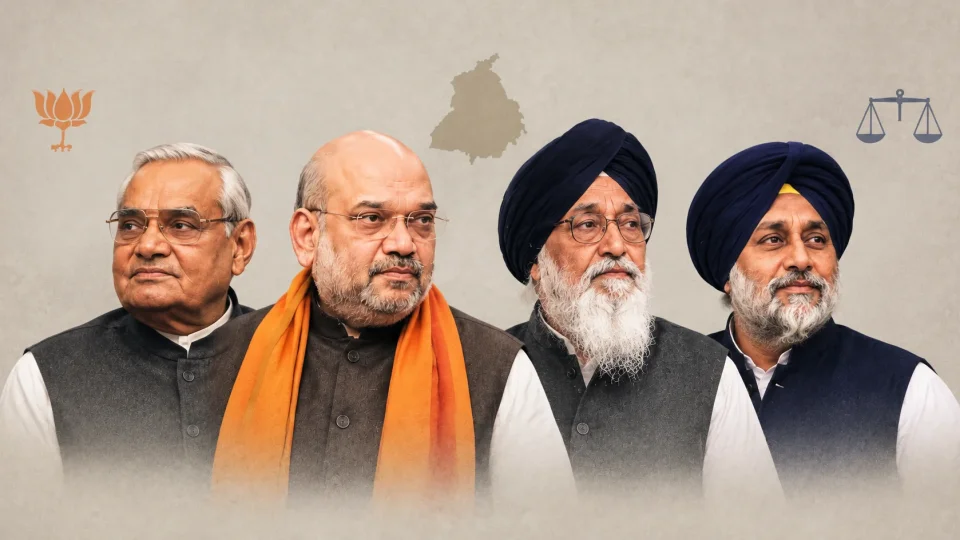
BJP SAD Alliance Punjab Elections 2027: The reunion of the Bharatiya Janata Party (BJP) and the Shiromani Akali Dal (SAD) ahead of the 2027 Punjab Assembly elections is more than an attempt to revive a 24-year-old political partnership. It reflects the electoral limitations both parties have faced since their separation in 2020 and their recognition that their respective strengths could be more useful together than separately. For the BJP, the Akali Dal offers something it has struggled to establish independently in Punjab: a regional political network with a history of support among rural voters and the Sikh electorate. For the SAD, the BJP brings national-level organisational resources and campaign machinery at a time when the regional party is trying to regain lost political ground.
The two parties first came together electorally in 1996, following the Akali Dal's Moga Declaration, which sought to broaden its political appeal beyond Sikh religious and community concerns to embrace the larger idea of Punjab, Punjabi and Punjabiyat. Their electoral constituencies were largely complementary. The SAD had its strongest presence among Sikh farmers and rural voters, while the BJP had a more established support base among urban Hindu voters. This division allowed both parties to consolidate their respective constituencies without directly competing for the same sections of the electorate.
Also Read: Dairy Waste, Untreated Sewage Enter Yamuna Drains: What CPCB’s Year-Long Monitoring Reveals
The arrangement brought electoral success in 1997, when the SAD-BJP combine formed the government with Parkash Singh Badal as chief minister. The alliance returned to power in 2007 and 2012, governing Punjab for a decade. Its seat-sharing formula reflected the political hierarchy between the partners: the Akali Dal contested 94 of the state's 117 Assembly seats, while the BJP contested 23. In Lok Sabha elections, the SAD contested 10 of Punjab's 13 constituencies, leaving three for the BJP. The arrangement allowed the BJP to maintain a political presence in Punjab without having to independently develop the statewide reach that the Akali Dal had built over decades.
The Farm Laws Changed The Political Equation
The partnership came to an end in September 2020 when the Centre's three agricultural laws triggered widespread opposition in Punjab. Agriculture is closely connected to the state's rural economy, social identity and political landscape, making the legislation particularly contentious. The Akali Dal found itself in a difficult position as its continued association with the BJP risked alienating its traditional support base. Harsimrat Kaur Badal resigned from the Union Cabinet, and the SAD formally withdrew from the NDA, ending its 24-year alliance with the BJP.
The split was not an ordinary disagreement over political strategy or seat-sharing. It involved an issue that had mobilised farmers across Punjab and subsequently developed into a nationwide agitation. Although the three farm laws were repealed in November 2021, the political consequences of the confrontation remained. The BJP lost the support of its former ally's rural network, while the Akali Dal had to establish itself independently after walking away from a partnership that had sustained it through several elections.
Also Read: Kashmir's Last Local Terrorist Is Dead. What It Meant to Live with Militants Next Door
The 2022 Assembly election demonstrated how much political ground both parties had lost. The Aam Aadmi Party (AAP) won 92 of Punjab's 117 seats, securing 42.01% of the vote and reducing the Congress to 18 seats. The SAD won just three seats with 18.38% of the vote, while the BJP secured two seats with 6.60%. The former ruling partners had failed to revive their electoral fortunes separately, while AAP benefited from a strong anti-incumbency sentiment against the Congress government and its campaign promises of political and administrative change.
Why BJP Needs The Akali Dal Again
The 2024 Lok Sabha election offered a fresh indication of why the two parties might benefit from coming together. The BJP's vote share in Punjab increased to 18.56% in 2024, compared with 9.63% in 2019. Although it failed to win any of the state's 13 parliamentary constituencies, it finished second in Ludhiana, Jalandhar and Gurdaspur and led in 24 Assembly segments. The performance suggested that the BJP had expanded its independent electoral presence but had not yet developed the statewide political reach needed to translate that support into parliamentary victories.
The SAD, meanwhile, experienced a further decline. Its vote share fell from 27.45% in 2019 to 13.42% in 2024, and it managed to win only one Lok Sabha seat. The figures highlight the different problems confronting the two parties. The BJP has expanded its support base, particularly in constituencies with an established urban presence, but still needs a stronger regional network. The Akali Dal retains its political identity and organisational history, but has struggled to turn that legacy into electoral victories.
Their combined vote shares in the 2024 Lok Sabha election would have been approximately 32%, higher than the individual vote shares of either AAP or the Congress. This does not guarantee a similar performance in the 2027 Assembly elections, but it explains the electoral arithmetic behind the reunion. The BJP could benefit from the Akali Dal's rural connections and familiarity with Punjab's regional concerns, while the SAD could gain from the BJP's national leadership, organisational resources and campaign infrastructure.
How The Alliance Could Complicate AAP's Position
For AAP, the return of its former allies introduces a different political challenge ahead of the 2027 elections. Its 2022 victory was built on an unusually strong mandate, but the Bhagwant Mann government is now facing questions over drug abuse, law and order, unemployment and Punjab's financial position. These issues have featured prominently in the opposition's criticism of the government, giving the BJP and SAD common ground for their campaign.
Also Read: Sheikh Hasina's Return Bid Exposes Bangladesh's Unfinished Political Transition
Amit Shah has already placed the drug menace at the centre of his political pitch, promising a drug-free Punjab by December 2029. By holding both the AAP and the previous Congress government responsible for failing to address the problem, the BJP is attempting to make governance and accountability central to the election debate. The Akali Dal can strengthen this campaign through its regional network and familiarity with rural Punjab, while the BJP can bring its national leadership and organisational machinery into the contest.
The Congress, however, remains an important factor. In the 2024 Lok Sabha elections, it won seven of Punjab's 13 seats, compared with three for AAP and one for the SAD. The BJP failed to win a single seat. This shows that the anti-AAP political space is not exclusively occupied by the former allies. The Congress retains an independent electoral base, and the BJP-SAD alliance cannot simply assume that voters dissatisfied with the incumbent government will automatically support it.
The Biggest Challenge Is Winning Back Farmers
Despite the potential electoral advantages, the alliance faces a significant credibility problem over the farm laws. The SAD's departure from the NDA in 2020 was rooted in its opposition to the legislation, and its return to the BJP-led alliance raises questions about how it will explain the political reversal to farmers who participated in the agitation. The repeal of the laws removed the immediate legislative dispute, but it did not automatically restore the trust damaged during the confrontation. The Akali Dal will have to demonstrate that its regional interests and commitment to agricultural concerns remain central to the partnership.
The BJP faces a related challenge. Its improved vote share in 2024 suggests that it has expanded its independent support base, but its inability to win a single parliamentary constituency indicates that a larger vote share does not necessarily translate into victories. The Akali Dal could help bridge that gap, but its own standing among farmers cannot be taken for granted. Its declining vote share also shows that the party has considerable ground to recover. Sukhbir Singh Badal will have to demonstrate that the SAD can rebuild its credibility beyond its traditional organisational structure and the political legacy of the Badal family.
Seat Sharing Will Test The Partnership
Another important aspect of the renewed arrangement will be the division of Punjab's 117 Assembly constituencies. Under their previous formula, the SAD contested 94 seats and the BJP 23. However, reports ahead of the alliance announcement suggested that the BJP could seek around 40 seats, nearly double its previous share. Its improved performance in 2024 gives it an argument for a larger role, but the SAD has historically been the senior partner and will be reluctant to surrender too much of its political territory.
Amit Shah's announcement that the Akali Dal would remain the bada bhai, with the chief minister coming from the regional party, is an important reassurance to Sukhbir Badal. It suggests that the BJP is willing to preserve the broad political hierarchy of the earlier alliance even as it seeks a larger electoral role. However, the actual test will come when individual constituencies are allocated. Both parties will have to accommodate local leaders, former candidates and political aspirants who may have spent years preparing to contest independently. Disagreements over seats could create internal resentment and make it difficult to ensure that supporters of both parties vote for the alliance's common candidates.
The BJP-SAD reunion marks an attempt to revive a political arrangement that once helped both parties maintain a significant presence in Punjab. But the state has changed considerably since they parted ways in 2020. The BJP needs the Akali Dal's regional reach and political identity, while the SAD needs the BJP's national resources and organisational support. Their ability to rebuild trust, particularly among farmers, and find common ground on seat-sharing will shape how the partnership functions in the coming months. The reunion changes Punjab's opposition arithmetic, but it also brings back old questions about political credibility, regional interests and the challenges of keeping two parties with different electoral ambitions together.