Dairy Waste, Untreated Sewage Enter Yamuna Drains: What CPCB’s Year-Long Monitoring Reveals
CPCB and DPCC monitored 52 Yamuna drain locations for a year, finding dairy waste, sewage and industrial effluents. They flagged 12 hotspots and found 11 faulty wastewater traps.
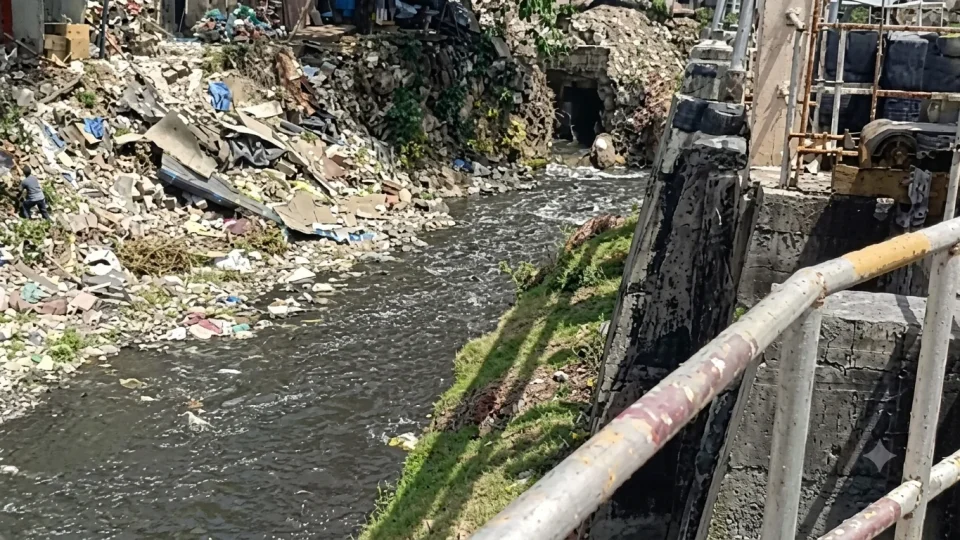
Yamuna Pollution Delhi: A year-long monitoring exercise by the Central Pollution Control Board (CPCB) and the Delhi Pollution Control Committee (DPCC) has found untreated or partly treated sewage, industrial effluents, and solid waste entering drains that discharge into the Yamuna in the Delhi-NCR stretch. The report identifies 12 drains as major pollution hotspots, linking dairy-related waste to high pollution readings at two locations. This helps address whether, and to what extent, dairy farms and other establishments contribute to the pollution entering the Yamuna.
The findings holds significance as Delhi tightens pollution norms for dairy farms and dhobi ghats as part of its Yamuna clean-up drive. However, drains are also receiving sewage, industrial discharge and solid waste, while parts of the existing wastewater-interception system are not working properly.
What Was Monitored
The joint monitoring programme began in May 2025 and continued until April 2026. CPCB and DPCC covered 52 sampling locations across two major drainage systems, the Sahibi River, also known as the Najafgarh drain, and the Shahdara drain, along with their secondary and smaller drains. Water samples were tested every month for 12 parameters. These included BOD and COD, which measure organic and chemical pollution; total suspended solids; ammoniacal nitrogen; total phosphorus; faecal coliform; and total organic carbon.
- BOD & COD (Organic and Chemical Waste): Amount of sewage and chemical waste in the water, which sucks out oxygen and kills fish and river life.
- TSS (Suspended Solids): Measures solid dirt, silt, and waste particles floating in the water.
- Ammoniacal Nitrogen: Raw sewage and animal waste (like cattle urine and dung).
- Total Phosphorus: Excess nutrients (often from detergents and waste) that trigger toxic algae growth.
- Faecal Coliform: Bacteria from human and animal waste that make water dangerous for human contact.
These indicators establish the nature and severity of pollution entering the drainage network before it reaches the Yamuna.
12 Drains Flagged
The report identified 12 drains as major pollution hotspots based on water-quality analysis. Monitoring found untreated or partially treated sewage and industrial effluents entering the drainage network.
- Palam drain
- Ramesh Nagar drain
- Nangloi drain
- Leg 1 drain
- Outfall of New Moti Nagar
- Mungeshpur drain
- Drain No. 6
- New Drain (AB7)
- Shahdara drain
- Shahdara Link Road drain
- Sahibabad drain
- Trunk Drain No. 1
Identifying a hotspot does not mean one particular establishment is responsible. Drains collect wastewater from many sources, including households, commercial units, industries, and animal sheds.
Dairy Waste at Two Sites
There are two specific observations linking dairy-related activities to water contamination.
- At the Nangloi drain, the report recorded an ammoniacal nitrogen concentration of 43.8 mg/L. It attributed the high reading to discharges from local dairies and animal sheds. Ammoniacal nitrogen is an important indicator when tracing sewage and animal-waste contamination.
- At the Mandauri drain, upstream of the Mungeshpur drain near the Auchandi border, the report recorded an extremely high faecal coliform reading of 2 x 10^15 MPN/100 ml. The report again attributed the contamination to discharges from local dairies and animal sheds.
However, there is no identification of individual dairy farms or statement of how much cattle waste each establishment contributes. It records pollution at the drain level, where wastewater from multiple sources mixes.
What Delhi’s July 2026 Progress Report Shows on Dairy Waste, Factories, and Enforcement
Separate data from the DPCC’s July 2026 Monthly Progress Report (submitted to the Ministry of Jal Shakti in September 2026) helps provide picture of how cattle dung is clogging Delhi's drainage network, and how authorities are cracking down on other polluting businesses:
- Ghazipur Dairy Farm: During July 2026 inspections, the outfall, with a capacity of 6.7 MGD, was found completely non-operational.
- Najafgarh Drain: A sub-drain feeding here was found carrying cow dung from the Bhalswa area, while the interceptor trap at Bhalswa Dairy was bypassing wastewater entirely.
To tackle these, as per report, Delhi is setting up biogas plants to stop cattle dung from entering drains. A 200-tonnes-per-day plant was inaugurated at Nangli Dairy in September 2025, and a 100 TPD compressed biogas plant operates at Ghogha Dairy. Plants are also planned at Goyla Dairy and Ghazipur Dairy.
Will the New Norms Solve the Problem?
Delhi’s new requirements for dairy farms and dhobi ghats are meant to control waste at the source. However, it is equally necessary to address how cattle dung, wastewater and other waste are collected, transported and treated, as suggested by the reports to authorities. Also, further concerns arise around composting or biogas capacity, collected dung’s treatment, who will monitor compliance, and whether authorities will measure reductions in ammoniacal nitrogen and faecal coliform after the norms are implemented.
The report recommends drain-specific pollution-control measures, removal of solid waste from drains and their banks, restoration of non-functional tapping systems and removal of accumulated sludge before the monsoon. It also calls for further monitoring of interstate drains from Haryana and Uttar Pradesh and preparation of pollution-load calculations using water-quality and flow data.
Also Read: CAQM Report Exposes Sharp Divide in Delhi’s 2026 Anti-Pollution Drive
Enforcement Gap
The report also points to gaps in implementation. It found solid-waste dumping at 32 locations and inadequate or non-functional wastewater-tapping arrangements at 11 drains. Tapping systems are meant to intercept wastewater and divert it towards treatment facilities rather than allowing it to flow untreated into the river. It specifically recommended that the Delhi Jal Board restore non-functional tapping systems at Palam, Ramesh Nagar, Nangloi, Yamuna Vihar and AB-7.
According to the NMCG’s August 2026 progress report, DPCC issued directions on February 5, 2026, to several civic and government agencies for removing solid waste identified in earlier monitoring reports. Reminders were issued on May 15 and July 8, 2026, but the action-taken report was still awaited.
DPCC also completed source mapping in 17 drains and sent drain-specific action points to concerned departments in April 2026. The August progress report said the action-taken report on those points was still awaited.