West Bengal SIR: SC Asks ECI to Prioritise Appeals by Voters Whose Names Were Deleted
West Bengal SIR Voter Appeal Tribunals: The Supreme Court has asked the Election Commission to increase the number of tribunals hearing appeals arising from West Bengal's Special Intensive Revision (SIR) of electoral rolls. It has called for appeals against voter deletions to be prioritised, particularly in constituencies where civic body elections are scheduled.
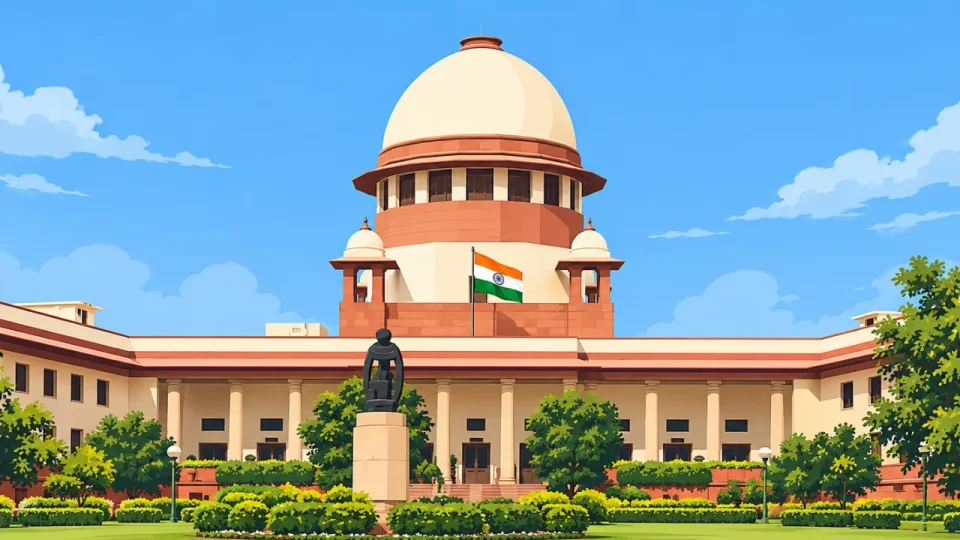
West Bengal SIR Voter Appeal Tribunals: The Supreme Court on Monday has asked the Election Commission of India (ECI) to increase the number of appellate tribunals hearing appeals arising from the Special Intensive Revision (SIR) of electoral rolls in West Bengal, in consultation with the Chief Justice of the Calcutta High Court. The bench, comprising Chief Justice of India Surya Kant and Justices Joymalya Bagchi and V Mohana, asked the tribunals to ensure that the priority is given to the matter regarding the deletion of voters' names, particularly in Assembly constituencies where civic body elections are scheduled.
The bench instructed the tribunals to distinguish the appeals into two categories: those challenging the deletion of names from the electoral rolls and those challenging the inclusion of names. It stressed that the matter of the inclusion of names could be taken up subsequently as they do not require the same degree of urgency.
Also Read: COP31: Climate Change Negotiations and the Collapse of Common but Differentiated Responsibility
The apex court also directed the ECI to identify suitable premises at different locations across Kolkata to make it easier for people to access the appellate tribunals and expedite the disposal of pending appeals. It specifically said appeals concerning voters within the jurisdiction of the Kolkata Municipal Corporation should be given preference.
Why the Court Wants Faster Disposal of Appeals
The Supreme Court's directions come amid a large number of pending appeals arising from the SIR exercise in West Bengal. Earlier, the ECI had informed the court that nearly 38 lakh appeals had been filed. Of these, 22.22 lakh concerned the deletion of names from the electoral rolls, while 16.10 lakh challenged the inclusion of names. At the time of the figures reported in September, 37 lakh appeals were pending. These are figures from the Commission's earlier submission and should not be treated as the current pendency.
The distinction between the two categories is important. Appeals against deletion are filed by people seeking restoration of their names in the electoral rolls. Appeals against inclusion, meanwhile, challenge the addition of names to the rolls.
By directing the tribunals to prioritise deletion-related appeals, the court has sought to ensure that voters challenging their exclusion receive attention without having to wait for the disposal of all categories of cases. The direction to identify tribunal premises at different locations in Kolkata also addresses the question of accessibility. The court has specifically prioritised appeals concerning voters under the Kolkata Municipal Corporation, where the disposal of such cases could have a direct bearing on their ability to participate in upcoming civic elections.
Aslo Read: India Is Asia's Third-Most Powerful Nation. Economic Clout Remains a Weak Link
Supreme Court's Earlier Directions
The top court was hearing petitions seeking measures to streamline and expedite the disposal of appeals before the tribunals constituted to adjudicate grievances arising from the SIR of electoral rolls in West Bengal. On August 25, the Supreme Court had directed the ECI to furnish details of pending and disposed-of appeals, including a separate account of cases filed by voters challenging their exclusion from or inclusion in the electoral rolls. It had also asked the Commission to indicate how many additional tribunals would be required to ensure time-bound adjudication.
The latest directions seek to address the volume of pending appeals, the need to prioritise challenges to voter deletions and the accessibility of the tribunals. The court has also clarified that appeals challenging voter inclusion can be taken up subsequently, rather than being treated with the same degree of urgency as appeals against deletion.
(With PTI Inputs)