India Is Asia's Third-Most Powerful Nation. Economic Clout Remains a Weak Link
India Asia Power Index 2026: The Lowy Institute's 2026 Asia Power Index shows India holding third place with a score of 40.5, behind the US (78.9) and China (73.6). Gains in defence networks and cultural influence, along with strong regional diplomacy, helped narrow the gap with China, while a weaker economic score and a lower global diplomatic profile held India back.
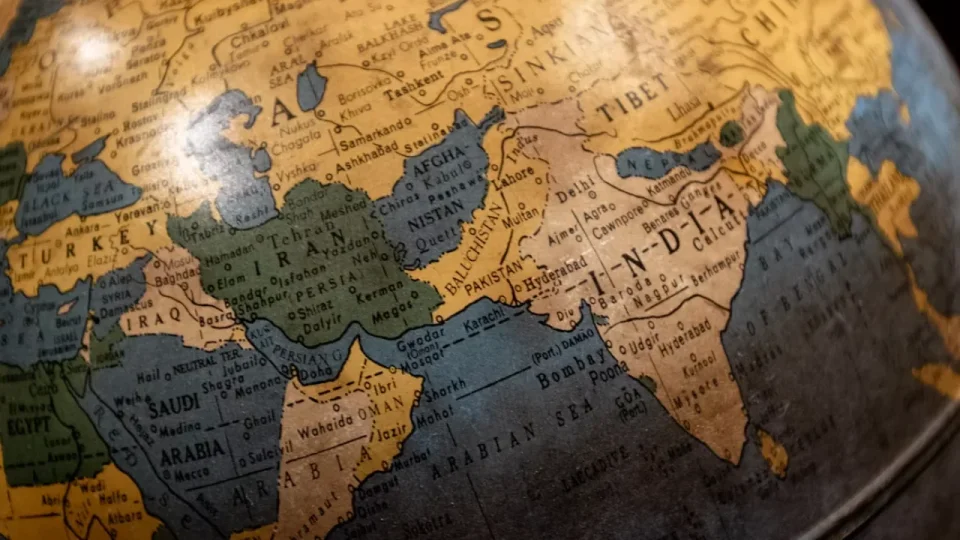
India Asia Power Index 2026: India's influence in Asia is growing, according to the latest assessment by Australia's Lowy Institute, which also points to an interesting contradiction. It says India's economic capabilities have weakened and its global diplomatic profile has lost some ground. Yet, it has strengthened its regional relationships, expanded defence partnerships and improved its cultural influence. These gains have helped India narrow the power gap with China, which is still 80% more powerful than India. The figure may sound significant, but the assessment shows that India's progress has consolidated its position as Asia's third most powerful country in 2026.
India scored 40.5 in the 2026 index, behind the United States at 78.9 and China at 73.6. While its overall position has remained unchanged, the scores across individual measures reveal a more complicated picture of India's rise. Its defence networks and cultural influence improved, while its regional diplomatic standing also remained strong, even as its global profile faced questions.
Economic Strength Does Not Automatically Translate into Regional Influence
India's economic performance presents one of the clearest contradictions in the assessment. Its Economic Capability score fell by 0.7 points to 26.4, although it retained third place. A weakening rupee, a change in the International Monetary Fund's (IMF) method of measuring economies and a nearly $20 billion fall in outbound investment contributed to the decline.
Also Read: COP31: Climate Change Negotiations and the Collapse of Common but Differentiated Responsibility
Its long-term economic outlook, however, moved in the opposite direction. India's Future Resources score rose by 1.2 points to 56.2, keeping it third in the category. The improvement reflects a more favourable economic forecast and points to the potential scale of India's future economic strength. The distinction matters. India may have considerable economic potential, but translating that potential into present-day regional influence requires more than a large economy. It also depends on investment, trade integration and economic relationships that create lasting interdependence.
There are signs that India is making progress here. It was among only five countries whose Economic Relationships score did not decline in 2026. Its score remained at 19.9, but its ranking improved by two places to seventh. That relative stability is significant at a time when several countries saw their regional economic relationships weaken. However, it does not mean India has established the kind of deep economic networks that would match its ambitions as an Indo-Pacific power. Maintaining existing relationships is one thing; becoming an indispensable economic partner is another.
Defence Partnerships Are Becoming an Important Source of Influence
If economic relationships show where India is holding its ground, defence networks offer a clearer example of where it is gaining ground. India's Defence Networks score rose by 2.1 points to 18.6, moving it two places higher to ninth. The Lowy Institute attributes the improvement to greater regional defence engagement and BrahMos missile sales to Southeast Asia.
The BrahMos deal with the Philippines is particularly important. It gives India a role in strengthening the defence capabilities of a country facing growing maritime tensions in the South China Sea. It also creates an opportunity for New Delhi to deepen military engagement with Southeast Asian countries beyond diplomatic statements and joint exercises.
Why does this matter? Defence partnerships can extend well beyond the initial sale of military equipment. They can lead to long-term cooperation involving training, maintenance, technology and military engagement. Such relationships can give India a more sustained presence in a region where China's military influence remains a major consideration.
Also Read: Maharashtra UCC: The Transgender Concerns That May Not Make It Into the Draft
But India still has ground to cover. Its ninth-place position in Defence Networks shows that its regional defence relationships are developing rather than firmly established. A few significant arms deals cannot, on their own, create a broad security network. The real test will be whether India can sustain these partnerships through continued supplies, support and cooperation.
Diplomacy Remains Strong in Asia, but India's Global Profile Faces Questions
Diplomatic Influence remains India's strongest measure in the index, with a score of 70.3 despite a marginal decline. It retained fourth place, suggesting that its standing in Asia remained relatively resilient even as several countries lost ground.
One notable finding concerns Prime Minister Narendra Modi's regional leadership. Expert assessments improved markedly, moving him up three places to become the second-most effective regional leader, behind Chinese President Xi Jinping.
However, the picture changes when it comes to India's global diplomatic profile. Assessments of Modi's global leadership and strategic ambition declined, reflecting India's lower diplomatic profile during the Gulf conflict.
The Lowy Institute points to India's muted response after a US submarine sank an Iranian naval vessel returning from an exercise hosted by India. The incident raised questions about how New Delhi balances its relationships with competing strategic partners.
This is a difficult position for India to navigate. Its ties with the United States are important, while its relationship with Iran also carries strategic and regional significance. Taking a position during a conflict involving major partners can carry diplomatic costs. But a limited public response can also raise questions about India's willingness to exercise diplomatic influence when its interests are involved.
The contrast in the index is worth noting: India's regional leadership standing improved, even as perceptions of its global diplomatic role weakened. Its influence in Asia is therefore not necessarily translating into an equally strong profile on the wider international stage.
Cultural Influence Gives India Another Route to Regional Reach
India's gains in Asia are not limited to defence and economic relationships. Its Cultural Influence score rose by 2.3 points to 43.8, with improvements across all three dimensions measured by the index: cultural projection, information flows and people exchanges. This adds another dimension to India's regional presence. Cultural connections, information networks and exchanges between people can help build familiarity and relationships that extend beyond formal diplomacy or military cooperation.
India ranked fourth in Cultural Influence, giving it a stronger position in this area than in its economic relationships and defence networks. The improvement also suggests that its influence is being shaped by several channels at once, rather than relying solely on its economic size or political leadership.
India's Bigger Challenge Is Turning Resources into Influence
Perhaps the most revealing finding is India's Power Yield score. The measure compares the influence a country actually exercises with what its resources would lead researchers to expect.
India recorded a score of minus 3.3, placing it 22nd among the 27 countries and territories assessed. In other words, India continues to exercise less influence than its economic, military and other resources might suggest. There is some progress, though. The gap narrowed for the first time since 2023. Combined with the rise in Future Resources, this indicates that India is becoming more effective at translating its capabilities into regional influence.
But the broader challenge remains. India needs to build stronger economic connections, deepen defence partnerships and maintain a more consistent diplomatic presence if it wants its regional influence to match its resource base. The 2026 Asia Power Index presents a more complicated picture of India's rise than its third-place ranking alone suggests. India is gaining ground in Asia, but not uniformly. Its defence networks and cultural influence are expanding, while its economic capability and global diplomatic profile face constraints.
And despite the narrowing gap, China remains substantially more powerful. India's progress is therefore better understood as a gradual expansion of regional influence than a fundamental change in Asia's power balance. The question now is whether India can turn this momentum into lasting regional leverage and narrow the gap further.