India and Nepal: A New Compact of Trust and Interdependence
India Nepal Ties Beyond Geopolitical Rivalries: India and Nepal have an opportunity to redefine their bilateral relationship amid changing geopolitical dynamics and growing economic ambitions.
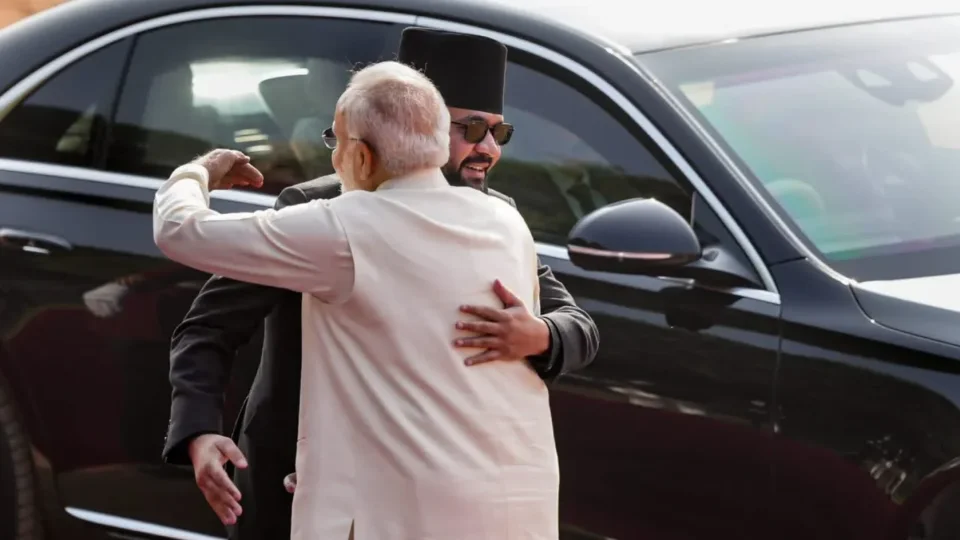
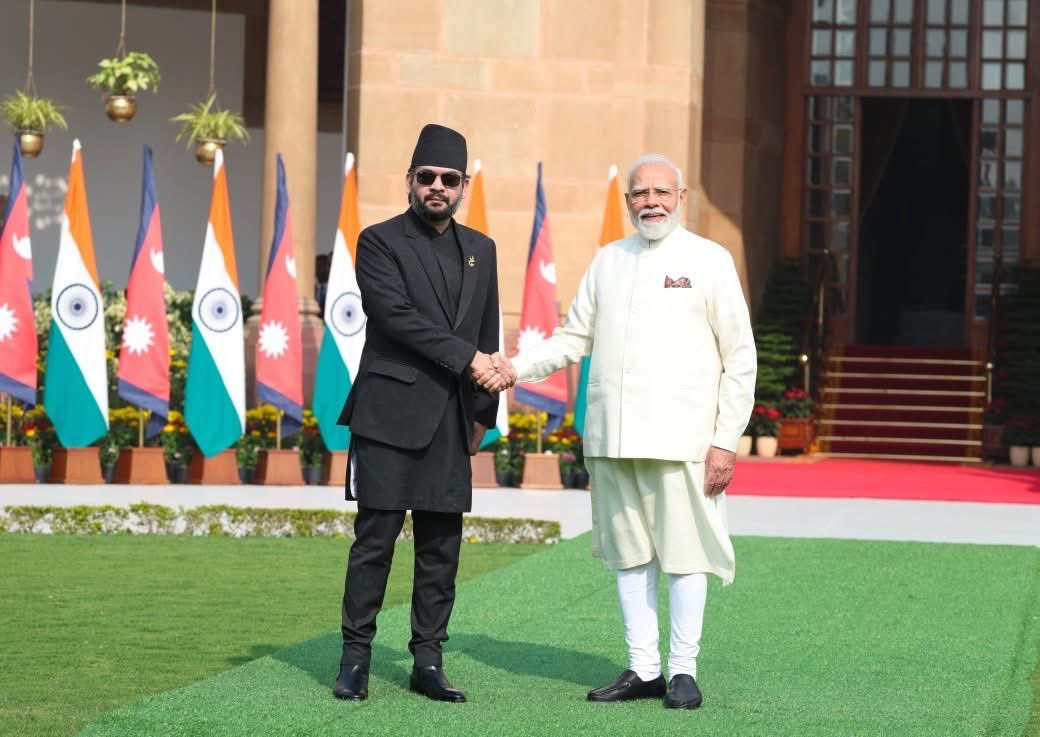
India Nepal Ties Beyond Geopolitical Rivalries: Nepal’s Prime Minister Balendra Shah’s state visit to India on 22–23 November 2026, his first after assuming office, provides an opportunity to reflect on a consequential and complex relationship. Amid shifting geopolitical and economic currents in South Asia, the two countries have an opportunity to forge a contemporary understanding of mutual interests, strategic sensitivities and shared prosperity.
Few bilateral relationships are as intertwined. Centuries of civilisational exchange, social intercourse and economic interdependence have created deep people-to-people bonds. Geography has brought the countries together, giving their relationship a distinctive character and creating opportunities for cooperation across a wide range of areas.
The Treaty of Peace and Friendship of 1950, together with its accompanying exchange of letters, institutionalised important aspects of their engagement. Reciprocal privileges relating to residence, movement and economic participation, alongside the longstanding open-border arrangement, have created a relationship unlike India’s engagement with any other neighbour. This mobility has generated goodwill and social integration.
Also Read: From Snubbing Indian Diplomats to Meeting Modi: Balen Shah's India U-Turn
The open border is one of the most distinctive features of this relationship. It facilitates legitimate movement, sustains livelihoods and strengthens social and economic ties. Its effective management is important in preventing its misuse by traffickers, smugglers and criminal networks. Both countries have a shared interest in ensuring that their territories are not used by terrorist organisations, extremist groups or transnational criminal networks. An open border must remain an enduring instrument of friendship and cooperation, supported by appropriate security coordination.
India and Nepal have an established institutional architecture comprising Home Secretary-level talks, the Joint Working Group on Border Management and Border District Coordination Committees. Regular engagement through these mechanisms, intelligence sharing and coordinated action against trafficking and organised crime can further strengthen border management while preserving the freedom of movement that has served both societies so well.
The 1950 Treaty remains a subject of political debate in Nepal, with recurring demands for its revision. The understanding reached during the visit that existing bilateral agreements, including the Treaty, could be reviewed by mutual consent offers an opportunity to bring the framework of the relationship in line with contemporary realities while preserving its fundamental advantages.
The 2015 border logistics crisis left a deep imprint on Nepal’s political consciousness. Kathmandu alleged the disruption of essential supplies to an undeclared “Indian blockade”; New Delhi denied the allegation, maintaining that the disruption arose from protests and obstructions on the Nepalese side.
Nepal’s geographical position gives it a distinctive place between India and China. Kathmandu has sought to leverage its location between two major neighbours to diversify economic partnerships, secure development assistance and expand connectivity options. India has demonstrated an understanding of Nepal’s desire to diversify its partnerships, while recognising the importance of its own legitimate security interests. Nepal, in turn, has an important stake in ensuring that its territory remains secure and that its engagement with external partners is sensitive to the security concerns of its closest neighbour. Strategic diversification and close cooperation with India can be mutually reinforcing.
Transit access is central to this relationship. For a landlocked country, access to seaports is an essential component of economic sovereignty. India’s extensive transport network and geographical proximity provide Nepal with important access to regional and international markets. Efficient customs procedures, rail and road connectivity, and predictable transit arrangements are integral to this partnership. The additional access to Deendayal Port at Kandla announced during the visit, and proposed access to Paradip once the requisite infrastructure is in place, further widen Nepal’s maritime connectivity options. These initiatives add to the scope for expanding trade and strengthening regional supply chains.
The relationship rests on mutual interests and reciprocal assurances. Nepal’s access to Indian ports, transport networks and markets is an important dimension of its economic engagement with India. Equally, India has a legitimate interest in ensuring that Nepal remains sensitive to its national security concerns.
The economic possibilities are particularly visible in the interface between Nepal, Bihar and Uttar Pradesh, where geographical proximity, shared cultural traditions and established commercial links create a natural basis for sub-national cooperation. The connections between Mithila and Nepal’s Madhesh region are deep-rooted. Janakpur’s association with the Ramayana tradition gives it a natural connection with Ayodhya. The Buddhist heritage linking Lumbini, Bodh Gaya, Sarnath and Kushinagar provides another foundation for cross-border tourism. Integrated circuits, supported by improved connectivity, simplified passenger movement and joint promotion, could create a vibrant regional tourism economy on both sides.
Trade offers further opportunities. Raxaul-Birgunj, Jogbani-Biratnagar and Sunauli-Bhairahawa should be viewed not merely as border crossings but as nodes of a wider economic geography. Cross-border industrial clusters, agro-processing facilities, logistics parks and integrated supply chains could generate employment and strengthen the productive relationship between Nepal and adjoining Indian states. A structured Nepal–Bihar–Uttar Pradesh sub-regional development framework could give institutional shape to this wider synergy.
It was indeed wonderful to meet you earlier today in Delhi. I am confident that our talks and the outcomes of this visit will boost India-Nepal linkages across key sectors like commerce, connectivity, culture and more. @ShahBalen https://t.co/Dv3Bd3Irs2
— Narendra Modi (@narendramodi) November 23, 2026
The river systems add another dimension. The Kosi, Gandak, Bagmati and Kamala connect the ecological and developmental destinies of Nepal and Bihar. They bring challenges of floods, sedimentation and displacement, while also offering opportunities for hydropower, irrigation, storage and water management. The Pancheshwar Multipurpose Project on the Mahakali, and the Saptakoshi and Sunkoshi schemes in the Koshi basin, have the potential to become important shared developmental assets. Cooperation in hydrometeorological data-sharing, early-warning systems and coordinated river management can further advance the common interests of the two countries.
The wider geopolitical setting adds to the relationship’s significance. The Framework for Belt and Road Cooperation signed by Nepal and China in December 2024 envisages a Trans-Himalayan Multidimensional Connectivity Network, encompassing roads, bridges, tunnels, railways, aviation, telecommunications and electricity transmission. It provides for objective assessment of technical, financial, commercial and economic feasibility, and value for money, before projects are prioritised. India’s approach to regional connectivity has consistently emphasised internationally recognised norms, respect for sovereignty and territorial integrity, transparency, financial responsibility, environmental safeguards and sustainable benefits for local communities. These principles are compatible with Nepal’s sovereign right to diversify its partnerships and provide a constructive basis for advancing infrastructure that supports Nepal’s long-term development and regional integration.
The visit produced a substantial set of outcomes that give practical expression to this expanding partnership. The two leaders adopted the Joint Vision, “Viksit Bharat and Samunnat Nepal: Re-imagining the Partnership”. India announced development assistance of ₹15,000 crore, comprising ₹3,500 crore in grant assistance for post-disaster reconstruction and new infrastructure, and a rupee-denominated line of credit of ₹11,500 crore for energy-sector projects. The foundation stone for the 669 MW Lower Arun Hydroelectric Project was laid virtually; the leaders also directed early finalisation of the Pancheshwar DPR and acceleration of the Saptakoshi and Sunkoshi projects.
Also Read: Ram and Sita Come Closer: India-Nepal Train to Connect Ayodhya and Janakpur
Connectivity featured prominently in the outcomes. The Sarayu-Kamala Express between Ayodhya and Janakpur adds a contemporary dimension to the civilisational relationship. The Final Location Survey for the proposed Raxaul–Kathmandu electrified broad-gauge railway has been finalised, marking an important preparatory milestone in the project. The two sides also agreed to collaborate on Nepal’s East-West Railway, prioritising the Bardibas–Nijgadh and Birgunj–Nijgadh sections. The Dharchula–Darchula motorable bridge was inaugurated, the foundation stone laid for an ICP at Banbasa, and progress at Bhairahawa, Sunauli and Dodhara-Chandani welcomed. The existing Kathmandu–Bhairahawa–Lucknow air route is to become bidirectional, subject to technical consultations.
Energy and trade infrastructure also advanced. Phase II of the Motihari–Amlekhgunj petroleum pipeline was dedicated, the foundation stone was laid for a petroleum terminal at Jhapa, and the two sides emphasised early commencement of the Siliguri–Jhapa pipeline. They also agreed to expedite cross-border retail payments, building on the linkage between India’s UPI and Nepal’s national payment system. The Chitwan Agro-Industrial Park, supported by Indian grant assistance, offers another avenue for value addition to Nepalese agricultural products.
The Joint Vision also covers education, technology, space, health, climate resilience and governance. It envisages exploring branches or campuses of reputed Indian higher educational institutions in Nepal, beginning with an IIT. Other initiatives include satellite communications through the South Asia Satellite, digital public infrastructure, start-up cooperation, sustainable urban development and capacity-building programmes.
These outcomes provide a substantial agenda for the next phase of India–Nepal cooperation. The proposed transit, railway and energy initiatives, alongside river-development projects and the review of existing bilateral arrangements, offer opportunities for sustained institutional engagement. The decision to activate a High-Level Monitoring Group, led by Nepal’s Foreign Secretary and India’s Ambassador to Nepal, meeting at least once every six months and reporting to the India–Nepal Joint Commission, provides an important framework for taking forward the agreed agenda.
India and Nepal have an opportunity to establish a mature compact that recognises each other’s developmental and security requirements. Their shared geography can facilitate secure mobility, wider access to markets and ports, and integrated sub-national growth, particularly across Nepal, Bihar and Uttar Pradesh.
The enduring strength of India–Nepal relations will lie in converting geographical interdependence into strategic confidence, political differences into constructive engagement, and shared civilisational heritage into tangible prosperity. Their relationship is sustained not merely by the frequency of high-level visits or the number of agreements signed, but by the trust they nurture, the common interests they advance and the opportunities they create for their people.a
Sanjay Kumar Verma, a 1988-batch Indian Foreign Service (IFS) officer, has held several key diplomatic assignments during his career, including serving as India's High Commissioner to Canada and Ambassador to Japan and Sudan. He was also concurrently accredited to the Republic of the Marshall Islands and served as Consul General of India in Milan. At the Ministry of External Affairs (MEA), he held the positions of Additional Secretary and Joint Secretary. After his diplomatic career, Verma served as Chairperson of the Research and Information System for Developing Countries (RIS).