


'Clear $24 Billion Trust Test or...': Khamenei's Adviser Warns War Could Take 'Another Dimension'
- 9 hours ago
- 3 min read
By Pranjal Gupta
New Delhi, June 6: “The ball is in Trump’s court,” a top Iranian official told CNN, asserting that Iran and the United States could reach a peace deal if the US President releases $24 billion in frozen Iranian assets. Mohsen Rezaei, a military adviser to Supreme Leader Ayatollah Mojtaba Khamenei, warned that Iran is prepared to “drag the conflict” beyond the Persian Gulf if America continues fighting. Speaking from Tehran in a rare interview, Rezaei noted, “The negotiations are at a deadlock, and Trump must break this deadlock.”
According to media reports, Iran is demanding that the US immediately release $12 billion of these frozen funds upon signing an interim agreement, with the remaining $12 billion to be released later.
However, US officials are hesitant to accept. They believe unfreezing the money would strip them of their current leverage over the Iranian regime. Furthermore, Trump is demanding a deal that looks far tougher than the 2015 nuclear agreement. He is strongly avoiding any move that could be seen as handing over "pallets of cash" - a phrase he frequently uses to criticize former President Barack Obama’s past financial settlements with Tehran.
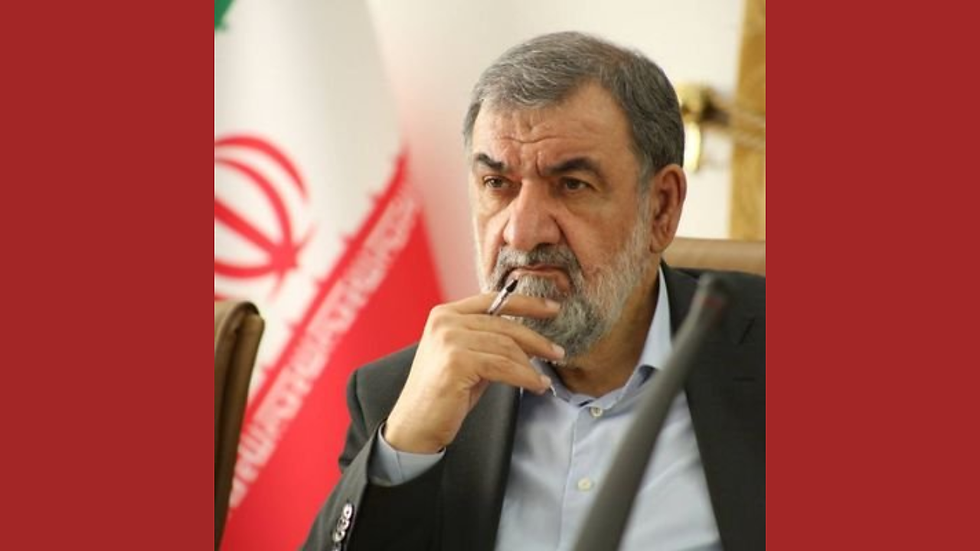
Rezaei further shared a glimpse of how Tehran views Iran’s future once the war ends. He discussed Iran’s demands in talks with the United States, the future of the Strait of Hormuz, and how Tehran might respond if it faces another military attack.
While Rezaei remains an influential figure within Iran’s security establishment, he is also considered close to the country’s supreme leader. His comments therefore carry significant weight in understanding Iran’s current strategic thinking.
Call for release of frozen Iranian assets
Rezaei said the United States should release around $24 billion in frozen Iranian assets as a sign of goodwill. He described the move as a test of trust between Tehran and Washington.
“If President Trump wants to reach an agreement with Iran, this $24 billion is a test of trust,” Rezaei said. He stressed that the money belongs to Iran and not to the United States.
According to him, releasing the funds could open a new chapter in relations between the two countries and help create conditions for future agreements.
Warning against renewed conflict
Rezaei warned that Iran would expand the scope of any future war if the United States launched another attack. He said Tehran would not limit its response to the Persian Gulf.
According to him, Iran could extend military operations from the Strait of Hormuz to other strategic waterways, including the Indian Ocean, the Bab al-Mandab Strait, the Red Sea and the Mediterranean Sea. He also suggested that Iran could target additional American military bases in the region.
Despite the warning, Rezaei said he believes the chances of another war remain low.
Dismisses possibility of Trump-Khamenei meeting
When asked about a possible meeting between US President Donald Trump and Iran’s supreme leader, Rezaei rejected the idea.
He avoided commenting on the supreme leader’s health or role in decision-making but said such a meeting would not happen at the current stage. Rezaei argued that negotiations had stalled and blamed Trump for bringing the talks to a halt.
His remarks came shortly after Trump said he and Iran’s supreme leader “seem to be getting along well” and that he would be “honoured” to meet him.
Strait of Hormuz remains central issue
Rezaei also repeated Iran’s claim that it shares sovereignty over the Strait of Hormuz with Oman. The waterway is one of the world’s most important energy routes, carrying a significant share of global oil and liquefied natural gas exports.

He said Iran and Oman should manage the strait together. Rezaei stopped short of calling Iran’s proposed charges on ships a toll, instead describing them as maintenance fees. He argued that Iran should not have to bear the cost of managing and securing the strategic passage alone.
First War Where Iran Emerged Victorious
Rezaei said Iran is prepared for the possibility of a US invasion if ongoing negotiations fail. He claimed that such a conflict would expose Iran’s true military strength to the world, arguing that the country’s ground forces are far more powerful than its missile capabilities. According to him, many countries underestimate Iran’s ability to wage a prolonged land war.
He also described the recent conflict as a historic milestone for the Islamic Republic, calling it the first war in which Iran emerged victorious. Rezaei argued that, unlike previous conflicts in the country’s modern history, Iran had managed to achieve its objectives and strengthen its position, presenting the outcome as a major success for the Iranian leadership and security establishment.

