Diljit Dosanjh's Satluj Removed from Indian Streaming Platform, Sparks Political Outcry in Punjab
By Mahima Katal Chandigarh, July 6: The removal of actor-singer Diljit Dosanjh's film Satluj from the Indian streaming platform ZEE5 has triggered sharp criticism from political leaders and Sikh organisations in the northern state of Punjab, who argue that the move suppresses an important chapter of India's human rights history. The film, previously titled Punjab 95, is based on the life of Jaswant Singh Khalra, the human rights activist who exposed the alleged secret cremation of thousands...
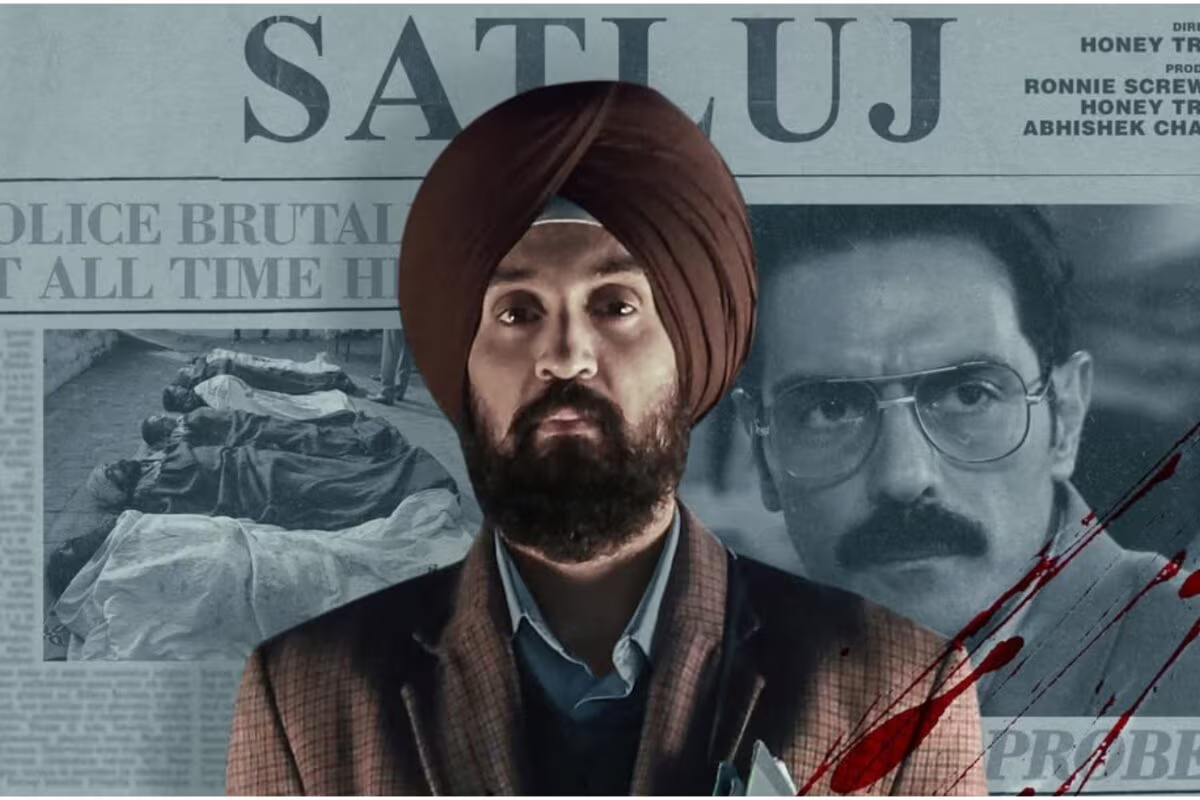
By Mahima Katal
Chandigarh, July 6: The removal of actor-singer Diljit Dosanjh's film Satluj from the Indian streaming platform ZEE5 has triggered sharp criticism from political leaders and Sikh organisations in the northern state of Punjab, who argue that the move suppresses an important chapter of India's human rights history.
The film, previously titled Punjab 95, is based on the life of Jaswant Singh Khalra, the human rights activist who exposed the alleged secret cremation of thousands of unidentified bodies during Punjab's insurgency era. It began streaming in India on Friday but was removed from
ZEE5 two days later without a detailed public explanation.
In a statement issued Sunday, ZEE5 said the film would remain unavailable in India "until further notice" while it explored "every appropriate avenue through due process" to restore access.
Political leaders condemn removal
Leaders across Punjab's political spectrum described the film's removal as an attack on freedom of expression and historical accountability.
Sukhbir Singh Badal, president of the Shiromani Akali Dal (SAD), called the decision "an assault on our collective memory, truth and freedom of expression."
"A powerful film that courageously unveils Punjab's painful history and honours the supreme sacrifice of Jaswant Singh Khalra cannot be silenced this way," Badal said, adding that Punjab "deserves to confront its past with honesty, not suppression."
Senior Congress leader Sukhpal Singh Khaira also condemned the removal, saying the film depicts the alleged police abuses surrounding Khalra's disappearance in 1995.
Khaira argued that the story is rooted in judicially established facts, noting that India's Supreme Court upheld the convictions of police officers found guilty in Khalra's abduction and murder. He urged authorities to ensure the film is made available so younger generations can understand the period.
From the ruling Aam Aadmi Party (AAP), Member of Parliament Malvinder Singh Kang questioned why films portraying other controversial historical subjects had remained accessible while Satluj was withdrawn.
"When a nation begins to fear its own history, censorship becomes its most dangerous weapon," Kang said, urging the government to facilitate the film's return.
Congress parliamentarian Dharamvira Gandhi described the removal as "an attack on freedom of expression," arguing that the film raises important questions about human rights and governance during one of Punjab's most turbulent periods.
Sikh bodies seek wider public access
The Shiromani Gurdwara Parbandhak Committee (SGPC), one of Sikhism's most influential religious institutions, also criticised the decision.
SGPC chief secretary Kulwant Singh Manan said the public should be allowed to watch the film and learn about events that unfolded in Punjab during the 1980s and 1990s.
A film marked by years of controversy
Directed by Honey Trehan, Satluj has faced repeated obstacles before reaching audiences.
The film reportedly remained stalled for more than three years amid certification issues with the Central Board of Film Certification (CBFC), which reportedly sought 127 cuts during the review process.
It was also scheduled to premiere at the Toronto International Film Festival in 2023 before being withdrawn from the festival lineup without an official explanation.
Originally planned for a global theatrical release in February 2025 under the title Punjab 95, the release was postponed after certification disputes in India.
The Jaswant Singh Khalra case
The film chronicles the work of Jaswant Singh Khalra, who documented the alleged illegal cremation of thousands of unidentified bodies by security forces during Punjab's insurgency between 1984 and 1994.
Khalra disappeared in 1995 after investigating the alleged abuses.
In 2005, four Punjab Police personnel were convicted for his abduction and murder. Their seven-year prison sentences were later enhanced to life imprisonment by the Punjab and Haryana High Court in 2007. India's Supreme Court subsequently upheld the convictions.
The film's removal has reignited debate over artistic freedom, historical memory and the portrayal of politically sensitive events in contemporary India.