For the First Time, Putin Reveals How Deeply Ukraine War Has Hit Russia's Oil Refineries
Putin admits Ukraine's strikes caused fuel shortages as Kyiv intensifies attacks on Russian oil refineries, increasing pressure on Moscow's war effort.
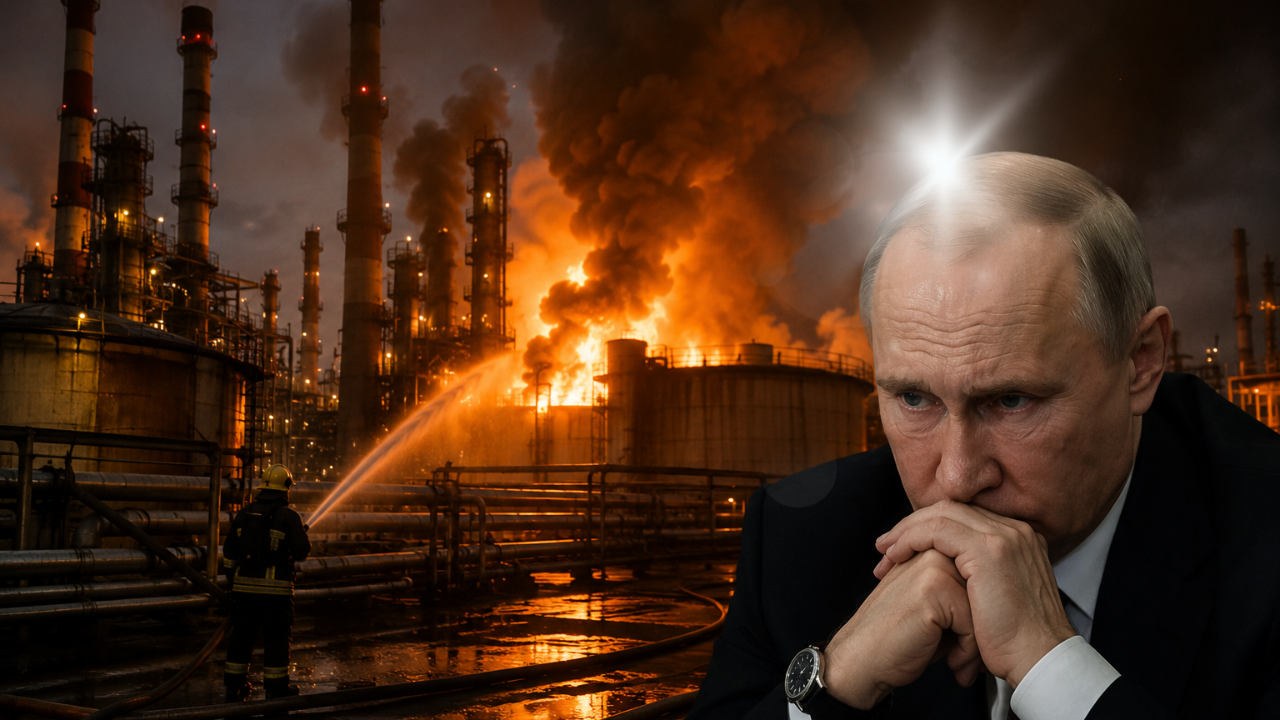
Putin admits Ukraine's strikes caused fuel shortages as Kyiv intensifies attacks on Russian oil refineries, increasing pressure on Moscow's war effort.
By Pranjal Gupta
New Delhi, June 29: More than four years into the Russia-Ukraine war, Russian President Vladimir Putin has admitted for the first time that Ukraine's long-range drone and missile strikes have created a "certain deficit" of fuel in Russia, highlighting the growing impact of Kyiv's campaign against Moscow's energy infrastructure.
Over the past few years, Ukraine has repeatedly targeted Russian oil refineries with drones and missiles in an attempt to disrupt fuel production and reduce the resources available for Russia's military operations. The attacks have damaged several major refineries, affecting domestic fuel supplies and exports.
Responding to the situation on Sunday, Putin said Russia would strengthen the protection of its oil facilities and increase fuel production to overcome the shortages.
Ukrainian President Volodymyr Zelenskyy welcomed the impact of the strikes, saying they had successfully hit two more Russian oil refineries. In a post on Telegram, he wrote, "Each strike means a reduction in the resources that fuel the Russian war machine, and another step toward peace."
Russian firefighters battle flames after a Ukrainian drone strike reportedly hit an oil refinery, intensifying pressure on Moscow's fuel supplies. (Representative Image)
According to Western analysts, Ukraine's campaign against Russia's energy infrastructure has disrupted fuel supplies, leading to shortages in several regions and forcing local authorities to introduce fuel rationing. They believe the attacks have also slowed Russia's military logistics and increased pressure on the Kremlin.
Putin Says Ukraine Wants to Force Russia Into Talks
Speaking to Russian state television, Putin accused Ukraine of attacking oil refineries to weaken public support for the war and force Moscow into peace negotiations on Kyiv's terms.
He claimed the attacks were intended to create divisions within Russian society and temporarily slow the advance of Russian troops on the battlefield.
"We will not give them that chance," Putin said, insisting that the strikes had no effect on Russia's military operations along the front line.
Putin also said, for the first time, that Ukraine had proposed stopping long-range strikes because Russian attacks deep inside Ukrainian territory were causing greater damage.
According to Putin, Kyiv also suggested limiting the fighting to the four Ukrainian regions that Russia claims to have annexed — Donetsk, Luhansk, Kherson and Zaporizhzhia. He rejected the proposal, saying it would allow Ukraine to move troops from other battlefronts to strengthen its positions in those regions.
Ukrainian Drones Hit Russian Refineries
Meanwhile, Ukrainian drone attacks continued overnight.
Authorities in Russia's Krasnodar region said debris from intercepted Ukrainian drones caused a fire at the Slavyansk-na-Kubani oil refinery, one of southern Russia's major fuel processing plants. The refinery processes nearly four million tonnes of crude oil every year and supplies petroleum products through Russia's Black Sea ports.
Regional Governor Veniamin Kondratyev said one person was killed in Slavyansk-na-Kubani and another was injured in a nearby village after drone debris fell on the area.
Zelenskyy also claimed that another refinery in Russia's Yaroslavl region, about 700 kilometres from the Ukrainian border, was struck during the overnight operation.
Russian authorities did not immediately comment on the reported attack on the Yaroslavl refinery.
The latest strikes underline Ukraine's continuing strategy of targeting Russia's energy infrastructure, even as fighting along the front lines remains intense and prospects for a negotiated settlement remain uncertain.
(With Inputs from AP)