


'Frankenstein State': Indian Diplomat Tells Pakistan, 'No Theatrics Will Work' at UN
Indian diplomat calls Pakistan a ‘Frankenstein state’ at UN, warning that no theatrics will work during heated Security Council debate.
By Pranjal Gupta
New Delhi, June 18: When Pakistan and the Organisation of Islamic Cooperation (OIC) raised the issue of Jammu and Kashmir at the United Nations Security Council (UNSC) on Wednesday, India categorically rejected their claims, calling them "baseless and malicious". Anupama Singh, First Secretary at India’s Permanent Mission to the United Nations, also called Pakistan a "Frankenstein state" that gets shocked when its "own monster bites back".
“Frankenstein state” is usually used to refer a country that creates or supports dangerous groups or forces that later become too strong to control. In simple words, it’s like a government “creating a monster” that eventually turns against it or causes chaos in the country.
'No Theatrics Would Work'
“We also categorically reject the references to Jammu and Kashmir made by the OIC... For the record, Jammu and Kashmir was, is, and will always remain an integral and inalienable part of India. The only unresolved issue is Pakistan’s illegal occupation of Indian territories and their return.”
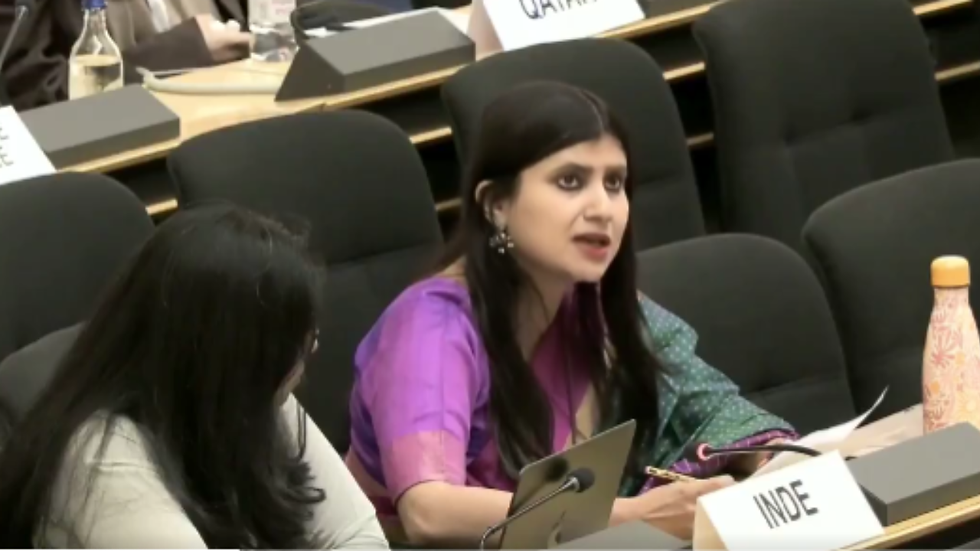
Anupama said Pakistan is a country whose sitting defence minister boasts of hosting, training, and deploying terrorists as state policy, “and yet Pakistan calls itself a victim of terrorism.”
“Its seasonal theatrics in this Council have long outlived any novelty. Thank you,” Singh said.
Indus River Treaty Currently in 'Abeyance'
Anupama Singh said Pakistan cannot ask for cooperation under the Indus Waters Treaty, which was signed in 1960 and is far from the reality of the present day.on Wednesday said Pakistan would serve its people better it starts putting its own house in order.
“A treaty negotiated in 1960 cannot be treated as a perpetual entitlement, which is insulated from accountability, detached from present-day realities, and untouched by the profound changes of the past six decades. The escalating impacts of climate change, advances in technology, and the growing imperative for sustainable clean energy demand a revaluation of the treaty’s relevance and applicability," said Singh at the UN.
She added: "Mr. Vice President, instead of coveting Indian territories, Pakistan would serve itself and its people far better by putting its own house in order."
The Indus Waters Treaty (IWT) was brokered by the World Bank in 1960 to divide the Indus River system between India and Pakistan. However, the treaty has hit its most severe crisis in its 66-year history.
Pakistan Cites 240 Million People Depend on Indus
Since then, Pakistan has been taking up the matter at the United Nations Security Council to build pressure on India to resume water flow to its territory. It has rejected India’s unilateral suspension, arguing that international law does not permit a country to put a water treaty in abeyance.
Pakistan has also warned of grave humanitarian and ecological consequences for its 240 million citizens who depend heavily on the Indus system for agriculture.


