Government Defends E20 Ethanol Blending Programme Amid Viral "Misinformation"
By Mahima Katal New Delhi, July 4: The Centre has mounted a comprehensive defence of India's E20 ethanol blending programme, issuing a 10-point clarification to counter what it describes as misleading claims circulating on social media about ethanol-blended petrol. The Ministry of Petroleum and Natural Gas has rejected allegations related to excessive water use, engine damage, insurance invalidation, food security risks, and environmental degradation, asserting that the programme is backed by...
By Mahima Katal
New Delhi, July 4: The Centre has mounted a comprehensive defence of India's E20 ethanol blending programme, issuing a 10-point clarification to counter what it describes as misleading claims circulating on social media about ethanol-blended petrol. The Ministry of Petroleum and Natural Gas has rejected allegations related to excessive water use, engine damage, insurance invalidation, food security risks, and environmental degradation, asserting that the programme is backed by scientific evidence, regulatory oversight, and international experience.
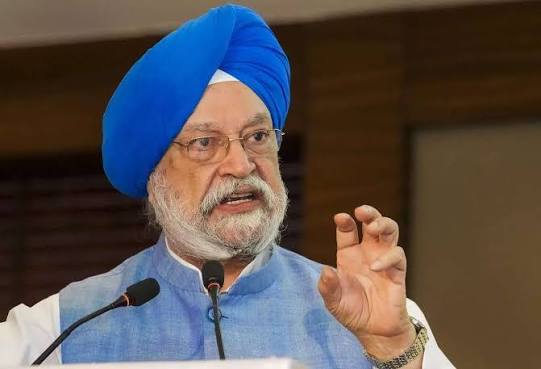
Hardeep Singh Puri
,
Minister of Petroleum and Natural Gas of India.
The clarification comes as India accelerates its transition towards cleaner fuels after achieving its target of 20 per cent ethanol blending in petrol (E20) in December 2025, ahead of schedule.
Why the Government Issued the Clarification
The ministry's statement responds to several viral claims questioning the safety and sustainability of ethanol-blended fuel. Officials argue that misinformation surrounding E20 could undermine public confidence in a programme that forms a key component of India's energy security and climate strategy.
According to the government, the allegations being circulated online either misrepresent scientific findings or ignore existing regulatory safeguards governing ethanol production and vehicle compatibility.
Key Claims and the Government's Response
Among the most widely shared claims is that producing one litre of ethanol requires nearly 10,000 litres of water. The ministry rejected this figure, stating that ethanol distilleries typically consume around 3–5 litres of processed water per litre of ethanol and increasingly operate Zero Liquid Discharge (ZLD) systems that recycle water.
The government also clarified that ethanol production primarily relies on surplus rice stocks, diverted only after national food security requirements are met, while maize, which now contributes more than 40 per cent of ethanol supplies, requires significantly less irrigation than paddy.
On vehicle safety, the ministry cited studies conducted by the Automotive Research Association of India (ARAI), the Indian Oil Corporation (IOC), the Indian Institute of Petroleum (IIP), and the Society of Indian Automobile Manufacturers (SIAM). According to these studies, extensive road trials found no significant adverse impact on engine performance, drivability, or fuel efficiency in E20-compatible vehicles. While certain rubber components in older vehicles may experience faster wear, the ministry said no major compatibility issues were identified.
The government also rejected claims that using E20 fuel could void vehicle warranties or insurance coverage, stating that manufacturers and insurers continue to honour warranties for vehicles certified to operate on E20 fuel.
Addressing Viral Social Media Narratives
The clarification also targeted several viral social media posts, including claims that insects such as ants and bees are attracted to E20 because it contains sugar. The ministry explained that fuel-grade ethanol undergoes industrial distillation, removing residual sugars, and contains denaturants that discourage insect attraction.
Similarly, videos allegedly showing sugarcane juice being mixed directly into petrol were described as fabricated. Officials emphasised that ethanol blending follows prescribed industrial processes and quality standards before reaching fuel stations.
The ministry also denied reports suggesting that the government had referred to the ethanol programme as an "experiment" before the Supreme Court. It clarified that the court proceedings related to contractual provisions governing ethanol procurement and not to the scientific validity of ethanol blending itself. The Office of the Attorney General has also reportedly issued a clarification disputing such media interpretations.
Economic and Environmental Rationale
The government's defence highlights ethanol blending as a strategic policy designed to reduce India's dependence on imported crude oil while supporting domestic agriculture.
According to official data, the programme has:
Saved over ₹1.9 lakh crore in foreign exchange by reducing crude oil imports.
Enabled payments exceeding ₹1.6 lakh crore to farmers.
Reduced carbon dioxide emissions by approximately 930 lakh metric tonnes.
Replaced more than 310 lakh metric tonnes of crude oil imports since 2014–15.
These figures reinforce the government's argument that ethanol blending is intended not only as a cleaner fuel initiative but also as an economic measure benefiting farmers and strengthening energy security.
The Bigger Picture
India's ethanol blending programme sits at the intersection of energy policy, agricultural economics, and environmental sustainability. While the government maintains that E20 is supported by scientific studies and decades of international experience, public concerns over engine compatibility, water usage, and ecological impact continue to fuel debate.
The latest clarification reflects the growing challenge governments face in combating misinformation around large-scale public policy initiatives. As India expands the use of alternative fuels to meet its climate commitments and reduce fossil fuel dependence, transparent scientific communication and continued monitoring of long-term impacts are likely to remain essential for maintaining public trust.