How Yoga Became a Global Phenomenon: India's Ancient Practice Conquers the World
With UN designating June 21 as the International Day of Yoga, the annual event has evolved into one of the largest participatory wellness movements in the world. By Mahima Katal New Delhi, June 20: On June 21 each year, millions of people across continents unroll yoga mats in parks, beaches, public squares, offices, schools, and homes. From New York's Times Square to the Eiffel Tower in Paris, from Sydney's waterfront to the foothills of the Himalayas, people gather to practice an ancient...
With UN designating June 21 as the International Day of Yoga, the annual event has evolved into one of the largest participatory wellness movements in the world.
By Mahima Katal
New Delhi, June 20: On June 21 each year, millions of people across continents unroll yoga mats in parks, beaches, public squares, offices, schools, and homes. From New York's Times Square to the Eiffel Tower in Paris, from Sydney's waterfront to the foothills of the Himalayas, people gather to practice an ancient discipline that originated in India thousands of years ago.
What was once a spiritual practice reserved largely for Hindu ascetics and seekers has transformed into one of the world's most recognizable wellness movements. Today, yoga is a multi-billion-dollar global industry, practiced by an estimated 300 million people worldwide.
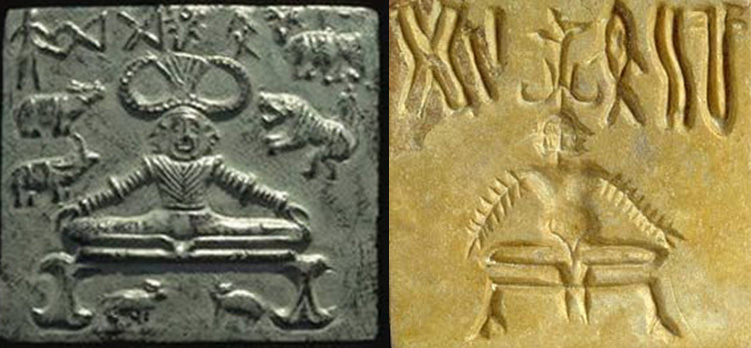
The Pashupati Seal from Mohenjo-daro, depicting a horned figure seated in a yogic posture, often cited as one of the earliest representations of yoga in the Indus Valley Civilization.
But its journey from secluded Indian ashrams to international fitness studios is a story of cultural exchange, adaptation, and globalization.
The Ancient Roots of Yoga
The origins of yoga can be traced back more than 2,500 years. References to yogic practices appear in ancient Indian texts, including the Upanishads and later in the Yoga Sutras of Patanjali, often regarded as the foundational text of classical yoga.
Contrary to modern perceptions, early yoga was not primarily about physical exercise. It was a spiritual and philosophical discipline aimed at achieving mental clarity, self-realization, and liberation from suffering. Practitioners focused on meditation, breath control, and mental discipline rather than elaborate physical postures.
For centuries, yoga remained largely within India's spiritual traditions, practiced by monks, sages, and ascetics seeking enlightenment.
The Man Who Introduced Yoga to the West
The global journey of yoga began in the late nineteenth century with the efforts of Swami Vivekananda.
In 1893, Vivekananda represented Hinduism at the Parliament of the World's Religions in Chicago, where his speeches captivated Western audiences. Through lectures across the United States and Europe, he introduced yoga as a philosophical and spiritual system rather than a set of physical exercises.
Swami Vivekananda, a pioneering spiritual leader and youth icon of India.
His influential book Raja Yoga, published in 1896, became one of the first major texts to explain Indian yogic philosophy to Western readers. It laid the foundation for growing Western curiosity about yoga and Eastern spirituality.
The Transformation of Modern Yoga
The yoga practiced in most studios today differs significantly from its ancient form.
During the early twentieth century, Indian yoga underwent a remarkable transformation.
Scholars of yoga history have documented how traditional yogic practices interacted with modern physical culture movements, including European gymnastics, military fitness drills, and bodybuilding exercises.
Many popular postures and sequences widely associated with yoga today emerged during this period. For example, the now-famous Surya Namaskar, or Sun Salutation, became popular only in the 1930s. Similarly, many dynamic yoga styles such as Ashtanga, Vinyasa Flow, and Iyengar Yoga developed during the twentieth century.
As photography, print media, and international travel expanded, these modernized forms of yoga spread rapidly beyond India's borders.
The 1960s Spiritual Revolution
Yoga's popularity surged dramatically during the 1960s and 1970s.
Western travelers searching for alternative spiritual paths arrived in India along the so-called "hippie trail." Ashrams in cities such as Rishikesh became destinations for seekers from Europe and North America.
One of the most influential moments came in 1968 when members of The Beatles visited Maharishi Mahesh Yogi's ashram in Rishikesh. Images of the world's most famous band practicing meditation in India captured global attention and fueled widespread interest in Indian spirituality.
Yoga increasingly became associated with peace, mindfulness, self-discovery, and holistic health.
International Yoga Day: India's Soft Power Success
A major milestone in yoga's global recognition came in 2014 when Indian Prime Minister Narendra Modi proposed the celebration of an International Day of Yoga during his address to the United Nations General Assembly.
The proposal received unprecedented support from UN member states. In 2015, the United Nations officially declared June 21 as the International Day of Yoga.
International Day of Yoga celebration at UN Headquarters in New York City (20 June, 2022).
Since then, annual celebrations have been held in more than 100 countries. Mass yoga demonstrations, public workshops, and community events take place worldwide, highlighting yoga's role in promoting health and well-being.
The initiative is widely regarded as one of India's most successful examples of cultural diplomacy and soft power, helping strengthen the country's global cultural influence.
From Spiritual Practice to Global Industry
Today, yoga occupies a unique space at the intersection of wellness, fitness, spirituality, and commerce.
The practice has evolved into countless variations, including hot yoga, aerial yoga, beer yoga, goat yoga, and even paddleboard yoga. While some traditional practitioners argue that such adaptations move away from yoga's original purpose, others view them as evidence of yoga's remarkable adaptability across cultures.
The global yoga industry now includes teacher training programs, retreats, wellness tourism, apparel brands, mobile applications, and digital fitness platforms.
Yet despite its commercialization, many practitioners continue to embrace yoga for its deeper benefits: stress reduction, mindfulness, emotional balance, and personal growth.
A Universal Language of Well-Being
The international success of yoga reflects a broader human search for balance in an increasingly fast-paced world.
Whether practiced as a spiritual discipline, a health routine, or a form of exercise, yoga has transcended geographical, religious, and cultural boundaries. Its evolution demonstrates how ancient traditions can adapt to modern societies while retaining elements of their original wisdom.
As millions celebrate International Yoga Day each year, yoga stands not only as one of India's greatest cultural contributions to the world but also as a universal language of well-being—connecting people across nations through breath, movement, and mindfulness.