India and Oman Launch Landmark CEPA, Opening New Trade Gateway Across the Gulf and East Africa
By Mahima Katal New Delhi, June 1: India and Oman have formally operationalized their long-awaited Comprehensive Economic Partnership Agreement (CEPA), marking a major milestone in bilateral relations and significantly expanding economic cooperation between the two countries. The agreement, which entered into force on June 1, is expected to reshape trade flows across the Gulf region while strengthening India's strategic economic footprint in West Asia and East Africa. The agreement was...
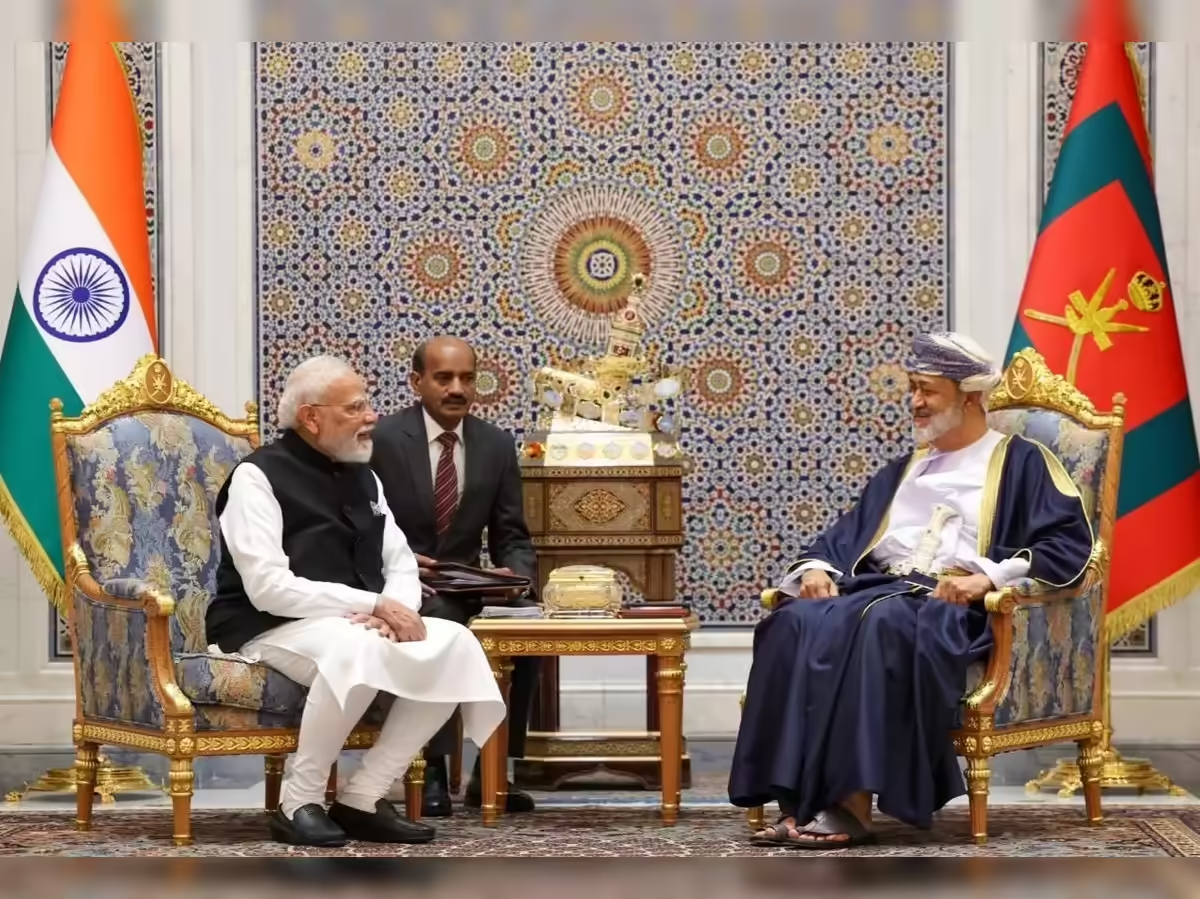
By Mahima Katal New Delhi, June 1: India and Oman have formally operationalized their long-awaited Comprehensive Economic Partnership Agreement (CEPA), marking a major milestone in bilateral relations and significantly expanding economic cooperation between the two countries. The agreement, which entered into force on June 1, is expected to reshape trade flows across the Gulf region while strengthening India's strategic economic footprint in West Asia and East Africa.
The agreement was originally signed in Muscat on December 18, 2025, in the presence of Indian Prime Minister Narendra Modi and Sultan Haitham bin Tarik Al Said of Oman. Following the completion of domestic ratification procedures by both nations, the CEPA has now become operational, creating one of India's most comprehensive trade partnerships in the Gulf.
The launch ceremony was attended by India's Commerce and Industry Minister Piyush Goyal and Omani Ambassador to India Issa Saleh Al Shibani. To mark the occasion, the first consignments benefiting from preferential tariff treatment under the agreement were flagged off from Mumbai, Kolkata and Chennai.
A Strategic Trade Corridor
Oman is India's second-largest trading partner in the Gulf and serves as a crucial gateway to the wider Gulf Cooperation Council (GCC) region and East African markets through its advanced logistics hubs at Sohar, Duqm and Salalah ports.
Bilateral trade between the two countries reached **USD 11.18 billion in FY 2025–26**, up from USD 10.61 billion the previous year. Officials expect the CEPA to significantly accelerate this growth by reducing trade barriers, facilitating investment, and enhancing services cooperation.
Under the agreement, 99.38 percent of India's exports by value will receive duty-free access to the Omani market, covering more than 98 percent of Oman's tariff lines. Previously, only around 15 percent of Indian exports entered Oman duty-free under Most Favoured Nation (MFN) arrangements.
The CEPA positions India as only the second country after the United States to secure such a comprehensive bilateral trade pact with Oman.
Boost for Key Export Sectors
The agreement is expected to provide a substantial boost to several labor-intensive sectors central to India's export economy.
Agriculture and Food Processing
India already holds a strong position in Oman's food imports, accounting for nearly 18 percent of the country's agricultural imports. The elimination of duties on products such as honey, cashews, basmati rice, biscuits, butter and processed foods is expected to strengthen India's market share further.
Indian agricultural exports, including mango varieties such as Alphonso, Kesar and Dasheri, are also expected to gain enhanced competitiveness in Gulf markets.
Marine Products
All marine products, including shrimp, fish and cuttlefish, will now enjoy immediate duty-free access. Industry experts believe the move could significantly benefit coastal exporting states such as Andhra Pradesh, Kerala, Tamil Nadu and Gujarat while helping Indian seafood exporters strengthen their presence in regional supply chains.
Gems and Jewellery
Import duties of up to five percent on gems and jewellery have been eliminated from day one of the agreement.
India's jewellery exports to Oman currently stand at approximately USD 26 million annually. Government projections suggest exports could increase six-fold to USD 150 million within three years, driven by stronger price competitiveness against suppliers from China, Turkey, Thailand and Italy.
The development is expected to benefit jewellery manufacturing clusters in Surat, Jaipur, Mumbai, Kolkata and Chennai.
Pharmaceuticals
One of the most significant achievements under the CEPA is the regulatory cooperation framework for pharmaceuticals.
Medicines approved by leading international regulators—including the US Food and Drug Administration (USFDA), the European Medicines Agency (EMA), the UK's Medicines and Healthcare products Regulatory Agency (MHRA), and Australia's Therapeutic Goods Administration (TGA)—will receive marketing authorization in Oman within 90 days without prior inspection.
The fast-track approval process is expected to improve market access for Indian pharmaceutical companies and strengthen India's position in the Gulf healthcare market, which continues to expand rapidly.
Engineering and Electronics
The agreement grants full tariff elimination on engineering products, automobiles, machinery, electrical equipment and electronics.
India's engineering exports to Oman reached nearly USD 876 million in FY 2025–26. Government estimates suggest the figure could rise to between USD 1.3 billion and USD 1.6 billion by 2030.
Unprecedented Access for Services and Professionals
Beyond goods, the CEPA provides what Indian officials describe as Oman's most ambitious services offer to any trading partner.
Oman has committed market access across 127 services sub-sectors, including information technology, healthcare, education, engineering, financial services, telecommunications, tourism and professional consulting.
The agreement also introduces legally binding mobility commitments for Indian professionals, including engineers, doctors, IT specialists, accountants, teachers and consultants.
Business visitors will be permitted to stay in Oman for up to 90 days, independent professionals for up to 180 days, and intra-corporate transferees for up to four years.
Notably, the ceiling for foreign employment under Information and Communications Technology (ICT) categories has been increased from 20 percent to 50 percent, potentially opening new opportunities for Indian talent.
Protecting Sensitive Sectors
While expanding market access, India has maintained safeguards for several politically and economically sensitive sectors.
Products such as dairy, cereals, fruits, vegetables, edible oils, oilseeds, rubber, leather, spices and other critical agricultural products remain excluded from tariff liberalization.
The agreement also incorporates tariff-rate quotas and minimum import price mechanisms for selected products to protect domestic producers and maintain food security.
Trade Facilitation and Regulatory Cooperation
The CEPA introduces a series of trade facilitation measures designed to reduce costs and improve efficiency.
Oman will now recognize certificates issued by India's Export Inspection Council (EIC), eliminating duplicate inspections and testing requirements. The agreement also provides recognition for India's organic certification and halal certification systems.
Dedicated chapters on sanitary and phytosanitary measures and technical barriers to trade aim to reduce non-tariff obstacles while increasing transparency and regulatory cooperation.
Strengthening India's Gulf Strategy
Analysts view the India-Oman CEPA as part of New Delhi's broader strategy to deepen economic engagement with the Gulf region amid shifting global trade patterns and supply-chain diversification.
The agreement complements India's growing network of trade partnerships across the Middle East and strengthens its integration into regional and global value chains.
Speaking at the launch, Commerce and Industry Minister Piyush Goyal described the agreement as a "force multiplier" for India's engagement with the Gulf, saying it would create opportunities for farmers, fishermen, entrepreneurs, women-led enterprises, MSMEs and young professionals.
With duty-free access for almost all Indian exports and enhanced mobility provisions for services professionals, the India-Oman CEPA is expected to emerge as a cornerstone of India's economic diplomacy and a key driver of trade growth under the country's long-term vision of becoming a developed economy by 2047.