


Indians Once Again Told to Exit Iran as West Asia Conflict Enters 101st Day
- Jun 8
- 2 min read
By The Slate Bureau
New Delhi, June 8: The conflict involving Iran entered its 101st day on Monday, prompting the Indian Embassy in Tehran to once again urge Indian nationals to leave the country as tensions continue to rise across the region.
The fresh advisory came just hours after Iran and Israel accused each other of carrying out new attacks despite a ceasefire that has largely held for the past two months.
Adding to the growing instability, Yemen's Houthi rebels launched a missile towards Israel and threatened to target shipping routes in the Red Sea, reported news agency AP. The developments mark the most serious escalation since the ceasefire took effect and have raised fears of a wider regional conflict in West Asia.

Amid the deteriorating security situation, the Indian Embassy in Iran advised all Indian citizens to avoid travelling to the country until further notice. It also urged those currently in Iran to leave at the earliest opportunity using available transport options.
The embassy in Tehran said the advisory was issued in view of the latest developments and the heightened security concerns arising from military activity reported since Sunday night. Officials stressed that Indian nationals should prioritise their safety and closely follow updates issued by local authorities and the embassy.
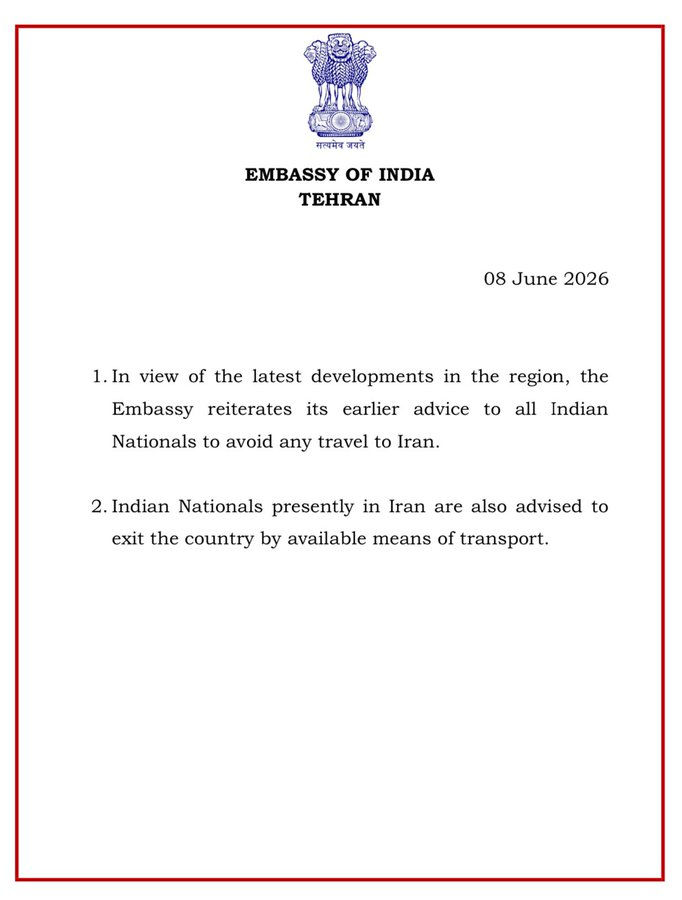
In its latest statement, the Embassy of India in Tehran said: “In view of the latest developments in the region, the Embassy reiterates its earlier advice to all Indian Nationals to avoid any travel to Iran. Indian Nationals presently in Iran are also advised to exit the country by available means of transport.”
The advisory applies to all Indian citizens in Iran, including students, businesspersons, pilgrims and tourists. It is the eighth advisory issued by the Indian government since the outbreak of the Iran-Israel conflict.
Shortly after a ceasefire was announced in April, the Indian Embassy had urged its nationals to leave Iran "expeditiously" while travel routes remained open and relatively safe. The mission also set up dedicated helpline numbers and emergency assistance channels to facilitate the evacuation process.
The embassy's strategy was to encourage citizens to use the temporary period of calm to return home, anticipating that hostilities could resume at any time. Recent developments appear to have validated those concerns.
According to media reports, around 7,500 Indian nationals still remain in Iran. In recent months, the Indian Embassy has helped thousands of citizens leave the country through land routes connecting Iran with Armenia and Azerbaijan. Authorities continue to monitor the situation closely and remain prepared to assist Indians who wish to return home.
With tensions once again rising between Iran and Israel and regional actors becoming increasingly involved, concerns are growing that the conflict could enter a new and more dangerous phase. Indian authorities have therefore advised their citizens not to delay travel plans and to leave Iran while commercial transport options remain available.


