Iran's New Fees at the Strait of Hormuz Test the Limits of International Maritime Law
By Mahima Katal A US-Iran framework agreement signed on June 15, 2026 reopened the Strait of Hormuz to global shipping and ended the US naval blockade on Iranian vessels, closing one chapter of a conflict that had unsettled global energy markets since February. But the de-escalation came with a catch: Iran dropped the wartime transit toll it had imposed on passing ships, only to retain two other charges — a navigation fee and an environmental protection levy. The shift has reopened a...
By Mahima Katal
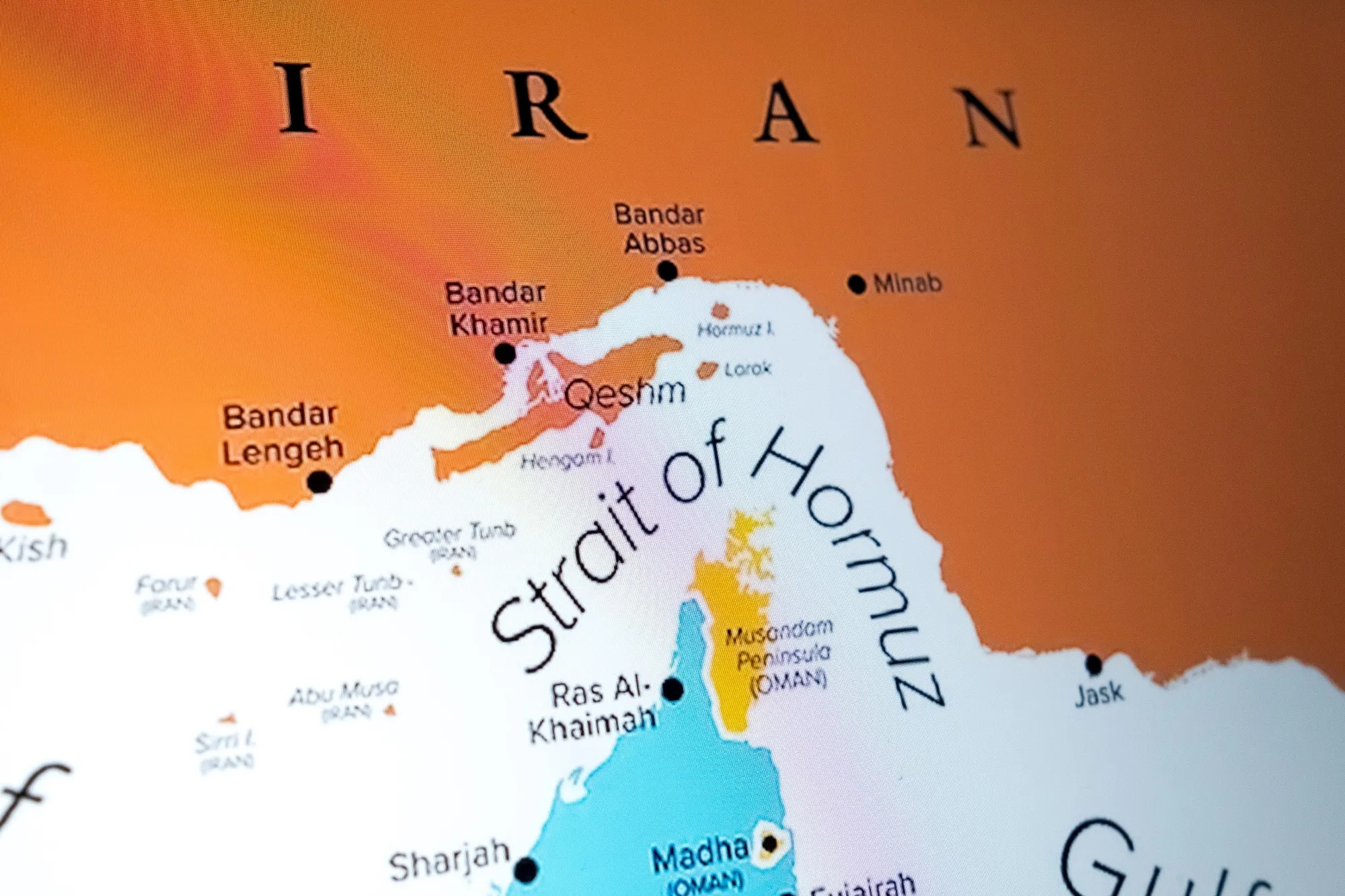
A US-Iran framework agreement signed on June 15, 2026 reopened the Strait of Hormuz to global shipping and ended the US naval blockade on Iranian vessels, closing one chapter of a conflict that had unsettled global energy markets since February. But the de-escalation came with a catch: Iran dropped the wartime transit toll it had imposed on passing ships, only to retain two other charges — a navigation fee and an environmental protection levy.
The shift has reopened a long-running legal question with global stakes: can a state bordering an international strait lawfully charge ships for passage, when the 1982 UN Convention on the Law of the Sea (UNCLOS) guarantees a "right of transit passage" through such waters?
A Chokepoint by Geography, a Lever by Design
The Strait of Hormuz carries a disproportionate share of the world's seaborne oil trade through a corridor only a few dozen kilometers wide at its narrowest point. That concentration of traffic is precisely what gives Iran, as the dominant bordering state, outsized influence over global energy flows — and precisely why international law has tried, for decades, to limit how much a coastal state can exploit that position.
UNCLOS addresses this directly. Articles 37 through 44 establish that vessels and aircraft transiting straits used for international navigation are entitled to continuous, expeditious passage that cannot be impeded or suspended. The International Court of Justice reached a similar conclusion well before UNCLOS existed: in the 1949 Corfu Channel case, it held that ships are entitled to unimpeded passage through international straits in peacetime, provided that passage poses no threat to the coastal state's security.
Under that framework, Iran's continued navigation and environmental charges look, to many observers, like an attempt to convert a strait historically treated as open water into a managed and monetized gateway — one jointly overseen by Iran and Oman, with Iran now collecting revenue from it.
Iran's Legal Position Is Weaker Than It Looks — But Not Empty
The case against Iran's fees is strong on paper, but Iran has several arguments available to it, rooted in the specific geography and history of the strait.
The first concerns where the strait actually sits. Hormuz falls within the combined territorial waters of Iran and Oman, not the high seas. In territorial waters, the broader transit-passage regime gives way to the narrower concept of "innocent passage," and Article 19 of UNCLOS allows a coastal state to restrict passage it judges to threaten its "peace, good order, or security" — a standard broad enough for Iran to invoke amid ongoing regional tensions.
Iran may also point to precedent: both the Suez and Panama canals charge transit fees without drawing the same legal objections. The comparison is weaker than it first appears, however. Those are artificial, engineered waterways built and maintained by their host states and governed by specific treaty regimes, whereas Hormuz is a natural strait subject to the general rules of UNCLOS.
The more substantive argument rests on Iran's own treaty history. Iran signed UNCLOS in 1982 but never ratified it, and at signing explicitly stated that it did not regard the transit-passage regime as customary international law — characterizing it instead as a benefit reserved for states that had ratified the convention. This positions Iran to invoke the "persistent objector" doctrine, under which a state that consistently and clearly rejects an emerging rule of customary international law while that rule is still forming may not be bound by it later.
That position has institutional backing. Iran's 1993 domestic legislation, the Law of Marine Areas of the Islamic Republic of Iran in the Persian Gulf and Oman Sea, already authorized it to suspend the passage of foreign vessels and to require prior authorization for ships carrying hazardous materials — a category that can plausibly include oil tankers. Iran's new fees, seen against this history, reinforce a legal posture it has been constructing for more than three decades, and one that draws some support from the principle of comity of nations, under which states voluntarily recognize one another's domestic laws and practices.
Economic Pressure as an Extension of the Conflict
The dispute over fees cannot be separated from the broader conflict that preceded it. Since hostilities between Iran, the US, and Israel began in late February 2026, the confrontation has moved repeatedly between direct military action and economic pressure, with the line between the two increasingly blurred. Even as Iran has been strained militarily and economically, it has demonstrated that it can impose real costs on global commerce without resorting to a full blockade — uncertainty over shipping costs and access has proven to be a lever of its own.
Analysts also note a regional dimension: Iran appears to treat the parallel conflict in Lebanon as part of the same strategic contest with Israel, and its position at Hormuz may be functioning as additional leverage to discourage further Israeli military action there.
A Reminder for Energy-Dependent Economies
For countries that depend heavily on energy imports moving through narrow maritime corridors, the dispute over Hormuz fees underscores a point that extends well beyond the specifics of UNCLOS. The reliability of global shipping lanes rests not only on the text of international agreements but on the political will and restraint of the states that control them and Iran's actions at Hormuz are a clear illustration of how that calculus can shift.