Most Defeated Trinamool Candidates Decline to Challenge Poll Results Despite Mamata's Call
By Ajay Haldar Kolkata: Despite repeated allegations of electoral malpractice by Trinamool Congress chief Mamata Banerjee and her call for defeated candidates to challenge the Assembly election results in court, the overwhelming majority of Trinamool candidates have chosen not to pursue legal action. Data from the Calcutta High Court shows that only eight election petitions were filed by Trinamool Congress candidates, including one by Banerjee herself. The figure is significantly lower than...
By Ajay Haldar
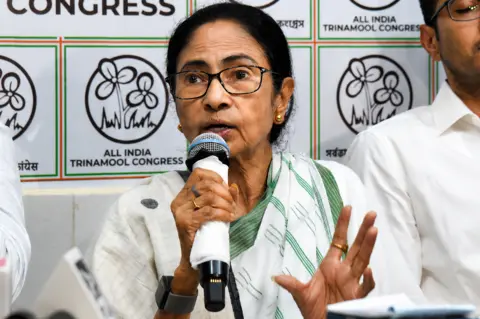
Kolkata: Despite repeated allegations of electoral malpractice by Trinamool Congress chief Mamata Banerjee and her call for defeated candidates to challenge the Assembly election results in court, the overwhelming majority of Trinamool candidates have chosen not to pursue legal action.
Data from the Calcutta High Court shows that only eight election petitions were filed by Trinamool Congress candidates, including one by Banerjee herself. The figure is significantly lower than expected, particularly after the party chief alleged widespread vote manipulation in more than 100 constituencies.
The Assembly election results were declared over 45 days ago, marking the deadline for filing election petitions. Under election law, only the defeated candidate can challenge the result in court. While Banerjee publicly questioned the legitimacy of the outcome, 203 defeated Trinamool candidates did not approach the court.
In contrast, the BJP, despite securing a decisive victory, filed six election petitions challenging results in specific constituencies. Altogether, 14 election-related petitions have been filed before the Calcutta High Court.
Trinamool contested 291 seats in the Assembly elections, excluding three constituencies in the Darjeeling hills, and won 80. Of the 211 seats it lost, legal challenges were filed in only eight.
Following the results, Banerjee alleged large-scale irregularities and accused the Election Commission of favouring the BJP.
"Votes were looted in over 100 seats. This Election Commission is a BJP Commission. This is not a moral victory but an illegal one achieved through force," she had said after the results were announced.
However, several party leaders privately expressed reservations about taking legal action. A Trinamool MLA told local media that filing an election petition requires substantial evidence and cannot be based solely on political allegations.
"Despite certain irregularities, it is ultimately important to accept the people's verdict," the legislator said.
Some defeated candidates also claimed that the party failed to provide organisational support for legal challenges. A former Trinamool candidate from Nadia district questioned why the party did not coordinate a collective legal strategy if it genuinely believed that electoral fraud had occurred in over 100 constituencies.
Political observers note that internal dissent within the party and growing dissatisfaction among some leaders may have contributed to the lack of legal action. Reports suggest that several candidates have distanced themselves from the party following the election setback.
Among those who filed petitions are Narendranath Chakraborty from Pandabeswar, who lost to BJP leader Jitendra Tiwari by 1,398 votes, as well as Ajit Mahato, Birbaha Hansda, Mangal Soren, Sandhya Rani Tudu, Tapas Chatterjee, and Piyushkanti Panda.
Several candidates who suffered narrow defeats chose not to approach the court. These include Somasree Betal, who lost by 401 votes in Satgachia; Snehasis Chakraborty, defeated by 862 votes in Jangipara; Mandira Dolui, who lost by 834 votes in Raina; and Atin Ghosh, who was defeated by 1,651 votes in Kashipur-Belgachia.
Banerjee herself has challenged the result from Bhabanipur, where she lost to BJP leader Suvendu Adhikari by 15,105 votes. She has alleged irregularities during the counting process and claimed she was denied access to the counting centre. The Election Commission has rejected those allegations, citing CCTV footage that showed her presence inside the facility.
The legal challenge follows a similar pattern to Banerjee's petition after her defeat in Nandigram during the 2021 Assembly elections, where she also alleged electoral malpractice. That case remains unresolved.
Legal experts note that election petitions often take years to conclude. Several petitions filed after previous Assembly elections are still pending, underscoring the slow pace of adjudication in election-related disputes.