NATO's Ankara Summit: What the Alliance's Internal Divisions Mean for India
The NATO summit in Ankara exposed growing divisions within the alliance over defence spending, U.S. leadership, missile defence and Turkey's expanding strategic role. While these developments are centred on Europe, they carry significant implications for India. This article examines how NATO's evolving dynamics could influence India's strategic autonomy, defence partnerships, relations with Russia and the West, and its role in the Indo-Pacific amid an increasingly fragmented global security...
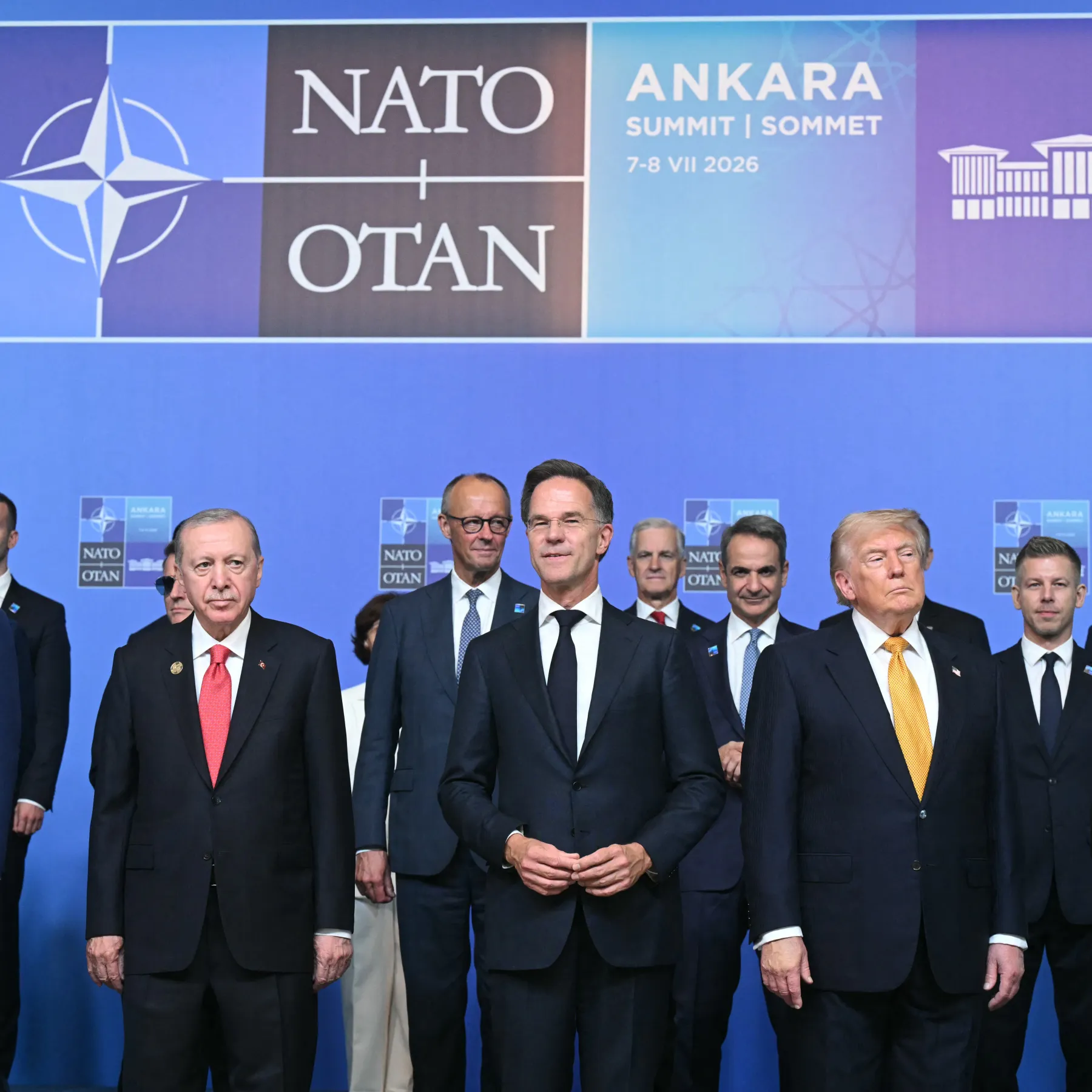
The NATO summit in Ankara exposed growing divisions within the alliance over defence spending, U.S. leadership, missile defence and Turkey's expanding strategic role. While these developments are centred on Europe, they carry significant implications for India. This article examines how NATO's evolving dynamics could influence India's strategic autonomy, defence partnerships, relations with Russia and the West, and its role in the Indo-Pacific amid an increasingly fragmented global security landscape. By Mahima Katal New Delhi, July 10: The NATO summit in Ankara was billed as a demonstration of Western unity at a time of growing global instability. Instead, it exposed an alliance grappling with internal divisions, shifting power equations and uncertainty over America's long-term security commitments. While much of the discussion centred on Europe, Ukraine and Turkey, the summit's broader implications extend far beyond the Atlantic—reaching New Delhi's strategic calculations as well.
For India, NATO's evolving dynamics are not merely a European concern. They influence the balance of power across Eurasia, shape relations between major powers, affect defence markets and alter the strategic environment in the Indo-Pacific.
A divided NATO and India's strategic autonomy
The Ankara summit reinforced a reality that has become increasingly evident over the past decade: NATO is no longer a monolithic alliance speaking with one voice. Disagreements over defence spending, burden-sharing, military support to Ukraine and the United States' role within the alliance revealed growing strains among member states. Questions surrounding Washington's commitment to European security have intensified as the United States increasingly expects its allies to shoulder a greater share of defence responsibilities.
For India, these developments reinforce the importance of its long-standing policy of strategic autonomy. New Delhi has consistently avoided becoming part of formal military alliances, preferring issue-based partnerships while maintaining relations with multiple global powers. A more fragmented NATO validates India's cautious approach to great-power politics, where flexibility often proves more valuable than bloc politics.
Europe may look inward
One of the strongest messages emerging from the summit was Europe's growing concern over its own security preparedness. European leaders acknowledged significant gaps in missile defence capabilities, defence manufacturing and military readiness. As governments increase defence spending to strengthen continental security, Europe's strategic focus may increasingly shift inward.
For India, this could have mixed consequences.
On one hand, European nations may become more interested in expanding defence cooperation with trusted partners, including India, particularly in defence manufacturing, technology transfers and resilient supply chains.
On the other, Europe's greater preoccupation with regional security could reduce its diplomatic bandwidth for issues in the Indo-Pacific. The Russia factor remains central Despite internal disagreements, NATO continues to view Russia as its principal security challenge. For India, this presents a familiar diplomatic balancing act.
Russia remains one of India's largest defence suppliers and an important strategic partner, while the United States and several European countries have become increasingly significant defence, technology and economic partners.
As NATO continues strengthening its eastern flank and supporting Ukraine, India will likely continue pursuing a carefully calibrated foreign policy that protects its national interests without aligning exclusively with either side.
Turkey's rise reshapes regional geopolitics
Perhaps the biggest geopolitical winner of the summit was Turkey. Its geographical position connecting Europe, the Black Sea, the Middle East and the Mediterranean has made Ankara indispensable to NATO's strategic planning. Its expanding defence industry, growing diplomatic influence and ability to engage simultaneously with NATO members, Russia and regional powers have significantly enhanced its leverage. This development carries implications for India.
India and Turkey have experienced diplomatic differences in recent years, particularly over Kashmir and Ankara's close engagement with Pakistan. A stronger Turkish position within NATO could make Ankara an increasingly influential actor in European security discussions and regional diplomacy, requiring India to monitor its evolving role carefully.
Implications for the Indo-Pacific
Although NATO remains primarily a transatlantic alliance, recent summits have increasingly linked European security with developments in the Indo-Pacific. China's expanding military capabilities, maritime competition and technological rivalry have become recurring themes in NATO discussions. If the United States shifts greater conventional defence responsibilities to European allies, Washington may devote more strategic attention and military resources to the Indo-Pacific. Such a shift aligns with India's growing importance as a key partner in maintaining a free, open and rules-based Indo-Pacific. However, a NATO distracted by internal disagreements could also complicate broader Western coordination on issues affecting Asia.
Defence opportunities for India
The summit also highlighted Europe's urgent need to expand defence production. This could create opportunities for India's defence industry as European governments diversify supply chains and seek reliable manufacturing partners.
India's "Make in India" and "Atmanirbhar Bharat" initiatives, coupled with increasing defence exports, position the country to benefit from closer industrial collaboration with European companies. Joint production, maintenance facilities and technology partnerships could become increasingly attractive as Europe accelerates military modernisation.
What India should watch
The Ankara summit leaves several questions that are directly relevant for Indian policymakers: Will Europe assume greater responsibility for its conventional defence while the United States focuses more on Asia? How will NATO's internal divisions affect the Western response to Russia and China? Will Turkey emerge as a more influential geopolitical actor in regions important to India? Can India leverage Europe's defence modernisation to deepen industrial and technological cooperation?
Conclusion
The Ankara summit was less about displaying NATO's unity than confronting its changing reality. An alliance once defined by unquestioned American leadership is now adapting to a more complex security environment marked by transactional politics, growing European responsibilities and the rising influence of regional powers such as Turkey. For India, the summit serves as a reminder that geopolitical shifts in Europe rarely remain confined to Europe. They influence defence partnerships, strategic alignments, supply chains and the broader balance of power across Eurasia and the Indo-Pacific.
As NATO recalibrates its future, India will continue pursuing what has increasingly become its greatest strategic advantage: maintaining partnerships across competing power centres while preserving the autonomy to act in its own national interest.