The Hormuz Ultimatum: Trump Tells The World’s Oil Dependents To Defend What They Cannot Afford To Lose
The Slate Bureau A demand has gone out from Washington. Approximately seven nations - unnamed, unconfirmed, and so far uncommitted - have been told by the US President Donald Trump that the time has come for them to deploy their own naval assets to the Strait of Hormuz. The message is unambiguous: countries that have built their economic foundations on oil transiting that narrow corridor of water must now accept responsibility for its protection. The era of America absorbing that burden on...
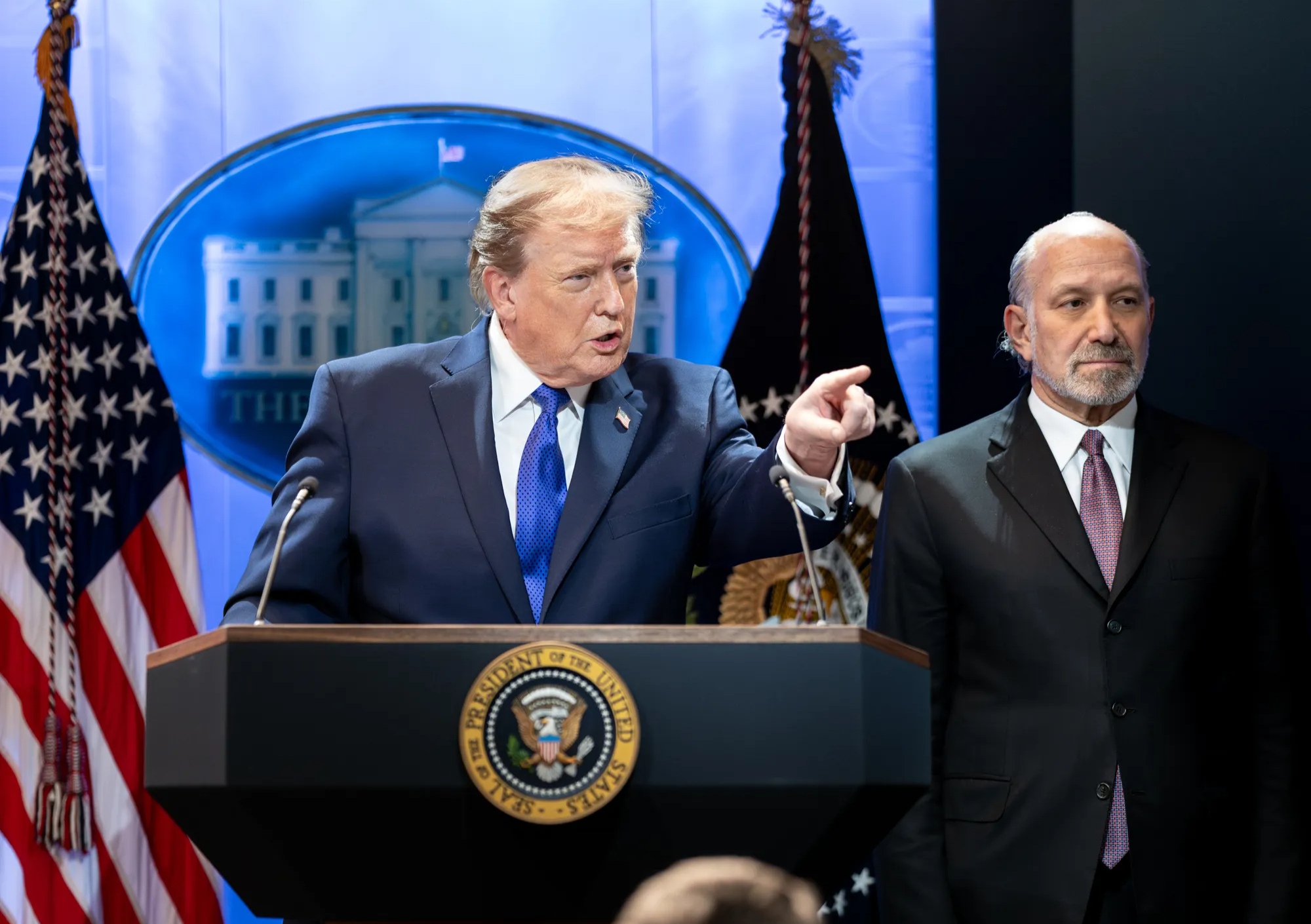
The Slate Bureau
A demand has gone out from Washington. Approximately seven nations - unnamed, unconfirmed, and so far uncommitted - have been told by the US President Donald Trump that the time has come for them to deploy their own naval assets to the Strait of Hormuz. The message is unambiguous: countries that have built their economic foundations on oil transiting that narrow corridor of water must now accept responsibility for its protection. The era of America absorbing that burden on behalf of others, Trump has signalled, is over.
The President Trump delivered these remarks in the particular setting that has become something of a trademark - fielding questions from journalists aboard Air Force One as it carried him northward from Florida back to the capital. The altitude did nothing to soften the sharpness of his position.
At the core of Trump's argument lies a concept that is deceptively simple: those who benefit most from a resource must shoulder the greatest responsibility for its security. The Strait of Hormuz is not, in his framing, a neutral global highway maintained for the common good. It is a lifeline - one that feeds the industrial engines of nations far more dependent on its uninterrupted flow than the United States itself.
Trump was pointed on this distinction. America, he argued, draws only a negligible share of its energy supply through the Persian Gulf passage. Other nations - and here he singled out China with notable emphasis - have constructed their entire energy architecture around it. Beijing, he claimed, sources roughly ninety percent of its oil through that single waterway. The implication was direct: if the strait closes, China's economy does not merely slow - it suffocates. And yet, Washington has historically been the power most visibly committed to keeping it open.
That arrangement, Trump made clear, no longer reflects his understanding of fair burden distribution.
Despite the forcefulness of the demand, the diplomatic reality remains considerably more tentative. No nation among the seven approached has, as of yet, offered any concrete commitment to contribute warships or personnel to the proposed coalition. The negotiations are ongoing. The outcomes remain uncertain. And the President Trump, while willing to describe the general contours of his outreach, declined to identify any of the countries by name - a silence that preserves diplomatic flexibility while also obscuring the true state of progress.
The omission of China from any explicit answer was itself revealing. When pressed on whether the world's largest consumer of Hormuz-dependent oil had been invited to participate - or had responded to any such invitation- Trump offered nothing. No confirmation. No denial. A deliberate void where a direct answer might have been expected.
It is a conspicuous silence given the arithmetic. If China draws nine-tenths of its oil through the strait, and if Trump's principle of proportional responsibility is to be applied consistently, Beijing's participation in any protective coalition would not merely be logical - it would be, by Trump's own reasoning, obligatory. Whether that logic has been communicated to Chinese counterparts, and how it has been received, remains entirely opaque.
This exchange did not occur in a vacuum. It unfolded against a backdrop of escalating tension involving Iran and a global oil market reacting with predictable anxiety to every development in the region. Prices have climbed as the conflict deepens and as uncertainty over the strait's navigability has grown. Traders, governments, and energy planners across three continents are watching the chokepoint with an intensity that reflects just how little margin for disruption the world's energy systems currently possess.
The Strait of Hormuz occupies a position in global commerce that has no substitute and no bypass. Approximately one fifth of all oil traded internationally passes through its waters. Tankers moving through it serve the refineries of Japan, South Korea, India, and much of continental Europe, in addition to China. A sustained closure- or even the sustained threat of one - sends reverberations through supply chains and inflation figures that governments cannot absorb quietly.
It is precisely this vulnerability that gives Trump's demand its leverage. Nations that have built prosperity on reliable access to Gulf energy have the most to lose from instability in the strait, and therefore, in theory, the most incentive to contribute to its protection. Whether that incentive translates into political will and military commitment is the central unresolved question hanging over the entire initiative.
Trump's Hormuz ultimatum is not an isolated manoeuvre. It fits within a wider and increasingly consistent doctrine - one that challenges the foundational assumption of the post-war security order, namely that American military reach exists to underwrite global stability as a kind of permanent public service.
That assumption, in Trump's worldview, has produced arrangements that are fundamentally unjust to the American taxpayer. Nations have grown wealthy and secure behind a shield they did not pay for and have shown limited inclination to maintain. The demand for coalition contributions at Hormuz is, in that context, less a diplomatic initiative and more a philosophical statement - a declaration that the architecture of global security must be renegotiated on terms that reflect actual stakes and actual dependencies.
Whether allies and rivals alike are prepared to accept those terms- and at what cost to existing relationships - will define a significant dimension of American foreign policy in the period ahead.
For now, seven nations have received a demand. None have answered it. And the strait, for the moment, remains both open and contested.