Those who attack schools and children with impunity must be held accountable: India at UNSC
By Mahima Katal United Nations, June 26: India has urged the international community to ensure accountability for attacks on schools and children in conflict zones, telling the UN Security Council that protecting children is incomplete without bringing perpetrators to justice. “Protection without accountability is incomplete. Those who target schools and children with impunity must be held to account,” India’s Permanent Representative to the UN, Ambassador Harish Parvathaneni, said during a...
By Mahima Katal
United Nations, June 26: India has urged the international community to ensure accountability for attacks on schools and children in conflict zones, telling the UN Security Council that protecting children is incomplete without bringing perpetrators to justice.
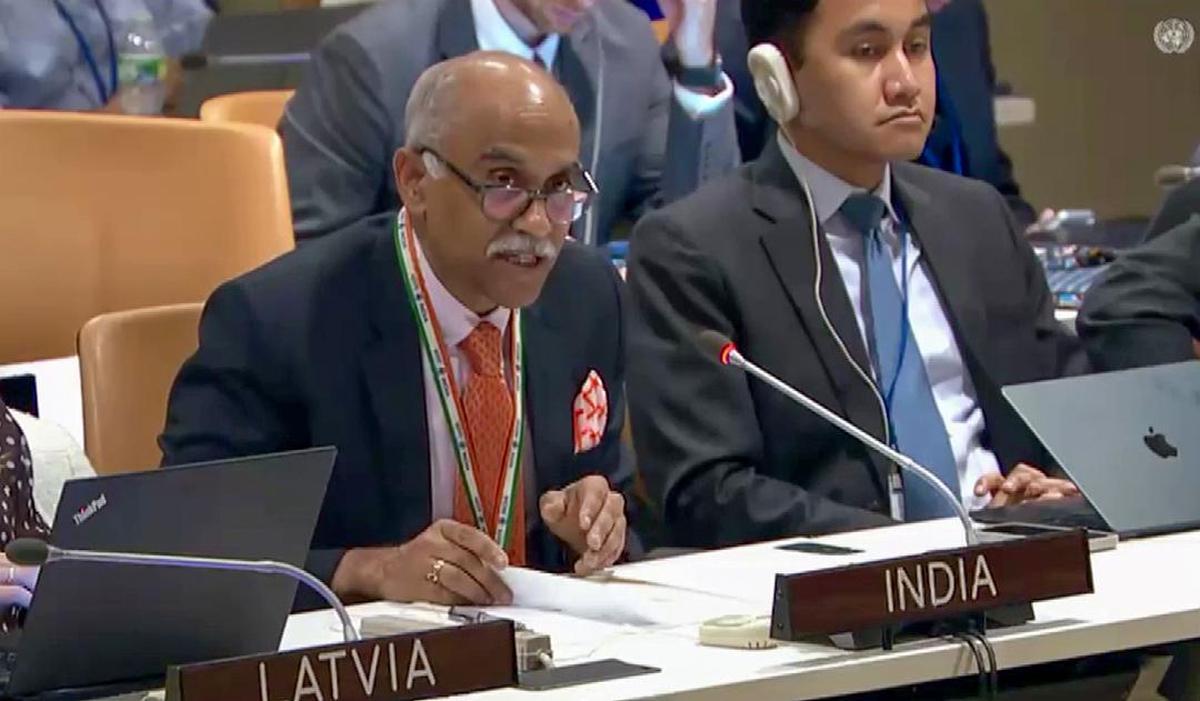
“Protection without accountability is incomplete. Those who target schools and children with impunity must be held to account,” India’s Permanent Representative to the UN, Ambassador Harish Parvathaneni, said during a Security Council open debate on strengthening the protection of education for children affected by armed conflict.
Permanent Representative of India to the UN in New York, Ambassador Parvathaneni Harish. File Photo
Parvathaneni emphasized that education must remain a guaranteed right even during war and conflict.
“Education is a right that should endure in times of conflict. Its fulfilment is among the most powerful contributions to lasting peace. India remains unwavering in its commitment to protecting children in armed conflict and upholding their right to learn, grow, and realise their full potential,” he said.
His remarks came amid growing global concern over rising violence against children in conflict zones. According to the UN Secretary-General’s latest report on Children and Armed Conflict, violations against children reached “shocking levels” in 2025, with a record number of children affected.
The report verified 38,558 grave violations involving 24,174 children in 2025, the highest figure since the mandate began. The number of children subjected to multiple grave violations also increased from 3,137 in 2024 to 3,176 in 2025.
The UN report further noted that parties to conflict frequently ignored or actively undermined their obligations under international humanitarian and human rights law, leading to widespread attacks on civilians, schools, hospitals, and humanitarian services. Government forces were identified as major perpetrators of killings, maiming of children, attacks on schools and hospitals, and denial of humanitarian access.
India highlighted that attacks on schools increased by 44 per cent in a single year, calling the trend deeply alarming.
“Nearly 473 million children — more than one in six globally — live in or are fleeing conflict zones, and over 85 million among them have no access to education whatsoever. These figures are a damning verdict on humanity’s collective failure to translate commitments into reality on the ground,” Parvathaneni said.
Stressing that protecting a child’s education means protecting a nation’s future, he said governments bear the primary responsibility for safeguarding children’s rights.
Parvathaneni pointed to India’s constitutional guarantee of free and compulsory education up to the age of 14 and highlighted the DIKSHA digital learning platform, which provides multilingual educational content and AI-powered learning tools.
“Our experience has convinced us that access to digital learning can be the bridge that helps children continue their education during conflicts,” he said, citing India’s use of digital platforms during the Covid-19 pandemic.
He also underscored the importance of investing in education for refugees and displaced communities, noting that India has supported educational access for such populations and contributed to rebuilding schools and vocational training centres in several countries, including in its neighbourhood.
“Continuity of learning is among the most powerful tools for resilience and recovery,” he said.