Three Bills, One Pattern? Monsoon Session May Expand the Centre's Regulatory Reach
The Centre's Monsoon Session agenda features three major Bills that, despite covering different sectors, reflect a common theme of expanding regulatory oversight. From NGOs and national symbols to higher education, the proposed laws raise important constitutional questions about executive power, institutional autonomy and fundamental freedoms. By Mahima Katal New Delhi, July 17: As Parliament prepares for the Monsoon Session beginning July 20, the Union government has placed an ambitious...
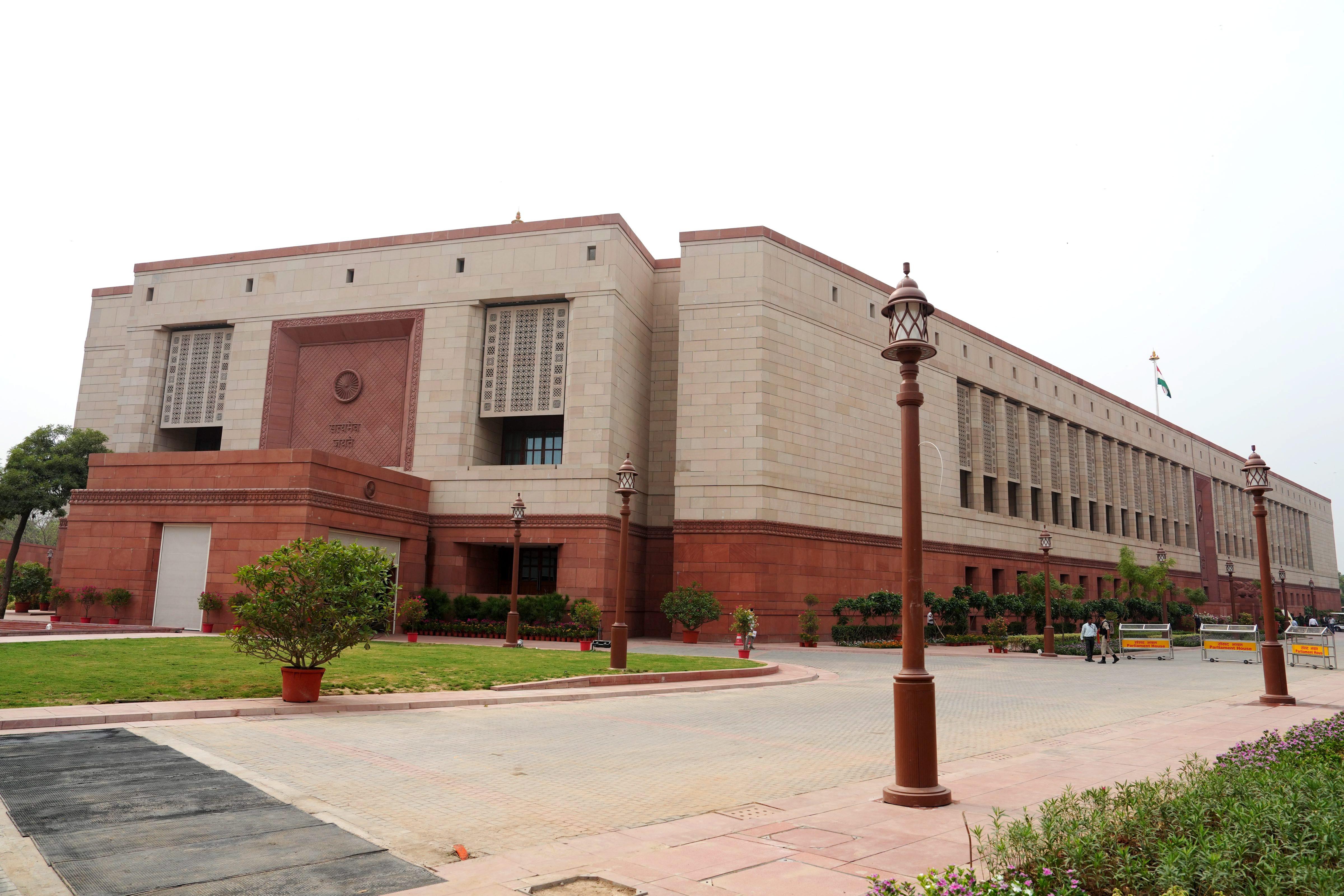
The Centre's Monsoon Session agenda features three major Bills that, despite covering different sectors, reflect a common theme of expanding regulatory oversight. From NGOs and national symbols to higher education, the proposed laws raise important constitutional questions about executive power, institutional autonomy and fundamental freedoms.
By Mahima Katal
New Delhi, July 17: As Parliament prepares for the Monsoon Session beginning July 20, the Union government has placed an ambitious legislative agenda before lawmakers. At first glance, the proposed amendments to the Foreign Contribution (Regulation) Act (FCRA), the Prevention of Insults to National Honour Act, and the higher education regulatory framework appear to address unrelated policy areas. One concerns foreign funding of non-governmental organisations, another national symbols, and the third the governance of universities.
Taken together, however, they reveal a broader governance trend: the steady expansion of the Union government's regulatory role over civil society, public institutions and spaces traditionally governed by autonomous bodies.
Whether viewed as necessary administrative reform or increasing centralisation, the proposed laws are likely to trigger important constitutional and legal debates that extend well beyond the Monsoon Session.
The FCRA Amendment: From Regulating Funds to Controlling Assets
Among the most significant proposals is the Foreign Contribution (Regulation) Amendment Bill, 2026, which seeks to create a statutory mechanism for managing the assets of organisations whose FCRA registrations are cancelled, surrendered or allowed to lapse.
Under the proposal, a Designated Authority would be empowered to oversee, manage and eventually dispose of foreign-funded assets. While the Bill expressly requires the religious character of places of worship to be preserved during the process, it also significantly expands the government's authority by allowing permanent acquisition of assets belonging to organisations that no longer comply with FCRA requirements.
The FCRA has progressively become one of the government's principal regulatory tools for overseeing NGOs receiving foreign contributions. The 2020 amendments had already reduced the ceiling on administrative expenses from 50 per cent to 25 per cent, prohibited sub-granting of foreign funds and tightened compliance requirements.
The latest amendment moves beyond regulating the use of foreign contributions. It raises a more fundamental legal question: Should the consequences of losing FCRA registration extend to state control over an organisation's assets?
The proposal is likely to revive debates around proportionality, due process and the balance between regulatory oversight and the freedom of association guaranteed under Article 19(1)(c) of the Constitution.
Vande Mataram: National Respect or Criminalisation?
The proposed Prevention of Insults to National Honour (Amendment) Bill, 2026 represents another significant shift.
According to government sources, the amendment seeks to place Vande Mataram on the same statutory footing as the National Anthem by making insults to, or obstruction of, the singing of the national song a punishable offence.
Unlike Jana Gana Mana, whose legal status has been considered in several judicial decisions, Vande Mataram occupies a unique constitutional and historical position. While it has immense national significance, it has never been accorded identical statutory protection.
The proposal therefore raises questions that go beyond symbolism.
Would criminal penalties apply only to deliberate disruption, or could they extend to refusal to participate? Could such provisions invite challenges under Article 19's guarantee of free expression or Article 25's protection of freedom of conscience and religion?
The Supreme Court has consistently distinguished between respect for national symbols and compelled participation. Whether Parliament can redraw that balance through legislation may eventually become a matter for judicial scrutiny.
Higher Education: One Regulator Instead of Many
The government also plans to advance the Viksit Bharat Shiksha Adhishthan Bill, 2025, arguably one of the most consequential institutional reforms on the legislative agenda.
The Bill proposes replacing the University Grants Commission (UGC), the All India Council for Technical Education (AICTE) and the National Council for Teacher Education (NCTE) with a unified regulatory framework for higher education.
Supporters argue that multiple regulators have created duplication, conflicting standards and unnecessary compliance burdens. A unified structure, they contend, could simplify governance, improve accountability and align higher education with the objectives of the National Education Policy.
Critics, however, are likely to ask whether regulatory consolidation also means greater centralisation.
Universities have historically enjoyed varying degrees of academic and administrative autonomy. A single regulatory architecture inevitably raises questions about institutional independence, the distribution of powers between the Union and states, and the future of specialised regulators.
A Common Governance Pattern
Although each Bill addresses a different policy sector, they appear connected by a common administrative philosophy.
The proposed FCRA amendment increases executive control over organisations even after their regulatory status changes.
The Vande Mataram amendment seeks to expand statutory regulation into questions of national symbolism and public conduct.
The higher education reform would consolidate regulatory authority under a single institutional framework.
In each instance, the State's role shifts from prescribing standards to exercising broader supervisory authority.
For the government, these measures may represent efforts to improve compliance, reduce institutional fragmentation and strengthen governance.
For critics, they may signal an increasing concentration of regulatory power within the executive.
The Constitutional Questions Ahead
As these Bills move through Parliament, the principal debate is unlikely to be confined to policy objectives alone.
Instead, courts, legal scholars and constitutional experts may eventually examine whether these measures maintain an appropriate balance between effective governance and constitutional freedoms.
Questions concerning proportionality, institutional autonomy, freedom of association, freedom of conscience and federalism are likely to feature prominently if the legislation is enacted and challenged.
The Monsoon Session may therefore be remembered not merely for the number of Bills introduced, but for what they collectively suggest about the evolving relationship between the Indian State and the institutions it seeks to regulate.