'Why Is Trump Still Alive?': Performer Sparks Cheers at Khamenei Funeral in Iran
A performer at Ayatollah Khamenei's funeral called for Donald Trump's death as huge crowds gathered amid stalled US-Iran peace negotiations.
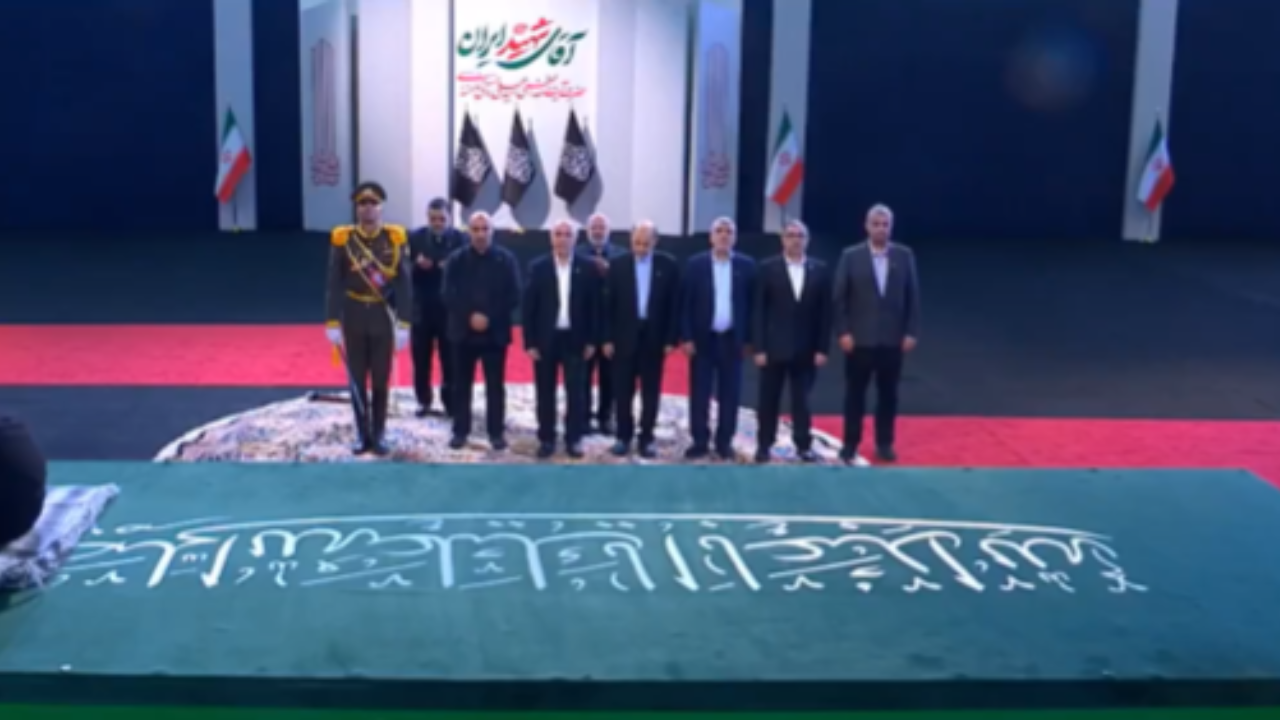
A performer at Ayatollah Khamenei's funeral called for Donald Trump's death as huge crowds gathered amid stalled US-Iran peace negotiations.
By Pranjal Gupta
New Delhi, July 5: A performer at the funeral of Iran's late Supreme Leader, Ayatollah Ali Khamenei, publicly called for the death of US President Donald Trump on Sunday, as hundreds of thousands of mourners gathered in Tehran. The remarks marked the first direct call for Trump's killing by a speaker at the state funeral.
Mohammad Rasouli, a poet who addressed the crowd through loudspeakers, asked, "Why is the most bastard man in the world still alive?" referring to Trump. His remarks drew loud cheers from the crowd, which responded with chants of "Death to America!" and "Death to Israel!"
Rasouli continued by saying that "the world is no longer a good place for" Trump, prompting another round of applause from mourners.
The funeral has featured posters, banners and graffiti calling for the deaths of both Trump and Israeli Prime Minister Benjamin Netanyahu. Such slogans have become common among Iran's hard-line supporters, even as Tehran continues negotiations with Washington over a permanent end to the recent conflict, which has disrupted global energy supplies.
Mourners gather during Ayatollah Ali Khamenei's funeral in Tehran as anti-US slogans and calls against Donald Trump intensify publicly. (Screengrab from viral)
Senior Iranian leaders attend funeral
Later in the day, 97-year-old senior Shiite cleric Ayatollah Jafar Sobhani led funeral prayers for Khamenei and members of his family at Tehran's Grand Mosalla.
Several top Iranian leaders attended the ceremony, including President Masoud Pezeshkian, Parliament Speaker Mohammad Bagher Qalibaf, Revolutionary Guard commander Gen. Ahmad Vahidi, and Esmail Qaani, the head of the Revolutionary Guard's elite Quds Force.
Khamenei's sons Masoud, Meysam and Mostafa also attended.
However, Iran's new Supreme Leader, Ayatollah Mojtaba Khamenei, was absent. Reports suggest he remains in hiding after suffering injuries in the Israeli airstrike that killed his father. Israel has also reportedly threatened to target him.
Huge crowds gather in Tehran
The second day of Khamenei's funeral drew a much larger crowd than the previous day. Thousands of mourners, many dressed in black, walked through Tehran carrying Iranian flags, banners praising Khamenei and placards calling for Trump's death.
The funeral took place as Trump addressed a gathering in Washington marking the 250th anniversary of the founding of the United States.
Speaking about recent military operations, Trump said, "We've had tremendous success. You look at Venezuela, you look at Iran. We wiped it out, wiped out their military."
Long-running tensions over Soleimani's killing
US authorities have monitored Iranian threats against Trump and other former and current American officials for several years.
The tensions date back to 2020, when Trump ordered the drone strike that killed General Qassem Soleimani, the commander of Iran's Quds Force, in Iraq.
Although Iranian officials have repeatedly denied plotting to assassinate Trump, state-linked media and hard-line groups have frequently circulated videos and messages portraying Trump as a target for revenge.
During the recent conflict, Trump also issued strong warnings to Iran, including threats to destroy the country's civilisation if the war escalated further.
Funeral delays peace talks
Khamenei, who ruled Iran for decades, died at the age of 86 in an Israeli airstrike on February 28 during the opening phase of the Iran-Israel war. His funeral was delayed because fighting continued.
The ceremony comes at a critical time for Iran's leadership. The country is trying to strengthen domestic support under its new Supreme Leader while also negotiating with the United States over a long-term ceasefire.
Iran is also using its strategic position along the Strait of Hormuz as leverage in the talks. The waterway is one of the world's most important oil shipping routes, making stability in the region crucial for global energy markets.
Negotiations between Iran and the US remain on hold until the conflict fully ends, while concerns persist that Israel could launch further military strikes.