Youth Protest in New Delhi Reflects Growing Concerns Over India's Exam System
By Mahima Katal NEW DELHI, June 6: Students and young job seekers gathered in India's capital on Saturday, turning a protest over alleged examination and recruitment irregularities into a broader expression of frustration over transparency, accountability and opportunity in the world's most populous nation. The demonstration at Jantar Mantar, a designated protest site in central New Delhi, was organized by the Cockroach Janta Party (CJP), a youth-led movement that has gained prominence on...
By Mahima Katal
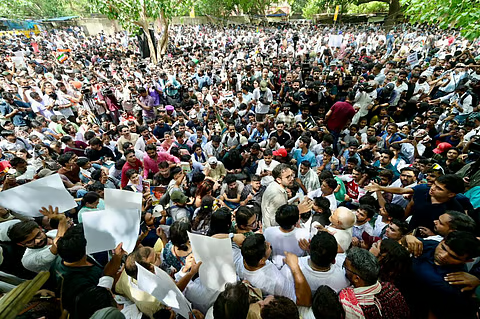
NEW DELHI, June 6: Students and young job seekers gathered in India's capital on Saturday, turning a protest over alleged examination and recruitment irregularities into a broader expression of frustration over transparency, accountability and opportunity in the world's most populous nation.
The demonstration at Jantar Mantar, a designated protest site in central New Delhi, was organized by the Cockroach Janta Party (CJP), a youth-led movement that has gained prominence on social media in recent months. Protesters demanded greater accountability from authorities and called for reforms in the conduct of examinations and government recruitment processes.
Many participants wore symbolic cockroach masks, the movement's emblem, while carrying flowers and placards. Chants focused on allegations of irregularities in competitive examinations and delays in recruitment processes that affect millions of students and job aspirants across India.
Police maintained a heavy presence at the venue, deploying more than 1,000 personnel across sensitive areas of the capital. Six people were taken into preventive custody after authorities received information about a possible confrontation between supporters and opponents of the movement, according to Delhi Police. No major incidents were reported. Among those present at the rally was Sonam Wangchuk, the renowned innovator, educator and environmental campaigner whose work inspired the character of Phunsukh Wangdu in the Bollywood film 3 Idiots. Wangchuk joined members and supporters of the Cockroach Janta Party at Jantar Mantar, lending his support to calls for greater transparency and accountability in examinations and recruitment processes. His presence drew significant attention from participants, many of whom view him as a prominent advocate for educational reform and youth empowerment.
The protest comes amid growing concern among students over the integrity of India's highly competitive examination system. In recent years, allegations of paper leaks, administrative lapses and recruitment delays have triggered public outrage and legal challenges.
Controversies surrounding examinations such as the National Eligibility cum Entrance Test (NEET), the Common University Entrance Test (CUET) and various government recruitment examinations have intensified scrutiny of the country's education and hiring systems.
For many young Indians, competitive examinations represent one of the few pathways to higher education, stable employment and social mobility. Any disruption or perceived irregularity can affect years of preparation and significant financial investments by students and their families.
India is home to one of the world's largest youth populations, with millions entering the education and job market every year. While the country's economy remains one of the fastest-growing among major nations, concerns about employment opportunities and recruitment bottlenecks have increasingly become subjects of public debate.
The emergence of the CJP reflects a broader trend of youth-led activism organized through digital platforms. What began as an online campaign questioning examination practices has evolved into a movement capable of mobilizing large crowds and attracting national attention.
Participants at Saturday's rally said the protest was not limited to a single examination or recruitment process but represented wider concerns about fairness and trust in institutions responsible for evaluating and recruiting young people.
The Indian government has previously defended the integrity of its examination systems while introducing measures aimed at strengthening security and preventing malpractice. Authorities have also launched investigations into several alleged irregularities and enacted stricter provisions against examination fraud. However, for many protesters gathered in New Delhi, those measures have yet to fully restore confidence.
As the crowd dispersed under tight security, organizers vowed to continue their campaign, signaling that concerns over examinations, recruitment and accountability are likely to remain a prominent issue among India's youth in the months ahead.