Why Is Sheikh Hasina Invoking the 1971 War Against Pakistan Now?
Sheikh Hasina invokes Pakistan's 1971 brutalitySheikh Hasina has invoked the brutality of the Pakistani military during the 1971 Liberation War to criticise Bangladesh's current authorities.
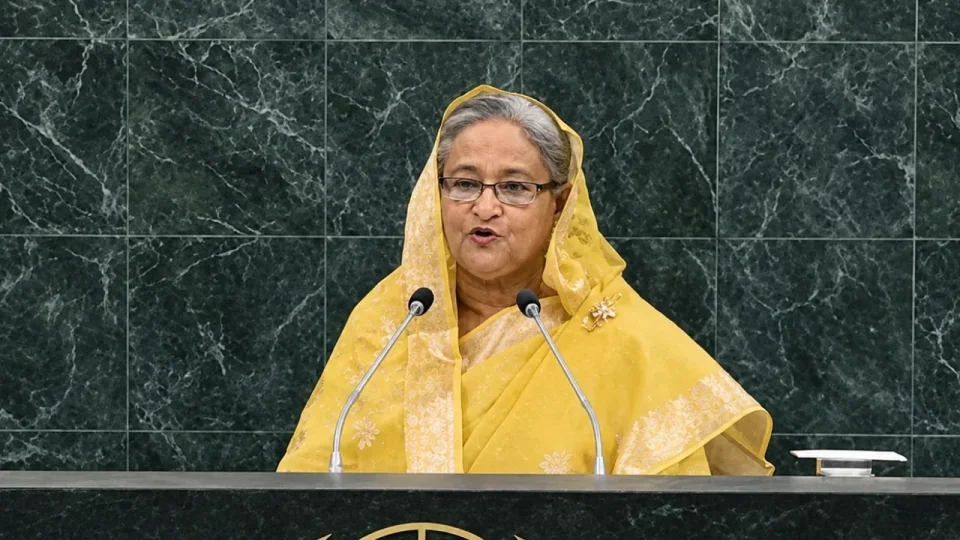
Sheikh Hasina Invokes Pakistan's 1971 Brutality: Former Bangladesh Prime Minister Sheikh Hasina has invoked the brutality of the Pakistani military during the 1971 Liberation War to criticise the country's current authorities, saying Bangladesh would not have become independent without the sacrifices of its freedom fighters. Had the country not achieved independence, its people would have continued to endure violence and humiliation at the hands of Pakistani forces, Hasina said. “They would have had to suffer kicks from the boots of the Pakistani military,” she said.
Hasina made the remarks during an audio-only virtual address on Saturday, November 28, through Zoom, at the 98th episode of the Bangladesh Awami League's 'Dayamukti' live series. Her comments come at a politically significant moment. She has announced her intention to return to Bangladesh on December 16, the country's Victory Day, which marks the surrender of Pakistani forces in 1971 and the end of the Liberation War. Hasina has been living in New Delhi since fleeing Bangladesh on August 5, 2024, following a student-led uprising that brought an end to her 15-year rule.
Also Read: India and Nepal: A New Compact of Trust and Interdependence
Her latest speech does more than recall the country's independence struggle. By invoking the sacrifices made against Pakistan, she is attempting to connect the present political conflict with Bangladesh's founding history and portray the treatment of freedom fighters as an attack on the values for which the country fought its Liberation War. The address also comes as Hasina seeks to remain politically relevant from India, with her Awami League party barred from political activities and several of its leaders facing legal action.
Hasina Accuses Authorities of Targeting Liberation War Veterans
In her address, Hasina alleged that freedom fighters were being targeted and eliminated one by one. She did not identify the individuals or groups she was referring to. She also alleged that prisoners were being tortured in custody, denied medicines and medical treatment, and left to die. According to Hasina, their families were not properly informed when they were taken to hospitals. “What could be more heinous than this?” she asked, questioning the treatment of those who had fought in the 1971 Liberation War.
Hasina further alleged that a freedom fighter had been killed and his body hung from a tree. She did not provide the person's identity or details of the alleged incident. These claims were made during a political address and have not been independently established. Allegations of custodial torture, deaths and attacks on veterans require corroboration from families, medical records, police documents and independent reporting.
Her repeated references to freedom fighters are politically significant. The 1971 Liberation War was fought against Pakistani rule and military repression, culminating in the creation of Bangladesh. The Awami League has historically placed Sheikh Mujibur Rahman and its role in the independence movement at the centre of its political identity. By invoking the war and the brutality of Pakistani forces, Hasina is seeking to position her party as a defender of the country's independence legacy. She is also suggesting that the present authorities are failing to respect those who fought to establish Bangladesh.
Why Hasina Is Invoking Sheikh Mujibur Rahman's Legacy
Hasina also recalled the contribution of her father, Sheikh Mujibur Rahman, who led the movement for an independent Bangladesh. Describing him as the Father of the Nation, she said he had dedicated his life to the people and given them an independent country and a national identity. “He was working to change the fortunes of the people of this country, but he was not given that opportunity,” she said.
Hasina added that Bangladesh could have become a developed country within 10 years of independence had Mujibur Rahman been alive. Mujibur Rahman returned to Bangladesh in January 1972 after being released from Pakistani imprisonment. He became the country's first prime minister and later served as president following a constitutional change in 1975.
On August 15, 1975, he was assassinated along with most of his family members in a military coup at his residence in Dhaka. His daughters, Sheikh Hasina and Sheikh Rehana, survived because they were in West Germany at the time. Hasina was 27 years old. Mujibur Rahman's legacy remains central to the Awami League's political identity. His role in the independence movement and the struggle against Pakistan has been a defining part of the party's historical narrative.
Hasina's latest remarks bring that legacy into the current political dispute. By linking the treatment of freedom fighters with the sacrifices made against Pakistani rule, she is attempting to frame the present confrontation as a question of Bangladesh's founding ideals.
Hasina Criticises Government Over Healthcare and Cost of Living
The former prime minister also criticised the current authorities over healthcare services and the economic situation. She alleged that community clinics established during her government were being shut down. These clinics, she said, had provided medical services to ordinary citizens, including mothers and expectant women. Hasina accused those in power of taking the country towards destruction and alleged that the government wanted poor people to remain economically disadvantaged while expanding interest-based businesses.
She also claimed that human life had become the cheapest thing in Bangladesh, even as the prices of essential commodities, electricity and gas continued to rise. These statements reflect Hasina's attempt to contrast the record of her government with the performance of the current administration. Claims about clinic closures, healthcare access and rising living costs should be assessed against government records and independent data.
Why Hasina's Planned Return Has Become a Political Flashpoint
Hasina has been living in India since August 5, 2024, when she fled Bangladesh following the student-led uprising that ended her 15-year rule. In November 2025, Bangladesh's International Crimes Tribunal sentenced her to death in absentia for crimes against humanity over the 2024 crackdown on protesters. Hasina has rejected the allegations. Bangladesh has sought her extradition from India under the bilateral treaty between the two countries. New Delhi has said that Dhaka's request is being examined through the appropriate legal process.
Hasina, however, has said she intends to return voluntarily and surrender before a court.