COP31: Climate Change Negotiations and the Collapse of Common but Differentiated Responsibility
The Rise of Narrow, Short-Term Interests and the End of the Precautionary Principle
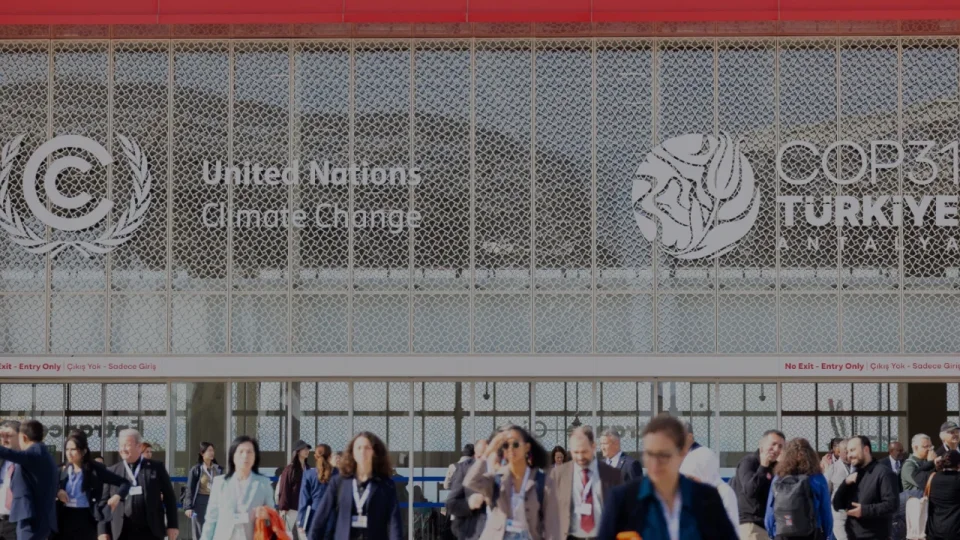
COP31 Antalya Climate Talks Failure: The world is moving towards temperatures at which some changes in the climate may become irreversible. The World Meteorological Organization (WHO) reports that global temperature during January–September 2026 averaged 1.47°C above the pre-industrial level. The UN Environment Programme projects warming of 2.8°C this century under current policies, and 2.6°C even if national pledges are fully implemented. The 1.5°C goal is slipping away. Even 2°C is unlikely. It is beginning to seem like a race that one is trying to run with broken legs.
What happens if we cross the tipping points? Major ice sheets may enter a process of long-term loss. Forests could cease to absorb as much carbon and may begin releasing more of it. Changes in ocean circulation could have consequences far beyond the oceans. These processes could themselves add to global warming. The real danger is that we may reach a point when reducing emissions will no longer reverse some of the damage already done, while other changes may themselves accelerate global warming.
The precautionary principle was meant for exactly such situations. You act before a house catches fire, not after it has burnt down. Climate negotiations have effectively buried this principle. Even when there is enough evidence of the danger, action is postponed in pursuit of immediate narrow interests. Preventing the possibility of a common disaster seems the least of their collective concerns.
Also Read: COP31 Drops Fossil Fuel Language, as India Wanted, and Climate Finance Goes with It
COP31 in Antalya provides the latest example. Countries could not agree on the proposed Antalya Pact. The final draft did not even mention fossil fuels. At COP28 in Dubai, they had agreed to transition away from fossil fuels in energy systems. Three years later, they could not agree to retain even that language in an overarching declaration. One step forward, two steps backwards.
We have seen this before. The Kyoto Protocol was adopted in 1997. At COP6 in The Hague in 2000, negotiations on its implementation broke down. An agreement was subsequently reached at COP6bis in Bonn, although the United States had already decided not to ratify the Protocol. The Paris Agreement in 2015 brought renewed hope, but it appears to be following much the same course. Agreements are celebrated, but their implementation is resisted. Another agreement is then negotiated, allowing nations to bask in the glory of collective success rather than admit the abject failure of earlier ones.
The UN Framework Convention on Climate Change, born out of the 1992 Rio process, was based on common but differentiated responsibilities. There was supposedly a common interest because everyone would suffer from climate change. Responsibilities were differentiated because countries had contributed unequally to the problem and possessed unequal capacities to respond. Decades later, it is clear that in practice, neither are interests common nor is anyone willing to accept differentiated responsibility. Each one unto his own.
Also Read: From Snubbing Indian Diplomats to Meeting Modi: Balen Shah's India U-Turn
Fossil fuel producers protect their markets. Industrialised countries protect their trade and competitiveness. Developing countries want growth and reasonably expect support for transition. Outcomes are increasingly determined by narrow, short-term national interests. What was common has almost disappeared.
One of the basic principles of historical responsibility has been neatly buried in the sands of time. The idea was based on the fact that since the countries that industrialised first used a disproportionate share of the atmosphere's capacity to absorb greenhouse gases, they needed to do more. This principle seems more a part of historical records than a guiding principle.
Climate finance stands uncomfortably on the foundational structure of trade. Money comes through loans, investments, equipment sales and access to markets. Of course, newer technologies can reduce emissions. But selling a more efficient technology does not become climate action because it is described as such.
The tragedy is that countries cannot protect themselves by acting alone. A country can reduce its own emissions, but it cannot control the warming caused by emissions elsewhere. Whether one starts with global agreements or national commitments, the need for cooperation remains. There appear to be no alternatives. If one existed, nations would have found it. Perhaps only a devastating global catastrophe will force countries to rediscover a common interest. Unfortunately, it may be too late by then.

Arun Kumar Mehta is a retired IAS officer and former Chief Secretary of Jammu & Kashmir. He has served in key leadership roles, including Chairman of the Central Pollution Control Board (CPCB), and has overseen major portfolios such as Environment, Urban Development, Finance, Information Technology, and General Administration.