


China Realises That Humanoids Are Just Organised Toys; Yet Betting Billions of Dollars — Why?
China bets billions on humanoid robots, even as early adopters admit the technology remains far from replacing human labour.
By Pranjal Gupta
When humanoid robots took to the stage at last year's Spring Festival Gala, performing slick, synchronised dance routines in front of millions of viewers, most people saw a spectacle. Ai Lin reportedly saw a business opportunity.
Soon after watching the performance, the e-commerce livestreamer based in Hangzhou spent $30,000 on his first android and turned it into a rental venture, reports CNN. The idea was simple: rather than businesses or individuals buying their own expensive robots outright, they could hire one for the day instead.
Trade has been steady. For 3,000 yuan (around $443) a day, customers can rent an android to draw crowds at exhibitions, perform at corporate events, or even help stage a marriage proposal.
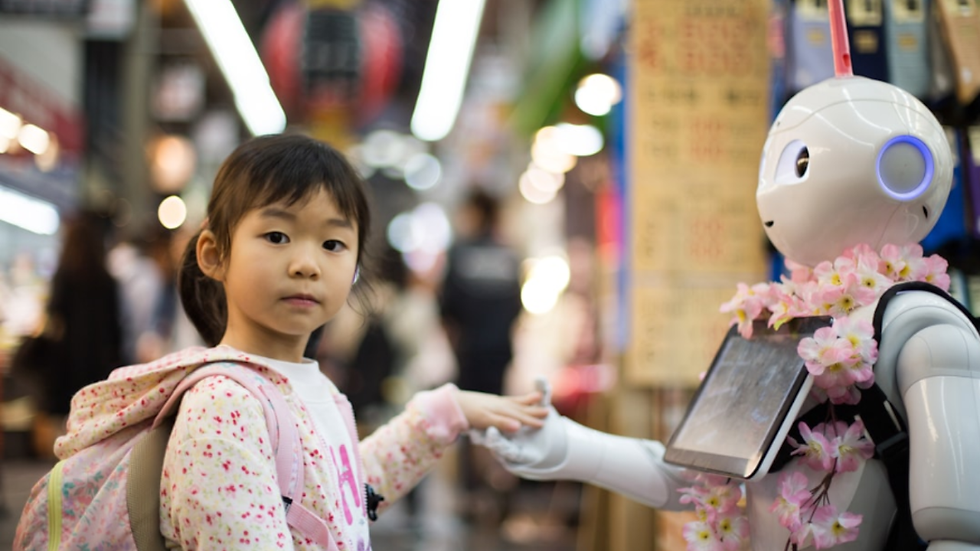
But Ai's venture has also exposed something that the viral videos of dancing, flipping robots tend to gloss over: this heavily promoted technology is still years away from genuinely replacing human labour, whether on a factory floor or around the house.
"The market for humanoid sales hasn't really taken off yet because today's robots still can't operate on their own — they're basically oversized toys," he said.
A billion-dollar bet, regardless
Despite this, Beijing is pouring billions of dollars into humanoid robots, viewing them as a strategic technology that could help boost productivity at a time when economic growth is slowing and the country's workforce is shrinking. Gaining an early advantage in this fast-growing industry could also help China move ahead of the US and other rivals in artificial intelligence and advanced manufacturing more broadly.
"Traditionally, industrial capabilities have been controlled by countries like Germany, Japan and the US," said Lian Jye Su, chief analyst focusing on artificial intelligence and humanoid robots at research firm Omdia, said the media report. "But with humanoids, it represents a rare opportunity where the whole world may be looking to China for this next pivotal moment."
The scale of opportunity here is significant. Investment bank Morgan Stanley estimates there could be as many as one billion humanoid robots in use globally by 2050, representing a market worth more than $5 trillion — although widespread adoption is not expected to gather real pace for at least another decade.
China already leads the world in manufacturing and deploying industrial robots, such as robotic arms used on factory production lines. Its humanoid robot makers accounted for the vast majority of global android deliveries last year, comfortably outpacing American competitors such as Tesla and Figure AI.
Earlier this month, Beijing launched a nationwide initiative to speed up the real-world deployment of humanoid robots, with the goal of rolling them out across more than 100 "high-value application scenarios" by the end of this year.
"I do think that by far, the biggest competition for humanoid robots will be from China," said Elon Musk, CEO of Tesla, during a January earnings call, the CNN report added. Tesla's own humanoid robot, Optimus, has faced repeated delays but is now slated for production later this year.
The rental boom
For Ai Lin, the turning point came watching robots share the stage with performers at last year's Spring Festival Gala, broadcast to millions of households across China.
"It made me realise that robots are likely to see large-scale adoption in the future," he said.
That moment of spectacle gave rise to a wave of entrepreneurial self-starters like Ai, all eager to capitalise on the growing hype around humanoid technology.
With retail prices starting at around $19,000 for entry-level models and climbing well past $100,000 for more advanced versions, renting has emerged as a far more accessible way for ordinary businesses and individuals to get involved, without the steep upfront cost of ownership.


