Operation Epic Fury: The "Kharg Island" Strike And The Global Energy Crisis
The Slate Bureau The geopolitical tectonic plates of the Middle East have shifted violently this week as "Operation Epic Fury" —the joint U.S.-Israeli military campaign against Iran—entered a devastating new phase. In a move that has sent global oil markets into a tailspin, U.S. President Donald Trump confirmed that American B-2 stealth bombers successfully "obliterated" every major military target on Kharg Island , the strategic nerve center of Iran’s oil export infrastructure. The Strike on...
The Slate Bureau
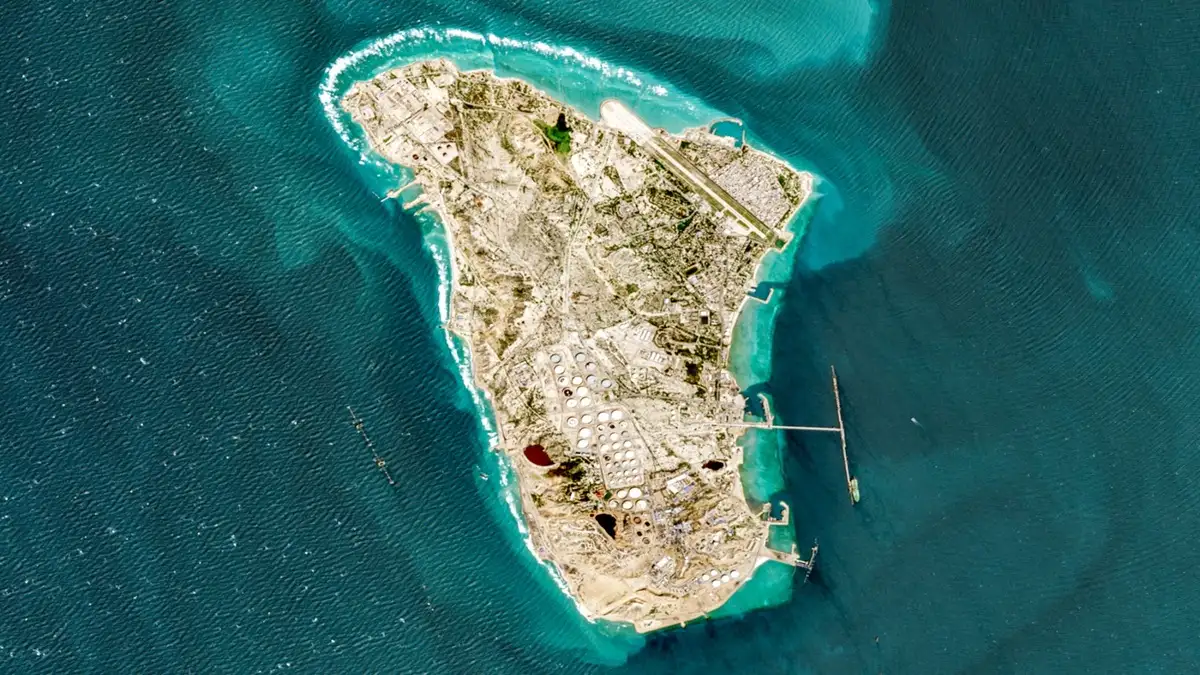
The geopolitical tectonic plates of the Middle East have shifted violently this week as "Operation Epic Fury"—the joint U.S.-Israeli military campaign against Iran—entered a devastating new phase. In a move that has sent global oil markets into a tailspin, U.S. President Donald Trump confirmed that American B-2 stealth bombers successfully "obliterated" every major military target on Kharg Island, the strategic nerve center of Iran’s oil export infrastructure.
The Strike on Kharg Island
Kharg Island, which handles roughly 90% of Iran's crude oil exports, was hit by a coordinated wave of precision munitions. While the U.S. maintains the strikes were aimed at "military assets" embedded within the island's industrial complex, the secondary explosions have effectively neutralized the facility’s ability to load tankers. President Trump, speaking from Joint Base Andrews, described the operation as a "very big hit," signaling a shift from tactical containment to the systematic dismantling of the Iranian "economic engine."
The Iranian response was swift and multi-pronged. Within hours of the Kharg Island strike, the Islamic Revolutionary Guard Corps (IRGC) launched a massive barrage of missiles and kamikaze drones targeting Israeli population centers and U.S. assets in the region.
The Escalation: Baghdad and Saudi Arabia
The conflict spilled over borders as a missile struck a helipad inside the U.S. Embassy compound in Baghdad on Saturday morning. Footage from the scene showed a thick column of smoke rising over the "Green Zone," marking one of the most direct attacks on American diplomatic soil in years.
Simultaneously, reports from Saudi Arabia’s Prince Sultan Air Base indicate that five U.S. Air Force KC-135 Stratotanker refueling planes were damaged on the ground during a drone and missile strike. This hit is particularly significant as it targets the "circulatory system" of the U.S. air campaign—without these tankers, the range and loitering time of Western fighter jets are severely curtailed.
The Strait of Hormuz Blockade
In his first public address since being named Supreme Leader following the death of Ayatollah Ali Khamenei, Mojtaba Khamenei declared that the Strait of Hormuz—the world’s most important oil transit point—will remain closed indefinitely. "The waterway of the world is now a graveyard for the enemies of Islam," the leader stated, defying U.S. warnings.
The impact on the global economy has been immediate:
Oil Prices: Crude prices have "whipsawed," with analysts predicting a surge past $150 per barrel if the blockade persists.
Energy Waivers: In a surprising move of "geopolitical pragmatism," the Trump administration issued a temporary 30-day waiver allowing India and other allies to purchase sanctioned Russian oil, an attempt to stabilize the market while the Middle East remains a no-go zone for tankers.
The Humanitarian Toll and NATO’s Entry
The UN has officially declared the situation a "major humanitarian emergency." In Lebanon, Israeli strikes on Hezbollah targets have resulted in heavy civilian casualties, including a strike on a health center that killed 12 medical workers.
Critically, the war saw its first NATO fatality outside Iranian territory this week. A French soldier was killed in a drone attack in Erbil, Iraq. This loss has placed immense pressure on European leaders, who are gathered in Paris for a Nuclear Energy Summit, to decide whether to officially join "Operation Epic Fury" or push for an immediate ceasefire.
As the war enters its third week, the world watches with bated breath. The conflict is no longer a regional skirmish; it is a systemic shock to the global order, testing the limits of modern warfare, energy security, and the "transactional" diplomacy of the 2026 era.