From Pariah to Player? Iran Emerges As A Key Player After Peace Deal
For the United States and its partners, the lesson is equally clear. Durable security in West Asia cannot be built by pretending Iran does not exist. By Sanjay Kumar Verma For four decades, Iran was the West’s preferred pariah: sanctioned, contained and lectured from Washington and European capitals. Yet today, it is part of a ceasefire and a detailed memorandum with the United States. Whatever its durability, the arrangement shows a simple truth Washington can no longer dodge: Tehran is too...
For the United States and its partners, the lesson is equally clear. Durable security in West Asia cannot be built by pretending Iran does not exist.
By Sanjay Kumar Verma
For four decades, Iran was the West’s preferred pariah: sanctioned, contained and lectured from Washington and European capitals. Yet today, it is part of a ceasefire and a detailed memorandum with the United States. Whatever its durability, the arrangement shows a simple truth Washington can no longer dodge: Tehran is too central to Gulf security and energy stability to be brushed aside. On balance, Iran has emerged as the principal diplomatic beneficiary of this conflict, even if its military gains are modest.
Four decades on the margins
It is worth recalling how thoroughly Iran was pushed to the margins after 1979. The Islamic Revolution and the hostage crisis in Tehran set off a long cycle of sanctions, asset freezes and diplomatic isolation. Over time, this hardened into one of the most extensive sanctions regimes in modern history, reinforced by European and multilateral measures tied to Iran’s regional conduct, human rights record and nuclear programme.
By the early 2000s, UN resolutions, EU sanctions and a dense web of U.S. restrictions had shut Iran out of global finance and major energy investment. The “axis of evil” label and repeated terrorism designations made its outsider status almost permanent. Even the brief opening created by the 2015 nuclear deal did not last. Once the accord came under strain and sanctions returned, Western policy again treated Iran less as a country to engage than as a problem to contain.
Hormuz changed the equation
The 2026 war exposed the limits of that approach. Joint U.S. and Israeli strikes on Iranian targets in late February triggered a sharp response from Tehran, including missile and drone attacks on regional infrastructure and commercial shipping. The conflict quickly turned on the Strait of Hormuz, the narrow passage at the mouth of the Gulf through which a large share of the world’s seaborne oil and a significant volume of liquefied natural gas pass every day.
With tankers harassed, routes disrupted and insurance costs rising, the consequences were felt far beyond the Gulf. Freight schedules slipped. Energy prices climbed. Suddenly, a country long treated as an outcast was at the centre of a global conversation on trade, energy and maritime security. West Asia has a way of humbling neat policy plans; geography always has the last word. Without some accommodation with Iran, stable sea lanes and predictable energy flows are hard to guarantee.
Iran
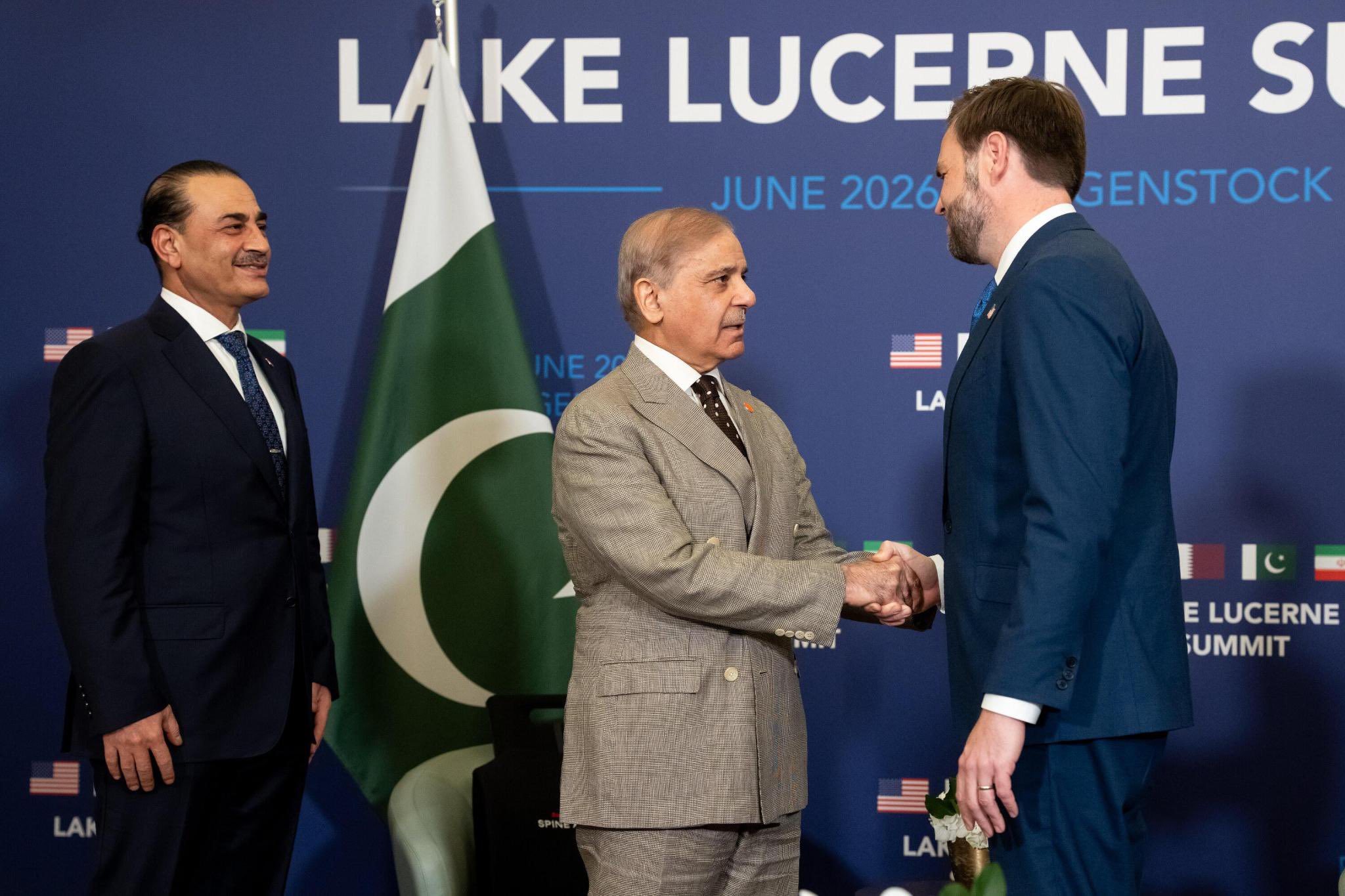
may have secured formal recognition as an indispensable regional actor, writes Verma. Photo:
Diplomatic gathering at the Lake Lucerne Summit in Switzerland. Photo souce: X account of US Vice President JD Vance
What the deal means
The ceasefire and the draft 14-point memorandum of understanding reflect that reality. The document opens a 60-day window to negotiate four linked issues: fresh limits on Iran’s nuclear programme, rules for shipping through the Strait of Hormuz, the timing of sanctions relief and frozen-asset release, and a reconstruction effort for Iran’s war-damaged economy.
Under the broad outline, Iran would restore normal commercial traffic through Hormuz and accept enhanced monitoring of its nuclear activities. In return, it would gain sanctions relief, access to frozen assets and limited reintegration into international financial and energy markets. Details will matter, of course. But the larger significance lies in the shift itself: from pressure without engagement to conditional accommodation based on reciprocal commitments.
For the first time in years, the discussion with Iran is not only about punishment. It is also about what Iran must do to make relief possible.
Why Tehran gains
Seen from Tehran, the diplomatic gain is substantial. Iran may have secured formal recognition as an indispensable regional actor. The fact that Washington is now discussing maritime security, energy flows and nuclear restraint directly with Tehran points to a hard truth: any durable Gulf security architecture will have to make room for Iran in some form.
The arrangement also turns Iran’s endurance under sanctions and war into political capital. Access to oil revenues, banking channels and long-frozen assets will help stabilise parts of its economy and give it more room to negotiate from strength. European and Asian states, too, will have greater political space to resume trade and investment that were constrained by sanctions risk. For a country long branded a pariah, that is no small achievement.
There is also the matter of narrative. Inside Iran, the leadership can claim it did not buckle under pressure and has forced the world’s leading power to acknowledge its security and economic concerns. Outside Iran, it can present its commitments on shipping and nuclear restraint as proof that it is willing to operate within international norms when its core interests are respected. That does not make Iran a status quo power. But it does make the old caricature of Iran as a permanent spoiler harder to sustain.
Israel’s unease
From an Israeli perspective, the military exchanges exposed some of Iran’s vulnerabilities. But the diplomacy that followed also underlined how difficult it is to imagine a regional settlement that simply bypasses Tehran. Many in Israel had hoped the war would significantly degrade Iran’s military capabilities, roll back its support for non-state actors and force much tighter constraints on its nuclear programme. Instead, the emerging arrangement focuses on ending hostilities, reopening Hormuz and setting up an interim framework for nuclear talks. The hardest questions — missiles, drones and the future of Iran’s regional networks — are deferred to later negotiations.
Israel was not a direct party to the ceasefire text, and it now faces an Iran that has survived a direct clash involving American forces, retained key capabilities and secured relief from some of the most painful sanctions. That naturally creates unease in Tel Aviv and Jerusalem alike. It also raises a broader question that many in the region are now asking: will Washington increasingly weigh Israeli preferences against wider strategic calculations?
West Asia is adjusting
Among Gulf Arab states and other Western-aligned partners in West Asia, the response has combined relief with caution. Saudi Arabia, the United Arab Emirates, Qatar and others have welcomed the ceasefire and the prospect of a more predictable shipping environment. They know full well that prolonged disruption in Hormuz would hurt their own economies and complicate long-term development plans.
At the same time, Gulf officials understand that the memorandum does not fully address concerns about Iran’s missiles, drones and non-state partners. That is why the war has accelerated a process already under way: diversification of security ties, risk-spreading and a greater desire to be present in any future regional arrangement involving Iran. This is not a rupture with the United States or Europe. It is a hedge. And in West Asia, hedging is often the most sensible strategy on offer.
India’s interests
For India, this is not a distant diplomatic shuffle. It has direct consequences. India depends heavily on oil and gas imports from the Gulf, and a significant share of those supplies, along with much of its trade with the region passes through Hormuz. Millions of Indians live and work across West Asia, and any prolonged disruption quickly affects remittances, employment and household stability back home.
There is also the Iran connection. New Delhi has long seen Iran as a potential partner for connectivity to Afghanistan and Central Asia, especially through Chabahar. A less isolated Iran, with some access to capital and a near normal diplomatic environment, could be better placed to support such initiatives. At the same time, India will continue to value its ties with Israel, the Gulf monarchies and the United States. The challenge is not to pick sides. It is to keep India’s room for manoeuvre intact.
Indian diplomacy, in this case, should be guided by its national interests. If Tehran and Washington sustain a managed relationship instead of sliding back into confrontation, India’s strategic options widen. That is in India’s interest, and it should be stated plainly.
A managed adversary
The end of the 2026 war and the signing of the U.S.-Iran memorandum do not mean Iran has returned to the Western fold. They do not make the Islamic Republic a status quo power. What they do mean is that Iran is no longer being treated as a permanent pariah. It is being handled as a difficult but necessary interlocutor. For Tehran, that is a diplomatic win.
For the United States and its partners, the lesson is equally clear. Durable security in West Asia cannot be built by pretending Iran does not exist. For India, the lesson is simpler still: in a region as volatile as West Asia, engagement with all major actors is not a luxury, it is a necessity. The war over Hormuz may be remembered less for the damage it caused than for the diplomatic realignments it accelerated. It may well mark the point at which Iran began moving back into the region’s diplomatic mainstream. Whether that shift lasts will depend on what follows. But pretending Iran can be left out of the regional equation is no longer a serious strategy.
Sanjay Kumar Verma is a former Indian diplomat with nearly four decades of experience. He served as India’s High Commissioner to Canada and Ambassador to Japan, Sudan, and the Republic of the Marshall Islands. He writes on diplomacy, geopolitics, international trade, technology policy, and global security.